Taipei / Taiwan When to visit
When should I visit Taipei, Taiwan, for the best experience?
The short answer
November — Taipei's driest month in the Central Weather Administration's normals (3.3 inches, 83 mm), with 77°F (25°C) afternoons, the typhoon season spent, and the hot-spring and silver-grass seasons both open.
The answer, with local context
Taipei is one of the wettest capitals in Asia — about 91 inches (2,330 mm) of rain a year, falling on some 163 days — so its best month is an exercise in probability. The Central Weather Administration's 1991–2020 normals show exactly where the odds improve: rainfall collapses through autumn from 12.4 inches (315 mm) in September to 5.9 inches (150 mm) in October and 3.3 inches (83 mm) in November, the city's driest month. November's average high is 77°F (24.8°C) and its low 67°F (19.7°C); typhoons, which average close to one a year in August on the long record, fall to about 0.1 a year in November. The city that spent summer sweltering at July's 95°F (34.8°C) highs becomes walkable from morning to midnight.
The enemies are seasonal, and November dodges both. From mid-May to June the plum rain (meiyu) parks a front over the island — June is Taipei's wettest month at 13.6 inches (345 mm) — and from July to September typhoons land with their own closures and chaos, while the heat index makes noon sightseeing a negotiation. Winter is the subtler trap: January's mean high of 67°F (19.4°C) sounds mild, but the northeast monsoon brings weeks of gray drizzle to Taipei, the basin's buildings hold no central heating, and the damp reads colder than the number.
November spends its good weather well. The miscanthus silver grass turns Yangmingshan's slopes and the Caoling trail white-gold; Beitou's hot-spring season opens as evenings cool; the Maokong tea hills run clear; and the night markets — the city's true dining rooms — are at their most pleasant, hot food in cool air. It is also the city's calmest calendar month, after the October festivals and before the New Year countdown crowds gather around Taipei 101.
Picture the place
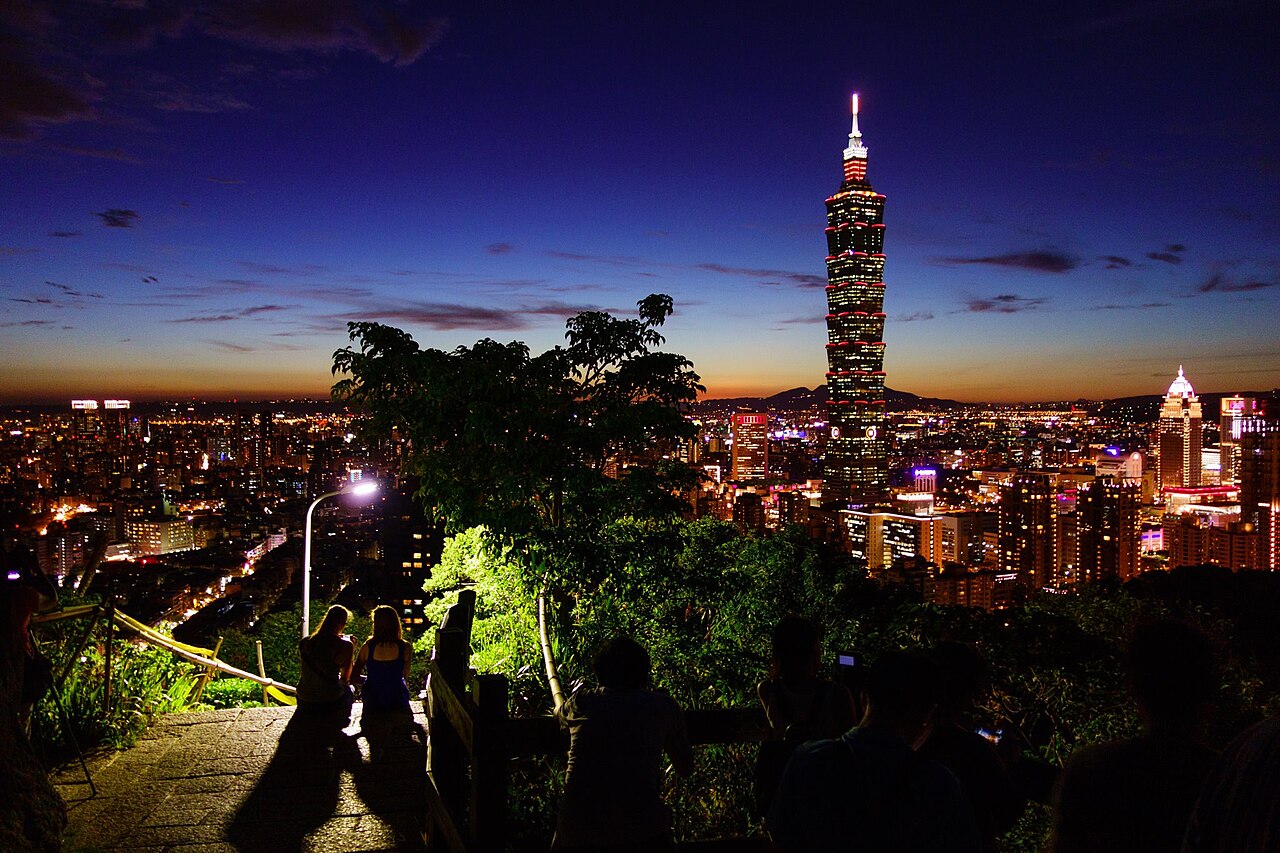
A November dusk on Elephant Mountain: the trail's stone steps are dry, the city below is already lamplit, and Taipei 101 stands clear against a washed blue sky — no haze, no rain, the whole basin legible to the mountains.
The easily missed detail
Taipei's rain is not distributed like other cities'. Even in its driest month the normals record rain on about 12 days — November's gift is not dry days but light rain, brief and warm, against June's all-day soakings. Pack the compact umbrella anyway; in Taipei it is less weather gear than civic uniform, and the convenience stores sell them at every corner for exactly this reason.
A practical rhythm
- Morning — The outdoor sights first: temple courtyards, Dadaocheng's lanes and the riverside parks in the clear early light.
- Afternoon — The National Palace Museum and the Taipei 101 observatory, timed for a clear day so the deck earns its ticket.
- Evening — Maokong's gondola up to the tea hills or a Beitou soak, then a night market as the air cools.
What could complicate the plan
A late typhoon can still brush Taiwan in November, and one storm can cancel a weekend's outdoor plans — the month lowers the odds, it does not void them. Weekends bring domestic travelers to Yangmingshan's grass season and Jiufen's lanes. And November's comfort is northern: the same northeast monsoon that dries Taipei can still wash the east coast, which matters if Taroko is on the same trip (its own answer treats that coast separately).
What to do next
Book mid-November weekdays, stay near an MRT station in Zhongshan or Da'an, and keep one flexible day for the 101 deck so the clearest sky gets it.
Sources
- Taiwan Central Weather Administration, Taipei station normals 1991–2020 — November high 24.8°C (76.6°F) and low 19.7°C (67.5°F), rainfall 83.2 mm (the driest month) against 345.0 mm in June and 315.2 mm in September; about 163 rain days a year; January mean maximum 19.4°C (66.9°F); July mean maximum 34.8°C (94.6°F)
- Central Weather Administration typhoon records — August averaging close to one affecting typhoon a year against about 0.11 in November
- Yangmingshan National Park — the November silver-grass season on the Datun and Qingtiangang slopes