Tbilisi / Georgia Things to do
What are the most worthwhile things to do in Tbilisi on a first visit?
The short answer
Ride the cable car to 4th-century Narikala, soak in Abanotubani's sulfur domes, stand under the Chronicle of Georgia's giant pillars, see the Colchian gold at the National Museum, cross the Bridge of Peace into the café streets, and finish with the funicular up Mtatsminda — a first visit built from altitude, steam and gold.
The answer, with local context
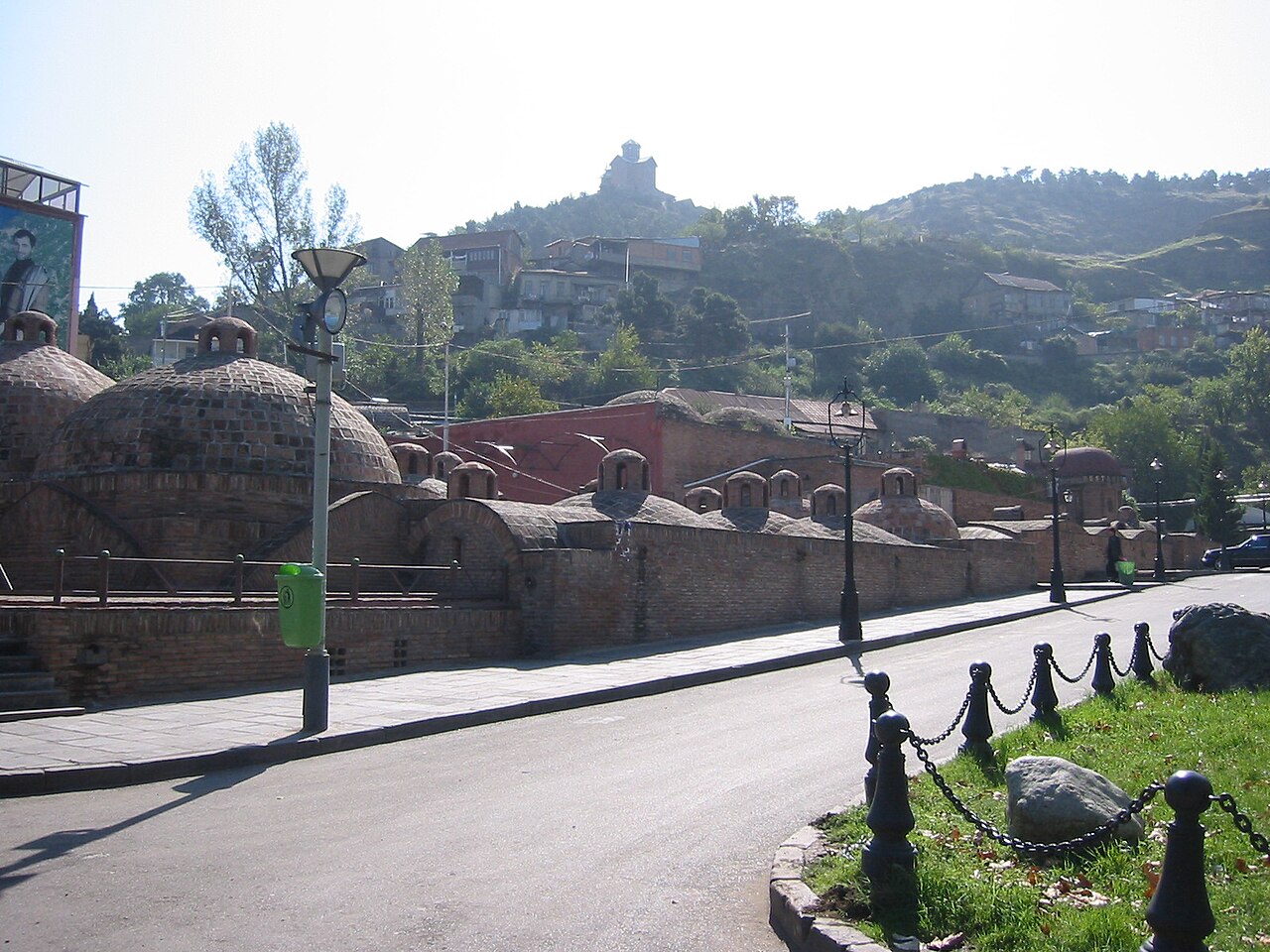
Begin in the gorge where the city began. Abanotubani, the bath district, is a cluster of brick domes at the foot of the Narikala cliff, fed by the hot sulfur springs that gave Tbilisi its name; the baths have operated here in one form since the city's founding and in their present domed form since the 17th–19th centuries, when poets and travelers (Pushkin praised them in 1829) made the soak a rite of passage. Rent a private room by the hour at one of the bathhouses — the ornate blue-tiled Chreli Abano is the beautiful one — and take the scrub. Above you rises Narikala, the fortress the Persians built in the 4th century and every empire since repaired; the cable car from Rike Park (opened 2012) floats you up in two minutes, and the walk down passes Kartlis Deda, Mother Georgia, erected in 1958 for the city's 1,500th anniversary: 65 feet (20 m) of aluminum holding a wine bowl for friends in one hand and a sword for enemies in the other.
The old town repays slow walking. Anchiskhati Basilica, built in the 6th century, is Tbilisi's oldest surviving church; Sioni Cathedral held the Vine Cross of St. Nino, Georgia's converter; across the Mtkvari, Metekhi Church (13th century) guards the cliff where Vakhtang Gorgasali's equestrian statue now stands. The modern city counters with the Bridge of Peace (2010), Michele De Lucchi's glass-and-steel bow across the river, and the Gabriadze clock tower (built 2010), a leaning fairy-tale column whose angel strikes the hour and whose tiny theater stages its "circle of life" show at noon and 7 p.m. For treasure, the Georgian National Museum's Janashia building keeps the Gold Fund: Colchian goldwork of astonishing delicacy from the land of the Golden Fleece, some pieces 4,000 years old.
Then go big. On a hill above the Tbilisi Sea stands the Chronicle of Georgia, Zurab Tsereteli's unfinished monument (begun 1985): 16 pillars up to 115 feet (35 m) tall, carved with kings, queens and saints, on a scale that has to be stood under to be believed — few tourists make the trip, and it is the city's most staggering sight. Close the day on the Mtatsminda funicular, a line first opened in 1905, climbing to the ridge-top park at 2,530 feet (770 m) for the city laid out below at dinner time — and if a day remains, Mtskheta, the ancient capital 25 minutes north, holds two UNESCO-listed monuments (Svetitskhoveli Cathedral and Jvari Monastery) in one easy half-day.
Picture the place
Inside a private room at the baths: a low dome pierced by a single oculus, a sunbeam standing in the sulfur steam like something solid, and the pool below so hot your first entry is a negotiation conducted one inch at a time.
The easily missed detail
The Dry Bridge flea market, on weekends, is where Soviet Tbilisi comes to be sold — medals, cameras, carpets, crystal, and (the story of the city's best restaurant began here) old books and cookbooks among the stalls. Go on Saturday morning, haggle gently, and treat it as the city's attic rather than a souvenir shop. Ten minutes away, the Dezerter Bazaar is the working counterpart: the country's larder under one vast roof.
A practical rhythm
- Morning — Cable car to Narikala at opening, the fortress and Mother Georgia, then walk down into Abanotubani for a late-morning soak.
- Afternoon — The old town churches and café streets, the Gabriadze tower at noon if timing suits, and the National Museum's gold for the day's quiet hour.
- Evening — The Chronicle of Georgia in the low light (taxi up), or the Mtatsminda funicular for sunset over the whole city.
What could complicate the plan
Narikala's walls are a scramble in places — uneven stone, unguarded drops, and real heat by midday in summer. The baths' private rooms book out on weekend evenings; reserve in the afternoon for that night. Sameba Cathedral, the vast modern cathedral consecrated in 2004 (at 338 feet, 103 m, among the tallest Orthodox cathedrals in the world), is a service-first building — dress and behave accordingly, and expect closures around major feasts. Tbilisi's hills make every "ten-minute walk" on the map a negotiation with gravity; the cable car and funicular are the local answer, and taxis are cheap.
What to do next
Stay in the old town or Mtatsminda's lower streets, buy the transport card (Metromoney / Travel Card) that covers metro, cable car and funicular alike, and give the city three full days.
Sources
- Tbilisi's historic monuments — Narikala Fortress founded in the 4th century; Anchiskhati Basilica (6th century), the city's oldest surviving church; Metekhi Church (13th century); Kartlis Deda erected 1958, 20 m; the Abanotubani baths' domed bathhouses of the 17th–19th centuries
- Tbilisi City / design record — the Rike Park–Narikala cable car opened 2012; the Bridge of Peace (2010) by Michele De Lucchi; the Gabriadze clock tower built 2010; the Mtatsminda funicular line first opened 1905, the park at 770 m; the Chronicle of Georgia by Zurab Tsereteli, begun 1985, with 16 pillars up to 35 m
- Georgian National Museum (Janashia) — the Gold Fund's Colchian treasures, goldwork up to some 4,000 years old
- UNESCO World Heritage List — Historical Monuments of Mtskheta (1994): Svetitskhoveli Cathedral and Jvari Monastery