Tbilisi / Georgia Food and drink
Where should I eat in Tbilisi, and which local food or drink is worth trying?
The short answer
Khachapuri in all three regional forms, khinkali eaten by hand at a mountain-style house, and dinner at Barbarestan — the restaurant cooking from an 1874 cookbook — all of it under the sign of the qvevri: Georgia's 8,000-year-old clay-vessel wine, UNESCO-listed since 2013.
The answer, with local context
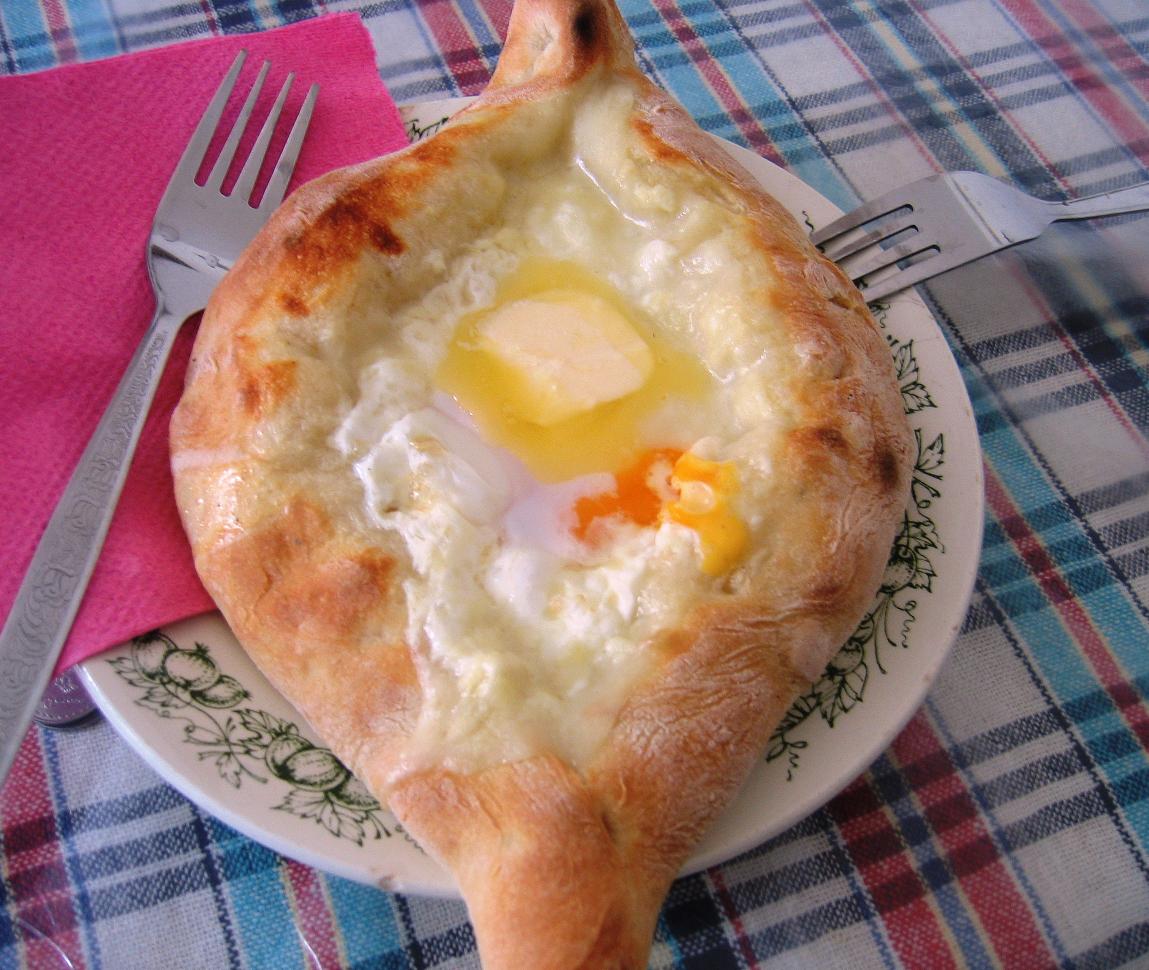
Georgian food is not a cuisine so much as a feast architecture — the supra, a table covered edge to edge with dishes, led by a tamada (toastmaster) whose toasts structure the evening. Build your eating around its three monuments. First, khachapuri, the cheese bread that is Georgia's national dish, in its regional dialects: Adjaruli, the Adjarian boat, its molten sulguni center finished with butter and a raw yolk you stir in at the table; Megruli, the Samegrelo round with an extra layer of cheese bronzed on top; Imeruli, the Imeretian pie, sliced like a cake. Order all three across the trip, never at one meal. Second, khinkali: great pleated dumplings from the highland regions of Pshavi and Khevsureti, traditionally beef, pork and lamb with chili and caraway (modern city versions add cheese and mushroom) — eaten by hand, upside down by the stem, first sip the broth, never use a knife, and leave the tough stalk on the plate as your tally. Pasanauri, the mountain town that claims the dumpling's birthplace, lends its name to a Tbilisi restaurant chain that serves as a reliable first classroom; the old-school houses around the old town do the rest.
For the city's single most interesting dinner, book Barbarestan (132 Aghmashenebeli Avenue). The family who runs it rebuilt their menu around a copy of Princess Barbare Jorjadze's Georgian Cuisine and Tried Housekeeping Notes (1874) — some 900 recipes, the foundational text of modern Georgian cooking, found by the family among the Dry Bridge market stalls — and since reopening in December 2016 they have recreated well over a hundred of its dishes: forgotten preparations of chicken, aubergine and walnut, sour-plum sauces and herb salads that taste like the 19th century thinking about itself. Chef Levan Kobiashvili's kitchen is seasonal and serious, and the room books out; reserve days ahead. Around it, fill the table with the supporting canon: pkhali (walnut-and-vegetable pâtés under pomegranate seeds), badrijani nigvzit (aubergine rolls with walnut and garlic), shkmeruli (chicken in garlic-milk sauce, from the Racha village of Shkmeri), mtsvadi skewers, and jonjoli, the pickled blossom that arrives with the first drinks.
And the drinks are the deepest story of all. Georgia's qvevri method — fermenting wine in clay vessels buried in the earth — was inscribed by UNESCO in 2013, and residue studies published in 2017 push the country's winemaking back some 8,000 years, to Neolithic villages south of Tbilisi: the oldest known on earth. The country farms more than 500 indigenous grape varieties. Drink the amber (skin-contact) whites — Rkatsiteli and Mtsvane, all tannin, apricot and tea — and the inky Saperavi reds at the natural-wine bars that made Tbilisi a pilgrimage city for sommeliers: Vino Underground, the pioneer, and 8000 Vintages for range. Chacha, the grape-pomace spirit, will find you on its own; churchkhela — walnut strings dipped in thickened grape must, hanging in every market like edible candles — is the souvenir that survives the flight.
Picture the place
The Adjaruli arrives still bubbling, the yolk trembling in its cheese lake; the table performs the ritual together — butter folded in with two forks, the boat torn from the pointed ends, the first scalding, salty, perfect bite eaten in silence.
The easily missed detail
Breakfast has a heroic local option: kachapuri's rowdy cousin khashi is for mornings, but the working Tbilisi classic is the khinkali house's late hours — several of the old houses serve until the small hours, because dumplings here are also the city's drinking food. And note the pepper rule: a dusting of black pepper is the only sanctioned seasoning for khinkali — hot sauce offered with them marks the place as a tourist house.
A practical rhythm
- Lunch — The khachapuri progression: Imeruli at a bakery-style café one day, Megruli the next, Adjaruli when you are properly hungry.
- Afternoon — The Dezerter Bazaar for churchkhela, sulguni and spice reconnaissance, then a qvevri tasting flight at a wine bar before dinner.
- Dinner — Barbarestan for the splurge night (booked ahead), a khinkali house for the joyful one — order by the five, and count your stalks.
What could complicate the plan
Georgian portions assume a supra: most dishes are built for the middle of a table, so solo travelers should order half what instinct suggests and lean on lunch counters and bakeries. Barbarestan's book-driven menu changes with the market and the season — the dish you read about may not be on tonight, by design. Restaurant culture is leisurely and smoking sections persist in some old-school rooms. And the wine is stronger than its easy drinking suggests; amber wines run 12–14 percent, and chacha far beyond.
What to do next
Reserve Barbarestan before you fly, learn the three khachapuri names by heart, and leave suitcase room for churchkhela and a jar of tkemali from the bazaar.
Sources
- Atlas Obscura / Barbarestan — the restaurant at 132 Aghmashenebeli Avenue rebuilt around Barbare Jorjadze's 1874 cookbook of about 900 recipes, the original copy found at the Dry Bridge flea market; reopened December 2016, with 125 recipes recreated in its first years under chef Levan Kobiashvili
- UNESCO Intangible Cultural Heritage (2013) — Ancient Georgian traditional Qvevri wine-making method
- Proceedings of the National Academy of Sciences (2017) — chemical evidence of winemaking in Georgia around 6000 BCE, at Neolithic sites south of Tbilisi; Georgia's 500+ indigenous grape varieties
- Georgian food traditions — Adjaruli, Megruli and Imeruli khachapuri; khinkali from the Pshavi–Khevsureti highlands, eaten by hand with black pepper; shkmeruli from Shkmeri in Racha