United Arab Emirates country guide Places and experiences
What should a first-time traveler see in United Arab Emirates beyond the obvious highlights?
The short answer
Al Ain, the inland oasis city on the Oman border, holds the first of the country's two World Heritage properties — a serial listing of 17 separate components protected under the Abu Dhabi Authority for Culture and Heritage Establishment Law of 2005, oasis protection laws of 2004 and 2005, and the Law of Archaeology and Excavations of 1970.
The answer, with local context
Seven emirates share a federation smaller than many US states, and the distances between them are short enough that a single base can reach most of the country. Abu Dhabi and Dubai sit roughly 85 miles (140 km) apart along the Gulf coast. Al Ain lies inland in the emirate of Abu Dhabi, pressed against the Omani frontier, and the drive out to it leaves the coastal humidity behind within an hour.
What Al Ain actually offers is layered time rather than a single monument. UNESCO describes the property as testifying to sedentary human occupation of a desert region since the Neolithic, covering the move from hunting and nomadic life to settled oasis farming. The Hafit, Hili and Umm an-Nar tombs and architecture illustrate human development on the Arabian Peninsula through the Bronze and Iron Ages, and the surviving remains include wells and mud-brick residences, towers, palaces and administrative buildings. The oases themselves were listed under criterion (v) for a long-running, sustainable relationship with the desert and careful use of water.
The northern emirates reward a day each. Sharjah sits immediately next to Dubai and is governed differently in one way that catches visitors out: alcohol is prohibited there, a rule the US Department of State states plainly in its UAE country information. Ras Al Khaimah holds the Hajar mountain country, and Fujairah faces the Gulf of Oman rather than the Arabian Gulf, which gives it a genuinely different coastline and different water.
Picture the place
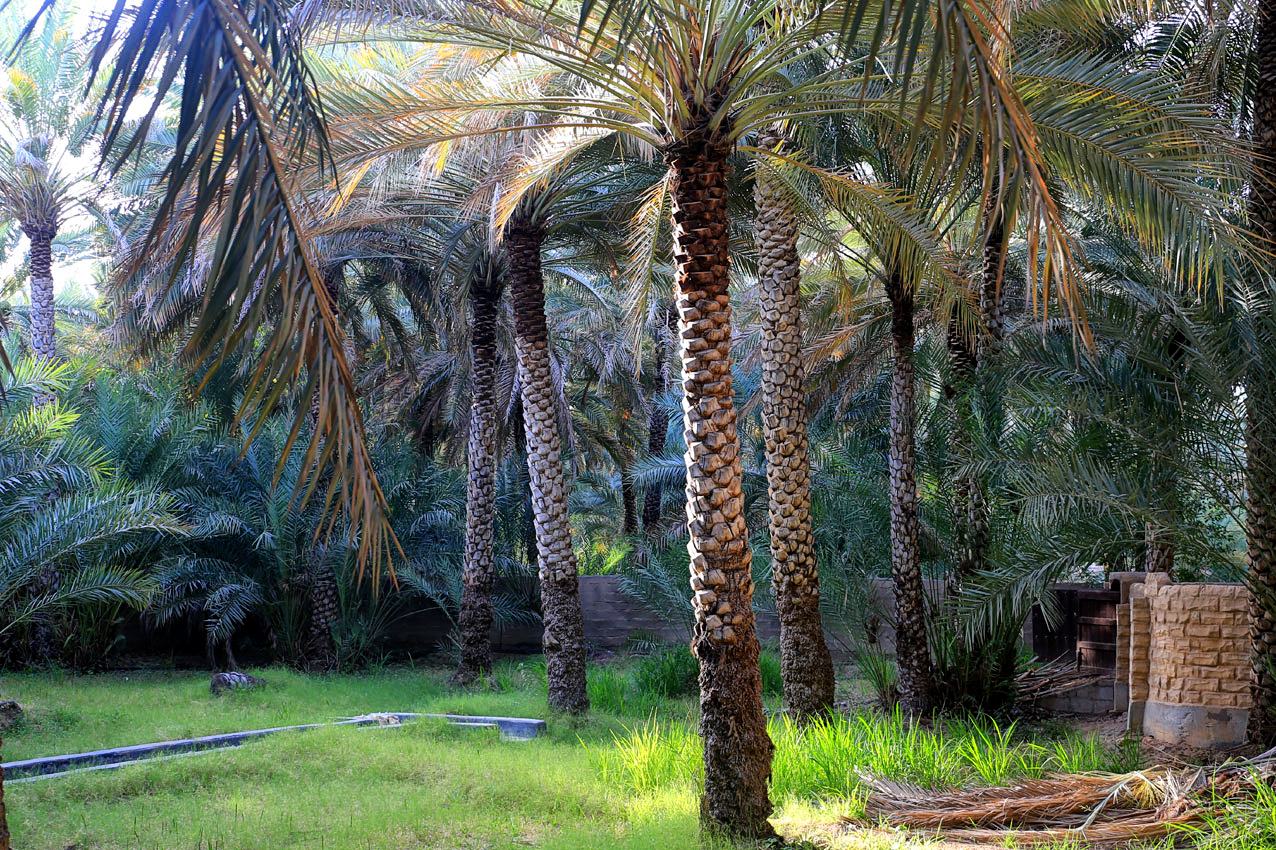
The Al Ain oases are walled gardens of date palm laid out in blocks, with the aflaj channels running at ankle level between the trunks and splitting at small stone gates. Step out of the palm shade onto the open ground and the light changes from green and filtered to flat white in a single pace.
The easily missed detail
The single most useful thing to know about photography in the Emirates is a legal matter, not an aesthetic one. US State Department guidance records that photographing military sites, airports and diplomatic missions is restricted, and that flying a drone requires prior approval. For a country whose landscape invites aerial photography, that is a consequential rule, and it applies across all seven emirates rather than in marked zones.
A practical rhythm
- Day one inland — Al Ain's components are spread across 17 locations, so pick two or three rather than attempting the property as a whole.
- Day two north — Sharjah and Ajman sit close enough together to combine; plan food and drink around Sharjah's prohibition rather than discovering it at dinner.
- Day three east — Cross to the Fujairah coast for Gulf of Oman water, which has a different temperature and clarity from the Arabian Gulf side.
What could complicate the plan
Border geography is the real constraint inland. Al Ain shares a frontier with Oman, and the road network there means it is easy to approach a crossing without intending to. Non-GCC citizens leaving the UAE by land pay a 35 dirham departure fee in local currency, and the State Department warns that you must exit on the same passport you used to enter unless you obtain an exit pass. Ras Al Khor, meanwhile, functions as a passage site as much as a wintering one, so its bird interest is seasonal rather than year-round.
What to do next
The Emirates food question covers what to eat in Al Ain and the northern emirates, and the trip-planning question sets out the visa and passport conditions that shape how long you can stay.
Sources
- UNESCO World Heritage Centre, Cultural Sites of Al Ain — property components, criteria, Bronze and Iron Age remains, protective legislation
- US Department of State, UAE country information — Sharjah alcohol prohibition, photography and drone restrictions, land departure fee, exit on same passport
- Ramsar Sites Information Service, Ras Al Khor Wildlife Sanctuary — site's role as a migration staging ground