United States country guide Places and experiences
What should a first-time traveler see in United States beyond the obvious highlights?
The short answer
The other 370 park units, for a start: the National Park System holds 433 units of which only 63 are national parks — and beyond them, the state parks, tribal lands, small historic cities and working landscapes that carry most of the country's story.
The answer, with local context
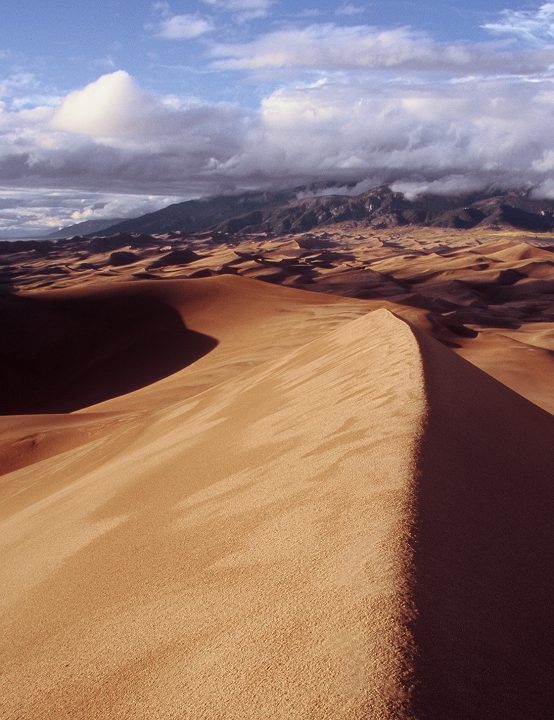
Start from the arithmetic the brochures skip. The Park Service protects more than 85 million acres across all 50 states, the District of Columbia and the territories, in categories most visitors never learn: national seashores, battlefields, parkways, monuments and historic sites alongside the famous parks. Yellowstone, created on March 1, 1872, was the world's first national park — and its fame now concentrates pressure that its siblings escape. Great Sand Dunes in Colorado holds the tallest dunes in North America (the Star Dune rises about 750 feet) against the Sangre de Cristo mountains, with a fraction of the Grand Canyon's crowds; Cuyahoga Valley in Ohio runs 33,000 acres of canal towpath and waterfalls between Cleveland and Akron; Dry Tortugas lies 70 miles west of Key West, reachable only by boat or seaplane, where the enormous hexagonal Fort Jefferson (built from 1846) guards coral reefs. Each is a headline landscape without the headline queue.
The human story is mostly outside the parks. Mesa Verde's cliff dwellings (a UNESCO World Heritage Site since 1978, among the first American inscriptions) and Illinois' Cahokia Mounds (UNESCO 1982), the largest prehistoric earthwork city north of Mexico, tell an Indigenous history a thousand years older than the republic; Monument Valley is a Navajo Nation tribal park, where the backcountry is visited with Navajo guides on Navajo terms. The republic's own layers survive best in places the itineraries rush past: the mission churches of San Antonio (UNESCO 2015), the freedmen's and civil-rights landscapes of Alabama (Birmingham and Selma, whose Edmund Pettus Bridge is a National Historic Landmark), the mill towns of Lowell, Massachusetts, where the Park Service runs a whole industrial city as a historical park. Add the Smithsonian Institution in Washington — more than 20 museums and galleries plus the National Zoo, with general admission free at its Washington museums — and a first trip gains a free, world-class education layer that costs only time.
Then travel the connective tissue rather than the icons. The Blue Ridge Parkway runs 469 miles along the Appalachian crest under Park Service management, linking Shenandoah and Great Smoky Mountains at 45 mph with no commercial traffic; historic Route 66, commissioned in 1926 and decommissioned in 1985, survives as drivable fragments and main streets from Oklahoma to Arizona; the state-park systems — New York's alone draws more visitors than many national parks — hold the swimming holes, fire towers and local campgrounds where American families actually holiday. The method beneath all of it: for every famous name on a first itinerary, ask what its region's residents would show a visitor instead, and give that answer a day.
Picture the place
Dawn at Great Sand Dunes: a creek running shallow and braided across flat sand at the dunes' foot, the dune wall rising 700 feet beyond it in shadow and first light, and almost nobody else on the sand.
The easily missed detail
Some of the finest units in the system are free and unglamorous on paper: the national seashores (Cape Cod, Point Reyes, Padre Island — the last a barrier island of more than 66 miles of undeveloped beach) charge little or nothing beside the flagship parks' entry fees and timed reservations, and the parkways and many historic sites charge nothing at all. The reciprocal trap is assuming "national monument" means lesser: several monuments (White Sands and Organ Pipe Cactus began as monuments; White Sands is now a national park) protect landscapes fully equal to the parks — the designation records politics, not quality.
A practical rhythm
- One icon, one sleeper — Pair each famous park with an unsung unit in the same region (Grand Canyon with Walnut Canyon, Yellowstone with Little Bighorn)
- A free day in Washington — The Smithsonian museums as the trip's no-cost, high-yield rest day between paid headliners
- Drive one slow road — A parkway, a Route 66 fragment or a state scenic byway taken at its own speed for a full day
What could complicate the plan
Beyond-the-highlights places run thinner infrastructure: Dry Tortugas has no water, food or fuel at the park; desert monuments have no services for 50 miles; tribal parks set their own hours, guide rules and photography restrictions, which are the host nation's decisions, not suggestions. Some sleeper units are sleeper because they are seasonal — northern historical parks and parkway sections close in winter, and hurricane season can shut Gulf and Atlantic seashores at short notice. Check the individual unit's page on the Park Service site, which is candid about all of it, before building a day around any of them.
What to do next
Take your draft itinerary, open the Park Service map for each region on it, and swap one crowded half-day for the nearest unit you have never heard of.
Sources
- US National Park Service — the National Park System's 433 units, 63 national parks and 85 million-plus acres; Yellowstone's creation (March 1, 1872); Great Sand Dunes, Cuyahoga Valley and Dry Tortugas unit pages
- UNESCO World Heritage List — Mesa Verde (1978), Cahokia Mounds (1982) and the San Antonio Missions (2015)
- Smithsonian Institution — its museums, galleries and National Zoo, and free general admission in Washington
- Federal Highway Administration / NPS — the Blue Ridge Parkway's 469 miles and the history of US Route 66 (1926–1985)