Varanasi / India Things to do
What are the most worthwhile things to do in Varanasi on a first visit?
The short answer
A dawn boat ride along the 84 ghats, the evening Ganga Aarti at Dashashwamedh, darshan at the Kashi Vishwanath Temple through its 2021 corridor, the silent ethics of Manikarnika observed from a respectful distance, and a day at Sarnath, where the Buddha preached his first sermon.
The answer, with local context
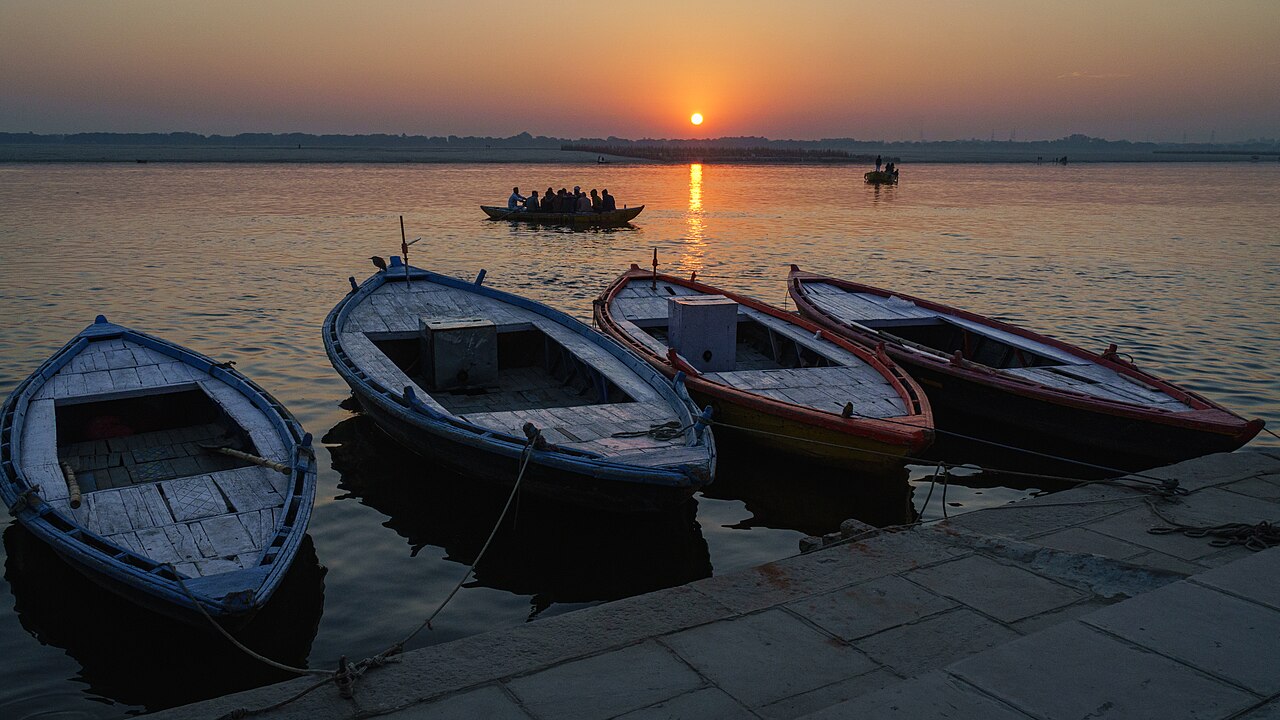
The city's essential act is the sunrise boat ride. Hire a rowboat at Assi Ghat before dawn and ride north as the light comes: the ghats — 84 of them, staircases running for some 4 miles (6.4 km) along the Ganges' crescent — wake in sequence, bathers descending, washerfolk at Dhobi Ghat, temple bells, wrestlers, widows, priests under umbrellas performing private rituals on the platforms. The ride ends, as all Varanasi geography ends, at Manikarnika, the great cremation ghat, where the fires burn around the clock and have, in the city's understanding, never gone out. You observe from the boat, you do not photograph — photography of the cremation ghats is prohibited and the prohibition is enforced by grief as much as by rule. The same evening, at Dashashwamedh Ghat, the Ganga Aarti (daily at about 7 p.m., earlier in the winter dusk; organized by the Ganga Seva Nidhi since 1991) stages the city's public liturgy: seven priests in saffron raising fire to the river in perfect unison, conches, bells, and a crowd of thousands on the steps and in a flotilla of boats. The smaller dawn counterpart, Subah-e-Benaras at Assi (5:30 a.m.), pairs with the morning boat on an early day.
Go to the temple in the morning. Kashi Vishwanath — Shiva as lord of the universe, one of the twelve jyotirlinga shrines — stood for centuries at the end of crushing lanes; since December 13, 2021, the Kashi Vishwanath Corridor has opened it to the river, a broad paved precinct running from Lalita Ghat up to the temple, with the gold-plated shikhara (its gold famously donated by Maharaja Ranjit Singh in the 1830s) visible from the water. The queue discipline is real: no phones or cameras inside, lockers at the gates, ID required, and the Mangala Aarti in the small hours is ticketed. Around it, the old city repays a guided walk: the Man Mandir Observatory (Jai Singh II's instruments, c. 1737) on a palace roof, the Alamgir Mosque's minarets above Panchganga Ghat, the silk weavers of Madanpura at their pit looms weaving Banarasi brocade — zari gold thread on silk, GI-tagged and still made by hand — and the lanes of Kachauri Gali, which is a food itinerary as much as a street.
Take the half-day out of the city. Sarnath, 6 miles (10 km) northeast, is where the Buddha, having gained enlightenment at Bodh Gaya, preached his first sermon — the deer park is now an excavated field of stupas and monastery foundations, crowned by the Dhamek Stupa (about 141 feet, 43 m tall, largely Gupta, 5th–6th century CE). The Sarnath Museum — the Archaeological Survey's oldest site museum, established 1910 — holds the Lion Capital of Ashoka (3rd century BCE), the sculpture that became independent India's national emblem, and the serene Gupta Buddha that defines an era of Indian art. On the way back, BHU's campus offers the Bharat Kala Bhavan museum's miniatures and the university's New Vishwanath Temple. Across the river at Ramnagar, the 18th-century fort of the Maharaja of Benares hosts the month-long Ramlila each autumn — the Ramlila tradition is UNESCO-listed (2008) — if the season aligns.
Picture the place
From the boat at first light the crescent resolves itself: temples stacked on temples above the steps, a single column of woodsmoke rising straight in the windless air at Manikarnika, and the sun coming up over the empty eastern bank exactly as the priests have arranged their mornings for a thousand years.
The easily missed detail
The river flows the "wrong" way here, and that is the point of the city. The Ganges at Varanasi bends and flows north, back toward its Himalayan source — one reason the crescent of ghats faces the sunrise and the eastern bank across the water is kept empty floodplain: the sun rises over nothing, nightly drowned and yearly rebuilt, and the city's whole theater of dawn depends on that emptiness.
A practical rhythm
- Dawn — Boat from Assi to Manikarnika on the first morning; Subah-e-Benaras aarti and yoga on the ghat after.
- Midday — The corridor and the temple (late morning queues are shorter), then the lanes, the weavers and lunch in the old city.
- Dusk — The Dashashwamedh aarti from a boat seat booked through the hotel; night walk back through the lit bazaars.
What could complicate the plan
The old city is a labyrinth of lanes too narrow for cars — everything is walking, rickshaws die at the lane mouths, and sensible shoes are sacred equipment. Temple security is strict and the queues on Mondays (Shiva's day) and festival dates can run hours; the corridor has eased access, not devotion. Touts and boatmen negotiate hard — fix prices through the hotel or the official counters, agree the route and the end point, and keep small bills. And this is a living holy city, not a monument: dress modestly, ask before photographing people at prayer, and let Manikarnika be a place you witnessed rather than captured.
What to do next
Stay three nights minimum in the old city, book the sunrise boat the evening before through the hotel, and pair the temple with Sarnath on separate mornings — Varanasi punishes itineraries that stack its intensities.
Sources
- Kashi Vishwanath Temple / Corridor — one of the twelve jyotirlingas; the corridor from Lalita Ghat inaugurated December 13, 2021; the shikhara's gold plating donated by Maharaja Ranjit Singh in the 1830s; phones and cameras barred inside
- Ganga Seva Nidhi — the Dashashwamedh Ganga Aarti performed daily since 1991, seven priests, around 7 p.m. in summer and earlier in winter; Subah-e-Benaras at Assi Ghat from 5:30 a.m.
- Archaeological Survey of India, Sarnath — the Dhamek Stupa (about 43 m, Gupta period); the Sarnath Museum (established 1910, the ASI's oldest site museum) holding the Ashokan Lion Capital, adopted as India's national emblem
- The ghats of Varanasi — 84 ghats along about 6.4 km (4 mi) of riverfront; photography prohibited at the cremation ghats; UNESCO Intangible Cultural Heritage (2008) for the Ramlila tradition staged at Ramnagar