Varanasi / India Food and drink
Where should I eat in Varanasi, and which local food or drink is worth trying?
The short answer
Kachori-sabzi and jalebi for breakfast in the old lanes (Ram Bhandar is the century-old benchmark), tamatar chaat at Kashi Chaat Bhandar, a kulhad lassi from the Blue Lassi shop, baati chokha for the Bhojpuri plate, malaiyyo if it is winter — and a Banarasi paan to close, from a city that treats the paan as dessert, digestif and punctuation.
The answer, with local context
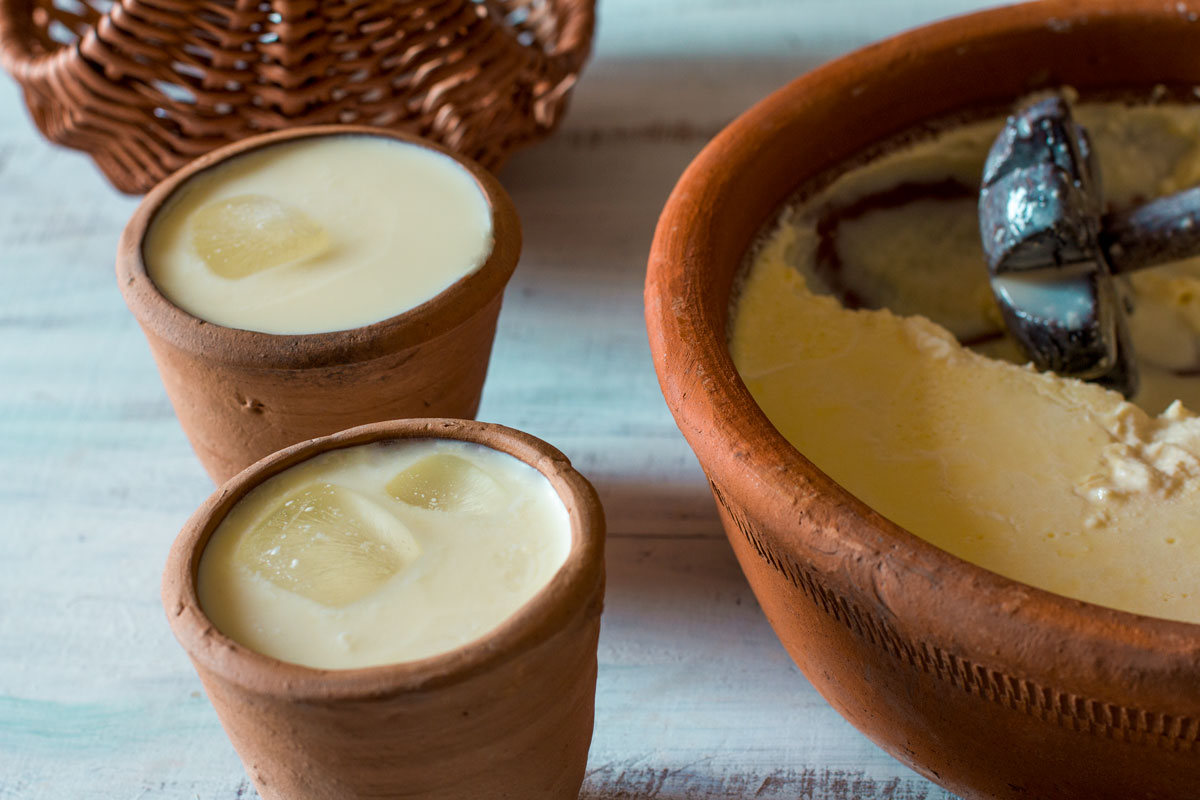
Varanasi eats on pilgrim hours: the great meals are breakfast and the evening snack, and the old city is the dining room. Breakfast is the sacred one — kachori-sabzi, crisp fried breads (bedmi and the smaller kachori) over a spicy aloo sabzi, with hot jalebis fried in ghee to follow, washed down with chai in a clay kulhad. The institution is Ram Bhandar in Thatheri Bazar, a sweet-and-savory house trading since the late 19th century whose morning queue is a cross-section of the city; a dozen imitators in the lanes around Godowlia will do if the queue defeats you. Winter adds the breakfast that cannot be exported: chooda matar — flattened rice tossed with fresh green peas, spices and fried peanuts — and, on cold mornings only, malaiyyo: milk set in open pans under the night dew, whisked at dawn into a saffron-scented foam that dissolves on the tongue and in the sun alike; it exists roughly November to February, is sold from handis in the Thatheri Bazar lanes, and is finished by nine.
The midday and evening canon is chaat, and Varanasi's claim on it is specific. Tamatar chaat — a spicy, buttery tomato mash with crisped sev, unique to this city — is the signature, with Kashi Chaat Bhandar at Godowlia the famous counter (Deena Chaat Bhandar runs it close); order the palak patta chaat too, spinach leaves batter-fried and dressed. The Bhojpuri heartland plate is baati chokha: hard wheat balls baked in embers, cracked open and drowned in ghee, with chokha — mashed roasted eggplant, tomato and potato — and dal; dedicated baati chokha restaurants near Lanka and Teliabagh serve it as a full meal at laborer's prices. And drink the lassi: thick, slow-churned, served in a kulhad under a cap of malai — the Blue Lassi Shop in the lanes near Manikarnika, run since the 1990s, fruit-blends it into dozens of variations for the backpacker crowd, while the old-city sweet houses serve the unadorned classic. Thandai — the spiced, chilled milk of Holi, sold year-round — comes plain or, at the city's licensed government bhang shops, with cannabis paste stirred in; treat the bhang version with the respect due a strong drug in a foreign city, whatever the festival mood suggests.
Close like a Banarasi: with paan. The Banarasi paan — betel leaf folded around areca nut, lime and sweet preserves, or the tobacco-free meetha paan — is the city's full stop, and the leaf-sellers are artists of the fold; Keshav Paan Bhandar at the Ravidas gate by Lanka is the storied counter, but any busy thela near the ghats will finish a meal correctly. Sweets for the road: the rabri at the old houses, khoya jalebi in season, and lal peda from the shops by the temple.
Picture the place
At seven in a Thatheri Bazar lane the jalebi man flicks batter into the ghee in perfect spirals without looking up, the kachoris come out of the kadhai in batches of twenty to a chorus of orders, and your sabzi arrives on a leaf plate with the jalebi still hot enough to gloss the fingers.
The easily missed detail
Malaiyyo is weather, not cooking — it cannot be made, only allowed: the dew, the cold and the dawn whisking do the work, which is why it vanishes by nine in the morning and entirely by February's end, and why no other city has ever successfully stolen it. If it is December and someone offers it at noon, it is not malaiyyo.
A practical rhythm
- Breakfast — Ram Bhandar or a Thatheri Bazar lane house at seven: kachori-sabzi, jalebi, kulhad chai — and malaiyyo first if the season is right.
- Afternoon — The lassi pause near the ghats and a baati chokha lunch on a Lanka or Teliabagh detour.
- Evening — Chaat at Godowlia after the aarti, sweets for the walk home, and a meetha paan as the last transaction of the day.
What could complicate the plan
Varanasi's old-city food is overwhelmingly vegetarian (the lanes around the temple serve no meat and no eggs at many houses) — embrace it; alcohol is likewise scarce and discreet in the old city. Hygiene varies with the fame of the counter in your favor: the busiest stalls turn over fastest, which is the practical rule for street food here. The famous names run out — kachori houses wind down by late morning, malaiyyo by nine, chaat by ten at night — so the city's eating is a series of appointments, and sleeping in is the costliest mistake.
What to do next
Give one full morning to a guided food walk through the lanes (the breakfast geography is genuinely hard to self-navigate), then repeat your favorites alone — and always carry small notes, because the best counters are cash-and-queue operations.
Sources
- Varanasi food institutions — Ram Bhandar, Thatheri Bazar (trading since the late 19th century), for kachori-sabzi and jalebi; Kashi Chaat Bhandar, Godowlia, for tamatar chaat and palak patta chaat; the Blue Lassi Shop near Manikarnika (since the 1990s)
- Banarasi winter foods — malaiyyo, the dew-set saffron milk foam sold in the Thatheri Bazar lanes roughly November–February and gone by mid-morning; chooda matar, the winter pea-and-flattened-rice breakfast
- Bhojpuri and Banarasi traditions — baati chokha (ember-baked wheat balls, ghee, roasted-vegetable mash); thandai and the licensed government bhang shops; the Banarasi meetha paan as the traditional close of a meal