Wadi Rum / Jordan When to visit
When should I visit Wadi Rum, Jordan, for the best experience?
The short answer
October — the summer's midday siesta season is over, and ASEZA, the authority that has managed the 74,000-hectare Protected Area since 2003, runs the same gate, the same JD 5 entry and the same jeep dispatches in the year's best light.
The answer, with local context
Wadi Rum is a high desert, and altitude is the first fact: the valley floor stands well above the Aqaba coast below it, which makes its summers survivable and its winters genuinely cold. Midsummer is the season the operators work around, shortening tours and building a long shaded lunch stop into the day — the desert at noon becomes a place to be driven through, not walked in. Winter inverts the problem: ASEZA's own climate guidance puts winter desert lows between 32°F and 61°F (0–16°C), so a night below freezing in camp is an ordinary risk rather than a freak one. Between those poles sit the two working seasons, mid-March to May and mid-September to November, and October is the stronger of them: spring's khamsin dust winds have no autumn equal, the light goes long and amber weeks before the solstice crowds would matter anywhere else, and the night sky — Rum is one of Arabia's darkest inhabited places — arrives at a civilized hour.
The authority facts frame every month equally, because the Protected Area does not seasonally close. Entry is JD 5 per person at the Visitor Centre (about $7), children under 12 free, and the Jordan Pass — JD 70–80 depending on the Petra days bundled — includes the fee. Every visitor must register at that Visitor Centre, 4.3 miles (7 km) before Rum Village; only 4WD vehicles may proceed inside, and private cars park at the center or in the village. October simply makes the system pleasantest to use: jeeps run full days without the summer siesta, hiking the canyons is a morning pleasure rather than a dawn calculation, and camp nights sit in the comfort band where a fire is a pleasure instead of a necessity.
Picture the place
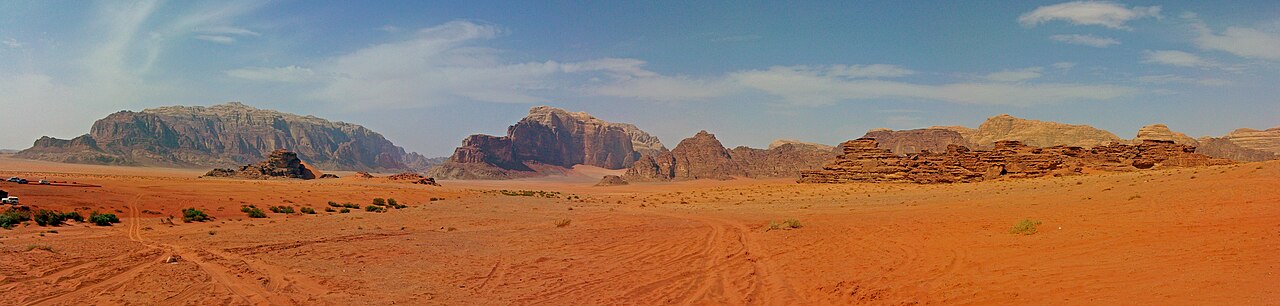
October, six in the evening: the jeep stops on the valley floor and the whole west wall of Jebel Rum catches fire in sections — first the summits, then the towers, then nothing but the long blue shadow and the first stars, while the sand still holds the day's warmth through your shoes.
The easily missed detail
The full moon is the desert's second calendar. Camps and astronomers both schedule around it: a new-moon October weekend gives the Milky Way at full strength over the massifs, while a full-moon night trades the stars for a landscape lit silver, when night walks need no torch. Pick your moon before you pick your dates within the month.
A practical rhythm
- Morning — The long jeep circuit: canyons, inscriptions and the big dune while the rock is still cool to the touch.
- Afternoon — Shade and tea in the camp, or the Barrah Canyon walk as the light turns.
- Evening — Sunset at the western viewpoints, zarb from the sand oven, and the sky after dinner.
What could complicate the plan
October is peak season and the good camps know it: the well-run small camps book out weeks ahead, and holiday weekends (Jordanian and regional) surge. Spring's rival claim is real — March and April bring wildflowers after wet winters and equally fine days, at the price of the khamsin risk. And desert cold is the perennial surprise: even in October, bring the fleece for the campfire hours; in January, bring the full winter kit or choose a camp with heated tents.
What to do next
Book an October new-moon weekend if the calendar allows, sleep two nights in the desert rather than one, and confirm the camp's jeep plan and menus before paying a deposit.
Sources
- Aqaba Special Economic Zone Authority (ASEZA) / Wadi Rum Protected Area — ASEZA has administered the protected area since 2003; entry JD 5 per person at the Visitor Centre, children under 12 free; all visitors register at the Visitor Centre; only 4WD vehicles permitted inside, private cars park at the centre or Rum Village; winter desert lows between 0°C and 16°C
- Jordan Pass (Ministry of Tourism and Antiquities) — JD 70/75/80 by Petra duration; Wadi Rum entry included; jeep tours, camps and activities not included
- IUCN World Heritage Outlook, Wadi Rum Protected Area — inscribed in 2011 under criteria (iii), (v) and (vii) over 74,000 hectares, with a conservation outlook of "Good with some concerns" finalized on 11 October 2025 and climate change listed among the site's potential threats