Wadi Rum / Jordan Food and drink
Where should I eat in Wadi Rum, and which local food or drink is worth trying?
The short answer
In the desert, at your camp: zarb — meat and vegetables slow-cooked for hours in a sand-buried oven and unearthed at sundown — is the dish Wadi Rum exists to serve, preceded by mansaf if your camp offers it, and followed by sage-sweetened Bedouin tea at the fire.
The answer, with local context
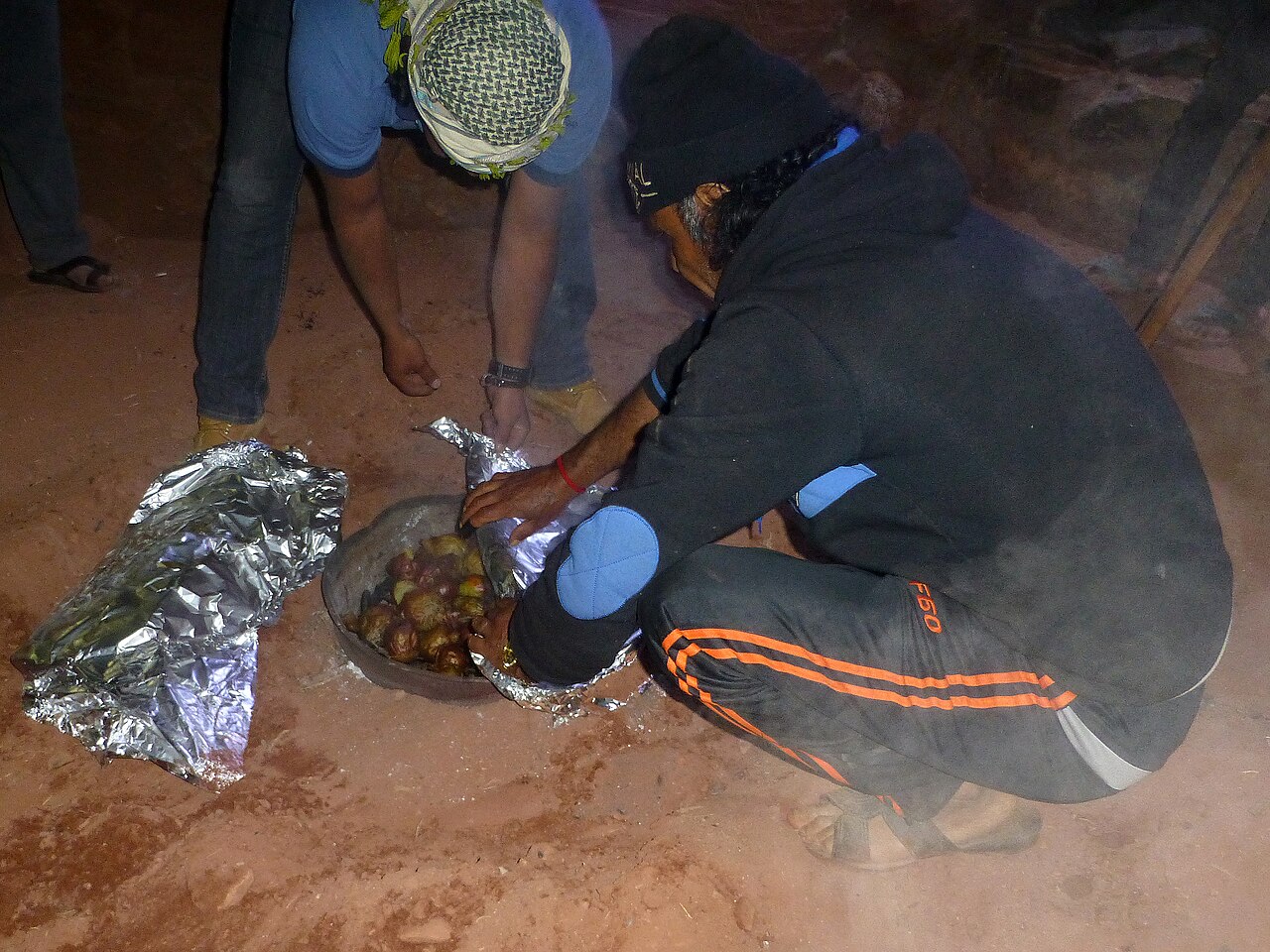
There are no restaurants in the Protected Area, and that is the answer's shape: you eat where you sleep, from the hands of the Bedouin family or company running your camp, and the set-piece is zarb. The method is ancient and theatrical — a metal rack stacked with marinated chicken or lamb and root vegetables is lowered into a pit of hot coals, sealed with sand and blankets, and left for two to three hours; at dinner the camp gathers while the host digs it up, and the meat arrives smoke-sweet and falling apart, served on great trays of rice with salads, hummus and flatbread from the saj griddle. Every camp serves its version as the centerpiece of the stay — the unearthing is timed to sunset — and it is the single meal most visitors to Jordan remember longest. Ask when booking whether zarb is the house dinner, because the camps that do it nightly are the ones to choose.
Around the zarb, the Jordanian table asserts itself. Mansaf — lamb simmered in jameed, a sauce of fermented dried yogurt, served over rice with pine nuts and parsley — is the national dish, inscribed by UNESCO in 2022 on its Intangible Cultural Heritage list ("Al-Mansaf in Jordan, a festive banquet"), and it appears at Rum camps on request, at Friday lunches and at the village's occasions; eat it the traditional way, standing, with the right hand, forming the rice into balls, if a host invites you to a real one. The village itself has a handful of simple restaurants and buffet houses near the rest house serving travelers' fare — galayah bandora (tomatoes stewed with meat and chili), magloubeh (the upside-down rice pot), lentil soup, grilled chicken — honest fuel rather than destinations, useful for a lunch before the jeep or after the bus. Breakfast at camp is the Levantine spread: eggs, hummus, labneh, olives, cheese, tomatoes, saj bread and jam, eaten early before the desert warms.
The drinks are a ceremony of their own. Bedouin tea — black tea boiled on the fire with sage or mint and a sweetness that startles on first contact — arrives at every stop: at the spring, at the dune, at the inscription wall, from a blackened kettle your driver produces like a conjurer, and refusing the first glass is the only impoliteness the desert recognizes. Arabic coffee, bitter with cardamom and poured in thimblefuls from the dallah, opens formal encounters. Water discipline matters more than either: the camps supply it, but the desert's arithmetic — a liter an hour in summer effort — is yours to respect, and there is no shop past the village.
Picture the place
The zarb pit at sundown: the host rakes the sand back, lifts the lid, and a column of steam and woodsmoke stands up in the still air; the rack comes out tier by tier — potatoes blackened at the edges, chicken glazed dark gold — while the whole camp holds its plates and its applause.
The easily missed detail
Sweet tea is information. In Bedouin custom the pourer keeps filling your small glass until you cover it with your palm or give it the slight shake that signals enough — an unshaken glass is a standing order. Learn the shake in the first hour and you will be treated as a person of manners for the rest of the trip.
A practical rhythm
- Midday — A simple village lunch (galayah, soup, bread) before the afternoon tour, or the packed camp lunch carried into a canyon shade.
- Sundown — The zarb unearthing, on time and unhurried; this is the dinner hour and the show is the cooking.
- Night — Tea at the fire in rounds, coffee if the host's family is visiting, and a glass of water for every glass of either before sleep.
What could complicate the plan
Camp food is a closed system: menus are fixed by the booking, special diets (vegetarian zarbs are gladly made, with the vegetables taking the rack) must be arranged in advance, and there is no shop to rescue a forgotten requirement. Quality varies enormously between camps — the zarb question at booking is the best single filter. Alcohol is not sold in the Protected Area and most camps neither stock nor welcome it; respect the house rule absolutely. And cash rules everything: no reliable ATM past the Visitor Centre, and card machines are rare in the sand.
What to do next
Choose the camp by its kitchen (zarb nightly, mansaf by arrangement), tell them your dietary lines when you book, and bring small dinar notes for tea-money tips and village bread.
Sources
- Bedouin zarb tradition, Wadi Rum — meat and vegetables slow-cooked two to three hours in a sand-sealed pit oven, unearthed at sundown as the camp dinner; saj-griddled flatbread
- UNESCO Intangible Cultural Heritage (2022) — Al-Mansaf in Jordan, a festive banquet and its social meanings; mansaf of lamb in jameed (fermented dried yogurt) sauce over rice as the national dish
- Wadi Rum visitor practice (ASEZA / Visitor Centre) — no restaurants inside the Protected Area; camps provide all meals, village eateries serve at Rum Village; no reliable ATM beyond the Visitor Centre; Bedouin tea (sage or mint, sweetened) served at tour stops