Xi'an / China Things to do
What are the most worthwhile things to do in Xi'an on a first visit?
The short answer
The Terracotta Army at opening, a bicycle circuit of the complete Ming city wall, the Shaanxi History Museum's Tang treasures, the Big Wild Goose Pagoda of Xuanzang's translations, the Great Mosque and lanes of the Muslim Quarter, and Mount Huashan by high-speed train if a day remains.
The answer, with local context
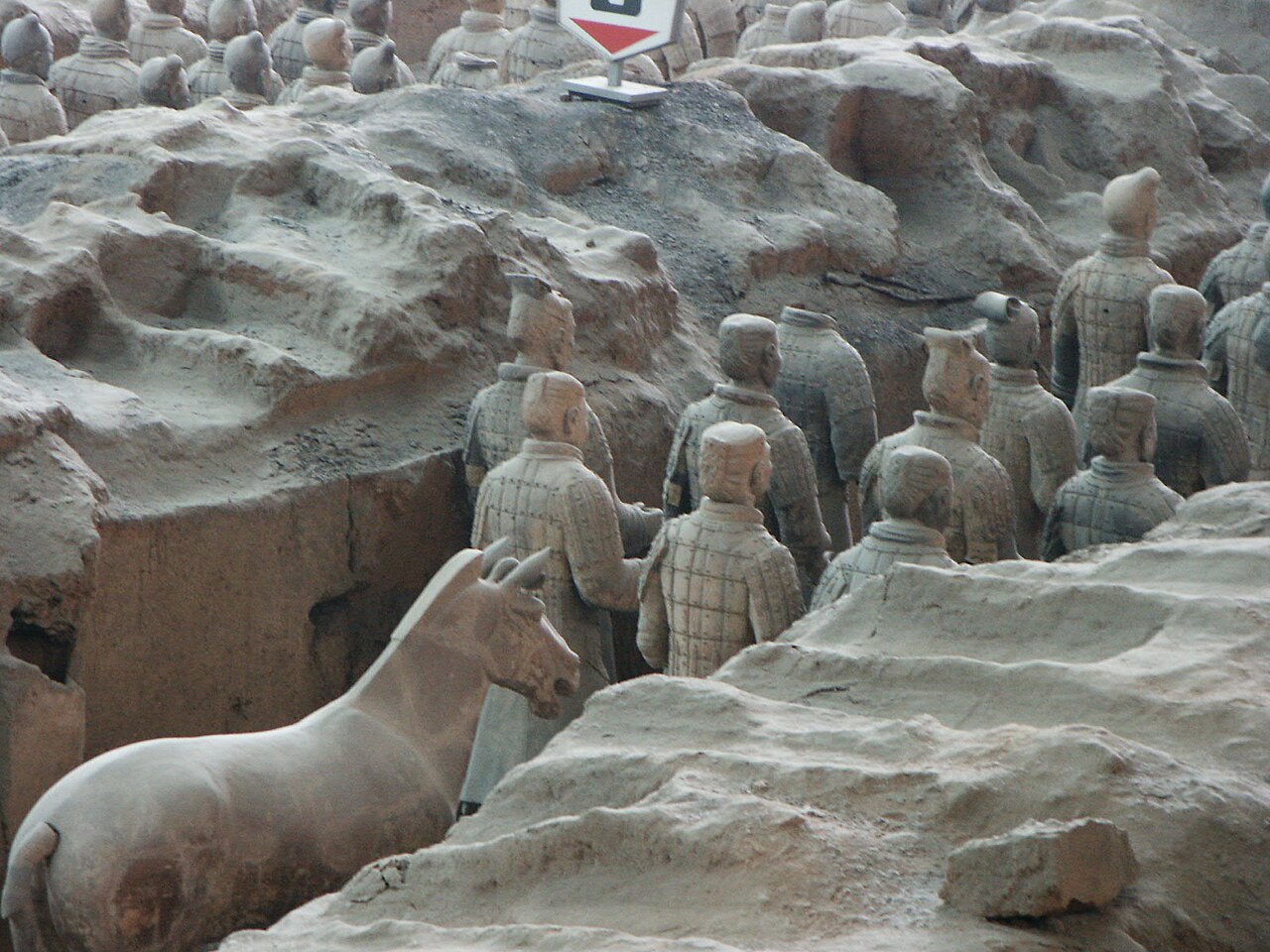
The warriors get the first morning, and they reward the early start more than any sight in China. The mausoleum of Qin Shi Huang — first emperor of a unified China (221 BCE) — lies 25 miles (40 km) east in Lintong; on March 29, 1974, farmers digging a well, Yang Zhifa and his companions, broke into Pit 1, and the excavation has run ever since. UNESCO inscribed the mausoleum in 1987. The arithmetic still staggers: an estimated 8,000 life-size soldiers in the full host (some 2,000 excavated and reassembled), each averaging about 5 feet 11 inches (180 cm), each with individual features, hairstyles and rank — and each originally painted, a fact the fragments of pigment on protected figures keep insisting on. Walk Pit 1's hangar (1,500 feet, 225 m long), then the bronze chariots in their own hall, and leave the emperor's own tomb mound — unexcavated, its mercury rivers attested both by Sima Qian's history and by modern soil surveys — as the visit's deliberate mystery. Admission is ¥120, and the park runs 8:30 a.m.–6:30 p.m. in season; be at the gate at opening and the first hour is nearly private.
Back in the city, the wall is the second monument and the better afternoon. Xi'an's Ming wall (built 1370–1378 on the Tang palace-city foundations) is China's most complete city wall: a rectangle 8.6 miles (13.7 km) around, 39 feet (12 m) high, wide enough on top for the bicycles rented at the gates — the full circuit takes about 90 minutes at an easy pace and delivers the old city as a map: Bell Tower (1384) at the exact center, Drum Tower (1380) at the Muslim Quarter's edge. Then the museum that explains everything: the Shaanxi History Museum (opened 1991), free by ID-based reservation, holding more than 370,000 objects with the Tang dynasty as its glory — the Hejiacun hoard's gold and silver, sancai tomb figures, and mural paintings cut from imperial tombs.
The living city fills the rest. The Big Wild Goose Pagoda (652 CE) was built for the monk Xuanzang to house the scriptures he carried back from India on the journey that became Journey to the West; its seven stories rise 213 feet (64.5 m), and the square below runs Asia's grandest musical fountain shows at night. The Small Wild Goose Pagoda (707–709) stands in the quieter Jianfu Temple grounds. And the Muslim Quarter — the Hui neighborhood behind the Drum Tower — holds the Great Mosque of Huajue Lane: founded, by its own tradition, in 742 CE, its surviving Ming-and-Qing buildings arranged as Chinese gardens and pavilions, minaret as pagoda, one of the most beautiful religious buildings in China, still in daily use. Its lanes double as the city's food court (the next answer's subject). With a spare day, Huashan is the expedition: five peaks, the South Peak at 7,070 feet (2,155 m) the highest of China's Five Great Mountains' western march, cable cars up and the famous plank walk in the sky for the steady-nerved — 30 minutes away by high-speed train to Huashan North.
Picture the place
Pit 1 at the opening bell: the hangar's arched roof holds a gray, even light, and the ranks stand in their excavated trenches in absolute silence — eleven corridors of soldiers facing east, their generals' hands empty where wooden weapons rotted two thousand years ago, waiting out the centuries between orders.
The easily missed detail
The warriors were a building project, not a portrait sitting: archaeologists read the production in the figures — workshop stamps on hidden surfaces, modular heads and torsos assembled from a kit of parts, each then individualized by hand. And the site's workshops, visible in the museum's conservation halls, are still reassembling shattered soldiers from the same pits: the army is being built twice, 2,200 years apart.
A practical rhythm
- Day one — The warriors at opening, the Lintong pomegranate stalls on the way home, the wall at golden hour, Muslim Quarter at night.
- Day two — Shaanxi History Museum at opening (reserve the day before), Great Mosque and the Quarter's lanes at midday, Big Wild Goose Pagoda and fountains after dark.
- Day three — Huashan by the earliest train, or the Small Wild Goose Pagoda and a slow old-city day inside the wall.
What could complicate the plan
The warriors' crowds are a logistics problem with a known solution — opening time, weekday, off-season — and no other. The History Museum's free tickets are reservation-gated and vanish on weekends; the fallback is its paid Treasure Gallery ticket. Huashan's cable cars queue for hours on holidays and its plank walk closes in wind and rain; it is a fair-weather, early-train commitment. The Great Mosque is a working mosque: modest dress, no entry to the prayer hall for non-worshippers, and Friday midday is for the congregation.
What to do next
Stay inside the wall near the South Gate or Bell Tower, reserve the museum the moment dates fix, and treat the warriors + wall + mosque triangle as the non-negotiable core.
Sources
- UNESCO World Heritage List (1987) — Mausoleum of the First Qin Emperor: the Terracotta Army discovered March 29, 1974, by well-digging farmers; an estimated 8,000 figures (about 2,000 excavated), averaging about 180 cm; the emperor's tomb mound unexcavated, its mercury attested in soil surveys
- Emperor Qinshihuang's Mausoleum Site Museum — admission ¥120; seasonal hours 8:30 a.m.–6:30 p.m.; the bronze chariots hall
- Xi'an City Wall — the Ming wall of 1370–1378, 13.7 km (8.6 mi) in circuit and 12 m (39 ft) high, bicycle rental on top; the Bell Tower (1384) and Drum Tower (1380)
- Shaanxi History Museum — opened 1991, more than 370,000 objects, free entry by reservation; the Big Wild Goose Pagoda built 652 CE for Xuanzang, 64.5 m (213 ft); the Great Mosque of Huajue Lane, tradition dating it to 742 CE; Mount Huashan's South Peak at 2,155 m (7,070 ft)