Xi'an / China When to visit
When should I visit Xi'an, China, for the best experience?
The short answer
Mid-October, the fortnight after the Golden Week crowds leave — the China Meteorological Administration's normals put the city's October high at 67°F (19.5°C) with the summer rains ended, the city wall is made for cycling again, and the persimmons and pomegranates of Lintong are ripe.
The answer, with local context
Xi'an sits on the Loess Plateau at the edge of the monsoon, and its year is a study in avoiding extremes. Summer is hot and wet together: July's mean high reaches 90°F (32°C), the rain concentrates in July through September, and the Terracotta Army's hangars fill to their densest. Winter is the opposite trap — January's high is 41°F (5°C), lows below freezing, and the north-China heating season historically hangs coal-haze over the city for days at a time. Spring is the popular second choice (April's highs near 70°F, 21°C, the peonies out in Luoyang an hour east), but it imports two liabilities: dust blown off the plateau on March–April winds, and air quality that swings with it.
Autumn clears the board in sequence. September is still warm (77°F, 25°C) and can be wet; by mid-October the rains have collapsed, the mean high settles at 67°F (19.5°C) with crisp lows near 50°F (10°C), the sky over the Qinling mountains south of the city turns its famous washed blue, and the ginkgoes around the Big Wild Goose Pagoda go gold. The one obstacle is man-made: Golden Week, the October 1–7 National Day holiday, is China's peak domestic travel period, and Xi'an — as a first-rank patriotic and historical destination — absorbs it fully. The Terracotta Warriors in that week are a crowd-management exercise. Wait it out: by October 8–10 the city empties, prices fall back, and the fortnight that follows is the finest of the year.
Mid-October pays in the countryside too. The day trip to the warriors runs through Lintong, where the pomegranate harvest (Lintong's火晶 persimmons and pomegranates are local celebrities) fills the roadside stalls, and Mount Huashan — the precipitous sacred peak 75 miles (120 km) east, 30 minutes by high-speed train — wears its autumn color for the cable cars and plank paths. The city's own calendar thickens: evening fountain shows at the Big Wild Goose Pagoda square, the wall lit, the Muslim Quarter at full steam in cool air made for hot soup.
Picture the place
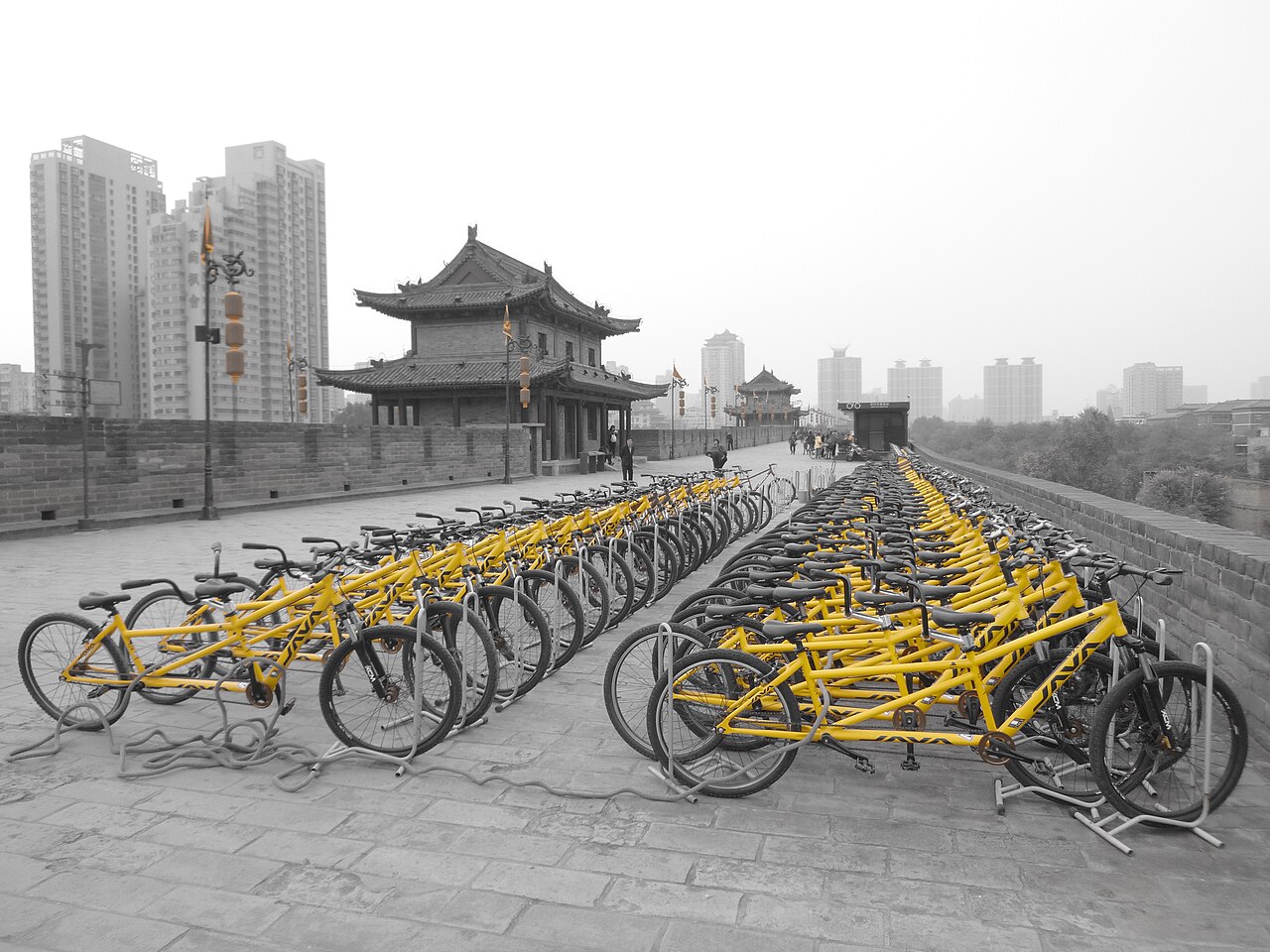
A weekday morning on the city wall in mid-October: a nearly empty 8.6-mile circuit of gray brick running to both horizons, ginkgo gold in the moat park below, and the Qinling range standing blue and crisp at the city's southern edge — a view winter will not grant again until April.
The easily missed detail
Xi'an's spring dust is not a metaphor: the same loess that built the plateau (and lines the First Emperor's burial pits) rides the March winds into the air, and a bad day can yellow the sky. October's rains have washed the year's dust out — another quiet reason the post-holiday fortnight outranks the spring peonies.
A practical rhythm
- Morning — The warriors first, on a weekday, at the 8:30 opening (the site's peak-season hours run 8:30 a.m.–6:30 p.m.).
- Afternoon — The Shaanxi History Museum (free, by reservation) or the wall, as the light goes golden.
- Evening — The Muslim Quarter for paomo and skewers, then the pagoda square's fountains in the cool night air.
What could complicate the plan
Golden Week is absolute: if the trip must touch October 1–7, book everything months ahead, expect the warriors at capacity, and put Huashan on a weekday. Autumn air is better than winter's, not guaranteed — the heating season begins in mid-November and the haze can arrive early in a still year, which is one more argument for October over November. And mid-October is also China's meeting-and-tour season in a business capital; the best-located hotels inside the wall book their weekends.
What to do next
Target October 10–25, arrive on a Sunday or Monday for the quietest warriors, and put Huashan midweek and the wall on the clearest morning of the stay.
Sources
- China Meteorological Administration normals, Xi'an — October mean high about 19.5°C (67°F), low about 10°C (50°F); July mean high about 32°C (90°F) with the rainfall concentrated July–September; January mean high about 5°C (41°F); April highs near 21°C (70°F), with spring dust episodes off the Loess Plateau
- Emperor Qinshihuang's Mausoleum Site Museum — peak-season (mid-March to mid-November) opening 8:30 a.m., closing 6:30 p.m.; admission ¥120
- China public-holiday calendar — the National Day Golden Week, October 1–7, the peak domestic travel period