Yogyakarta / Indonesia Food and drink
Where should I eat in Yogyakarta, and which local food or drink is worth trying?
The short answer
Gudeg — jackfruit slow-cooked in coconut milk and palm sugar — on Wijilan street, kopi joss (coffee with a live charcoal dropped in) at an angkringan cart by the station, sate klathak grilled on bicycle spokes in Bantul, and bakpia pastries warm from Pathok street: Yogyakarta is Java's sweetest kitchen, and its dining room is the street.
The answer, with local context
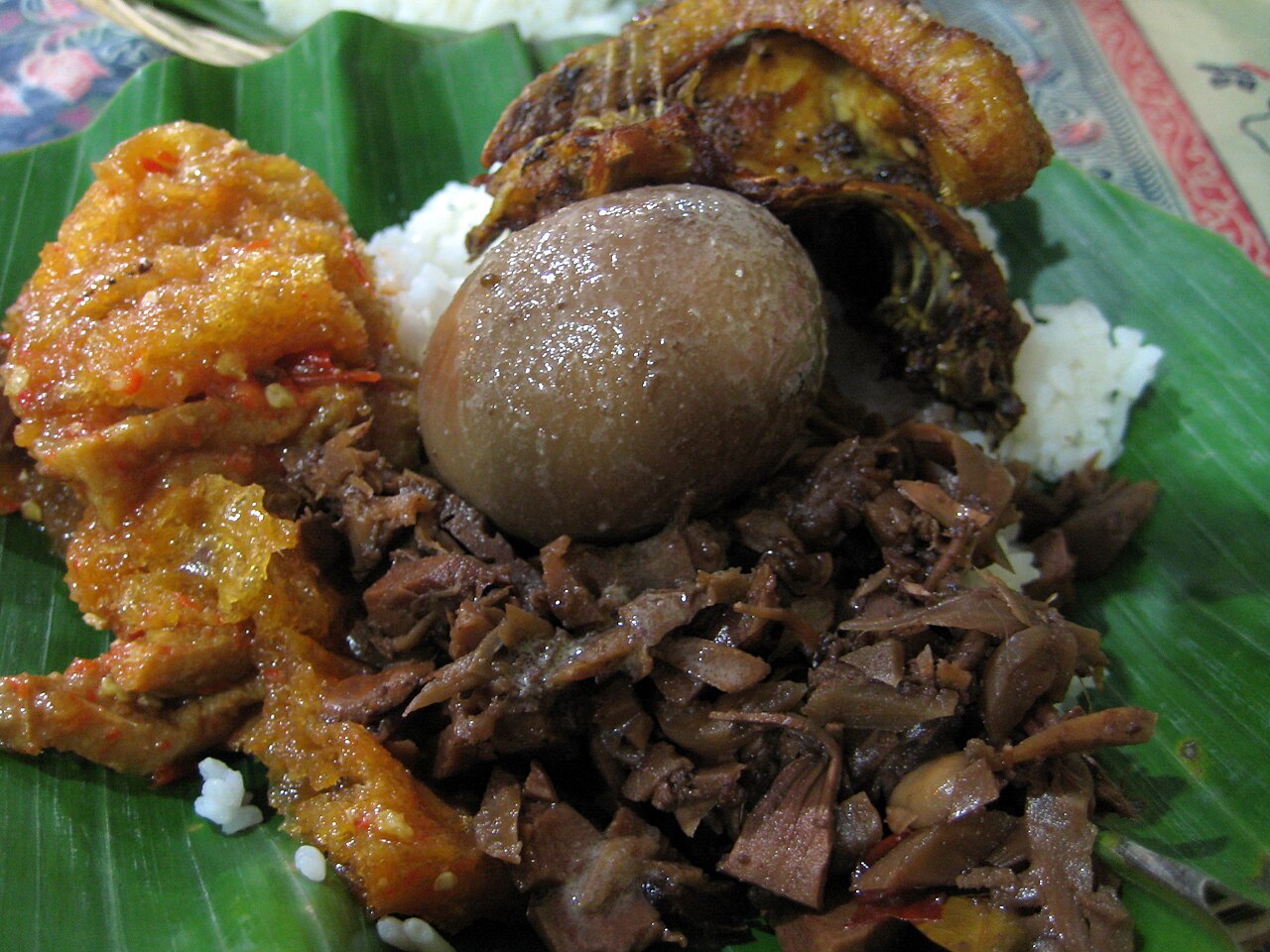
Gudeg is the city's dish in the way law is the city's other export: young jackfruit simmered for hours in coconut milk, teak leaf and palm sugar until it turns mahogany and sweet, served over rice with krecek (buffalo skin in a fiery sambal), a palm-sugar egg, opor chicken and areh coconut cream. The capital of gudeg is Wijilan, the lane just east of the Kraton, where Gudeg Yu Djum — trading since the 1950s — anchors a row of rivals; connoisseurs distinguish the dry style (gudeg kering, richer and longer-keeping, the boxed souvenir version) from the wet, and chase gudeg pawon, cooked and served straight from a family's kitchen hearth, sold at night until it runs out. It is, deliberately, the sweetest main course in Indonesia — Yogyakarta's court palate runs to sugar where East Java runs to chili — and one plate teaches the city's character faster than any museum.
The city's social institution, though, is the angkringan: a pushcart under a tarpaulin, lit by a pressure lamp, serving nasi kucing — "cat rice," a banana-leaf fistful of rice with a sliver of sambal and anchovy — plus gorengan fritters, skewers of quail egg, intestine and chicken head, and ginger tea, at prices that still run to a few thousand rupiah an item. You sit on the mats, you eat with your hands, you talk to strangers: the angkringan is Yogyakarta's pub, parliament and front porch. Its famous drink is kopi joss, born at Angkringan Lik Man by the station (trading since the 1960s): a glass of strong black coffee into which the vendor drops a glowing lump of charcoal — it hisses, it settles, you drink around it — now a registered piece of the city's culinary heritage and the essential late-night order. Wedang ronde (ginger broth with glutinous balls) is the gentler warm-up from the same carts.
For the expedition meal, ride south to Bantul for sate klathak: goat meat on skewers made from bicycle-wheel spokes (the iron conducts heat into the meat's center), seasoned with salt alone and grilled over charcoal, served with a thin curry broth — Sate Klathak Pak Pong is the storied original. In Kaliurang on Merapi's slope the classic pairing is jadah tempe — glutinous rice cake with sweet bacem tempeh, sold by Mbah Carik's successors since the Dutch era made the hill station fashionable. Take home bakpia: the Pathok quarter's flaky mung-bean (and now cheese, chocolate, durian) pastries, the famous houses numbering their brands — Bakpia Pathok 25 is the benchmark — best eaten still warm; add yangko (the local mochi) and geplak, Bantul's grated-coconut sugar balls. Market mornings at Beringharjo and the lesehan mat-restaurants of Malioboro after dark (order the ayam goreng and pecel, eat cross-legged) complete the circuit — and if a local steers you to Mangut Lele Mbah Marto, the legendary smoked-catfish kitchen near the arts institute, or to Soto Kadipiro (on the Wates road since 1928), follow without argument.
Picture the place
Midnight at Lik Man: the charcoal goes in with a hiss and a bloom of sparks, the vendor is already pouring the next glass, students and becak drivers share the mat in complete democratic silence, and your nasi kucing — three mouthfuls, perfect — waits in its banana leaf to be opened.
The easily missed detail
Gudeg's sweetness is geography: the court kitchens of the Kraton codified a sweet palate, teak leaves from the surrounding forests give the dish its color, and the coconut-and-palm-sugar base is the lowland Javanese larder itself. The dry gudeg in its kendil clay pot, wrapped for travel, keeps for days — it is the rare Indonesian dish engineered, accidentally, as a souvenir.
A practical rhythm
- Breakfast — Gudeg at Wijilan at seven, when the krecek is fresh — or the pawon queue if the night before ran late.
- Midday — Market grazing at Beringharjo (brongkos, lotek, pecel) and bakpia warm on Pathok street.
- Night — Sate klathak in Bantul or a Malioboro lesehan, then the angkringan for kopi joss and the city's conversation.
What could complicate the plan
The sweet palate is total war on some visitors: ask for extra sambal, balance gudeg days with the savory expeditions (klathak, mangut lele, soto), and know that "pedas" (spicy) is a request honored gladly everywhere. Angkringan economics are cash-and-coins; the famous carts queue deep after nine, and gudeg pawon sells out by ten most nights. Street-stall hygiene follows the universal rule — the busiest cart is the safest bet — and the charcoal in the kopi joss is showmanship with a long safety record, though the cautious can simply order the wedang.
What to do next
Stay close enough to Malioboro to walk home from the angkringan, eat gudeg twice (Wijilan and one pawon), and let a local driver pick the klathak night — Bantul is a ride, not a walk.
Sources
- Yogyakarta food institutions — Gudeg Yu Djum on Wijilan (since the 1950s) and the gudeg pawon kitchen-served houses; Angkringan Lik Man by Tugu station (since the 1960s), originator of kopi joss; Soto Kadipiro (since 1928)
- Javanese court and street traditions — gudeg of young jackfruit in coconut milk and palm sugar with krecek; nasi kucing and the angkringan cart culture; sate klathak of Bantul grilled on bicycle-spoke skewers (Pak Pong); jadah tempe of Kaliurang; bakpia of the Pathok quarter (Bakpia Pathok 25)
- UNESCO Intangible Cultural Heritage (2009) — Indonesian batik (context for the city's craft-and-court food culture centered on the Kraton)