Yucatan Peninsula / Mexico When to visit
When should I visit Yucatan Peninsula, Mexico, for the best experience?
The short answer
February into mid-March, across the whole peninsula — the driest weeks of the year, when inland Mérida is still walkable, the Caribbean is calm, and both the equinox crowds and the furnace of May are still ahead.
The answer, with local context
The peninsula has three seasons wearing two names, and they do not strike its two coasts equally. The dry season runs from late November to April; the rains build from May or June into October, mostly as hard afternoon downpours; and inside that wet season sits the Atlantic hurricane season, which NOAA fixes from June 1 to November 30, with the peninsula's highest storm risk from August through October. February is the hinge: driest air of the year, high temperatures around 82°F (28°C) at Cancún on the Caribbean side and about 88°F (31°C) in Mérida inland, and sea still warm from the tropics' long memory.
Geography explains the spread. Mérida, 22 miles from the Gulf and ringed by limestone, has no sea breeze to save it: its heat builds through the dry season until May, when average highs reach about 97°F (36°C) and afternoons can pass 104°F (40°C) — the peninsula's worst month, dry like February but brutal at the ruins. The Caribbean coast, cooled by the trade winds, stays in the upper 80s°F (around 31°C) through the same weeks. Winter has its own punctuation: the nortes, cold fronts that sweep down the Gulf between November and February, bring a day or two of wind, cloud and rough water on the northern coast in exchange for the season's coolest, clearest mornings.
The calendar adds three dated temptations. Around March 20–21 the equinox draws the year's largest crowd to Chichén Itzá for the serpent of light on El Castillo. From October 31 to November 2, Yucatán keeps Hanal Pixán, its own Day of the Dead, when families bake mucbipollo — a great chicken tamale — in earth ovens for the returning souls. And the summer everyone warns you about carries the peninsula's great wildlife season: the regulated whale shark season off Isla Holbox and Isla Mujeres runs from May 15 to September 17, peaking in July and August.
Picture the place
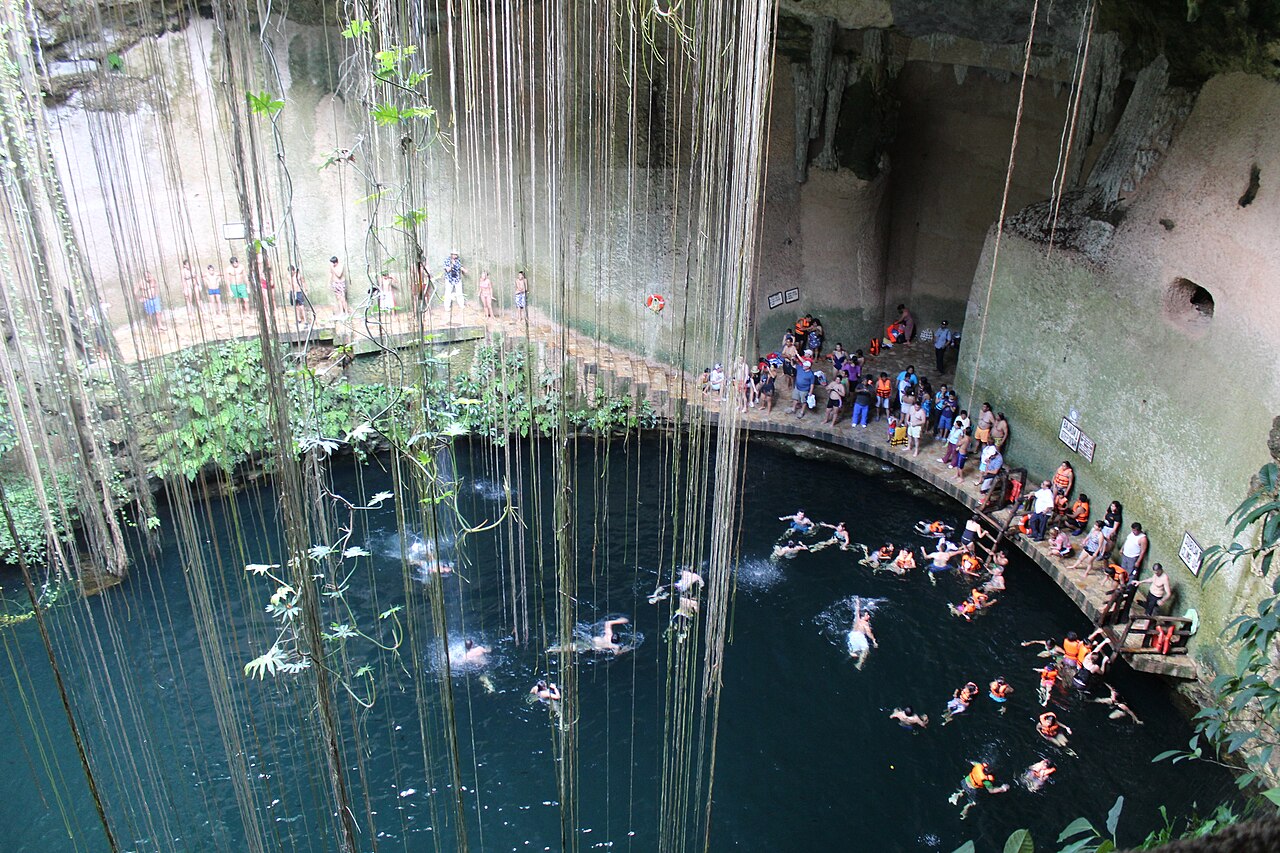
At a cenote near Valladolid on a February midday, the light falls in a single shaft through the opening in the limestone roof into water so clear the swimmers seem suspended in air, vines trailing down the rock walls to touch the surface.
The easily missed detail
"The Yucatán Peninsula" is two different weather bets in one trip. In the warmer months the Caribbean-facing beaches — Cancún, Playa del Carmen, Tulum — contend with sargassum seaweed arriving on the current, while the Gulf coast at Progreso and Celestún, on the same peninsula and the same week, does not receive it at all. Choosing a coast is choosing a climate.
A practical rhythm
- Morning — Ruins first, always: Chichén Itzá and Uxmal open at 8 a.m., and the stone is shadeless by eleven in any month.
- Midday — Swim a cenote at noon, when its water — cool all year — is the peninsula's natural air conditioning against the day's peak heat.
- Evening — Mérida's plazas after dark, when the inland heat breaks and the city's food stalls and marquesita carts come out.
What could complicate the plan
September and October stack every risk at once: the peak of hurricane season, the tail of the sargassum months on the Caribbean side and the heaviest rain. At the other end of the year, a strong norte can close Gulf ports to small boats and cancel Celestún's flamingo trips for a day or two — a winter itinerary needs a spare morning for the coast.
What to do next
Fix the coast before the month if beaches lead the trip, and the month before the ruins if archaeology leads it. The things-to-do question in this group orders the sites themselves.
Sources
- NOAA — Atlantic hurricane season dates, June 1 to November 30, and the late-summer peak in storm risk
- Servicio Meteorológico Nacional (CONAGUA) — the peninsula's dry season from November to April and the inland heat maximum in May, as reflected in Mérida's climate normals
- CONANP — the regulated whale shark season off Isla Holbox and Isla Mujeres, May 15 to September 17
- Yucatán state tourism — Hanal Pixán observances, October 31 to November 2