Yucatan Peninsula / Mexico Food and drink
Where should I eat in Yucatan Peninsula, and which local food or drink is worth trying?
The short answer
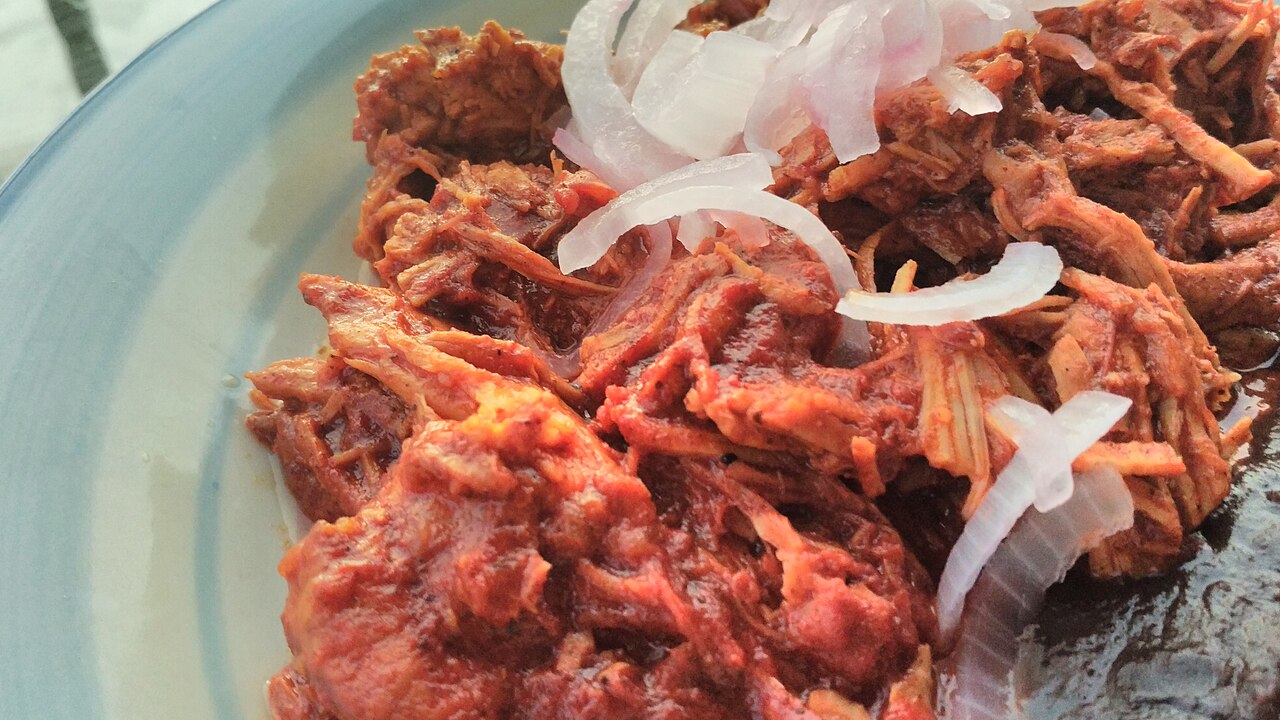
Cochinita pibil on a Sunday morning in Mérida — at the stalls of the Mercado Lucas de Gálvez — the pork dish cooked in an earth oven that Yucatán's own tourism authority puts first in its gastronomy, ordered as tacos or a torta with pickled red onion and habanero on the side.
The answer, with local context
Yucatecan cooking is a Maya cuisine that absorbed Spain, Lebanon and the Netherlands without dissolving. Its grammar is achiote, the red annatto paste; sour orange, the Seville orange that marinates everything; habanero, served at the side rather than cooked in; and the pib, the earth oven. Cochinita pibil is the grammar spoken whole: pork shoulder marinated overnight in achiote and sour orange, wrapped in banana leaves and slow-cooked in the pib for six to eight hours until it shreds. The name is the recipe — cochinita, little pig; pibil, from the pib. In Mérida it keeps a weekly appointment: on Sunday mornings from about 7 a.m., market stalls across the city serve it as the week's ceremonial breakfast, and the respected vendors sell out by noon. Lechón al horno, suckling pig roasted in wood ovens with a plainer seasoning of salt, garlic and sour orange, shares the same morning.
The week's calendar continues. Mondays are for frijol con puerco, pork with black beans — restaurants promote "lunes de frijol" as a standing date. Sopa de lima, a turkey or chicken broth perfumed with the lima agria, a local citrus between a lime and a bitter orange, and finished with fried tortilla strips, is the cuisine's reset button. Relleno negro takes the opposite direction: turkey stewed jet-black in recado negro, a paste of chiles charred deliberately to ash-dark. Papadzules — tortillas rolled around hard-boiled egg under a pumpkin-seed sauce — reach back to the pre-Hispanic table.
The Dutch chapter is the surprise. In the early 1900s, ships serving Yucatán's henequén trade brought Edam cheese in its red wax balls; Yucatecans hollowed the balls out and filled them with picadillo — ground meat with olives, raisins and capers — to create queso relleno, served under a tomato sauce and a white k'ool sauce, with the cheese itself, queso de bola, shredded into the marquesitas, the crisp rolled wafers that Mérida's evening carts sell as the city's street dessert. In Motul, 29 miles (46 km) east of Mérida, huevos motuleños stack a tortilla with black beans, fried egg, tomato sauce, ham, peas and fried plantain into the peninsula's signature breakfast. On the coast the same achiote turns whole fish into tikin xic, and for Hanal Pixán, at the turn of November, families bake mucbipollo, a chicken tamale a foot across, in the pib — the earth oven closing the year as it opens every Sunday.
Picture the place
At a Sunday stall in the Lucas de Gálvez market the cochinita sits in great rectangular tins under glass covers filmed with steam and fat, the vendor's hands pulling the pork apart to order, red onions pickled a violent pink in the bowl beside it and a stack of tortas rolls waiting their turn.
The easily missed detail
The most Yucatecan ingredient in the market is a Dutch cheese. Queso de bola — Edam — arrived as ships' cargo in the henequén boom, never left, and is now so local that a Yucatecan kitchen without a red wax ball in the pantry is under-equipped; both the grandest dish on this page, queso relleno, and the humblest, the marquesita, are built on it.
A practical rhythm
- Morning — Cochinita or lechón at a Mérida market stall on Sunday before nine; huevos motuleños on any other morning, in Motul if the route allows.
- Midday — A fonda lunch of sopa de lima followed by poc chuc or relleno negro — the cooked dishes are a midday tradition, not a dinner one.
- Evening — Panuchos and salbutes at a cenaduría, then a marquesita from a cart in the plaza for the walk back.
What could complicate the plan
The canonical dishes run on a timetable a visitor can miss entirely: cochinita is a Sunday-morning food that sells out by noon, mucbipollo exists for a few days around November 1, and much of the peninsula's traditional cooking is served at lunch, with many fondas and market stalls closed by early evening. Habanero is the other standing warning — it is served as a salsa at the side in quantities that assume experience.
What to do next
Eat the week in order if you can: arrive for a Sunday, stay for a Monday. The timing question in this group explains which months make Mérida's market mornings pleasant rather than punishing.
Sources
- Government of Yucatán (state tourism and gastronomy) — the Yucatecan dish canon: cochinita pibil, sopa de lima, panuchos, salbutes, papadzules, relleno negro, poc chuc and queso relleno
- Yucatán Today — the Sunday cochinita tradition, market stalls across Yucatán and Hanal Pixán's mucbipollo baked in the pib
- Mérida city markets (Mercado Lucas de Gálvez) — Sunday-morning cochinita and lechón service and the Monday frijol con puerco tradition