Afghanistan country guide Food and drink
What local dishes should I try in Afghanistan, and where should I look for them?
The short answer
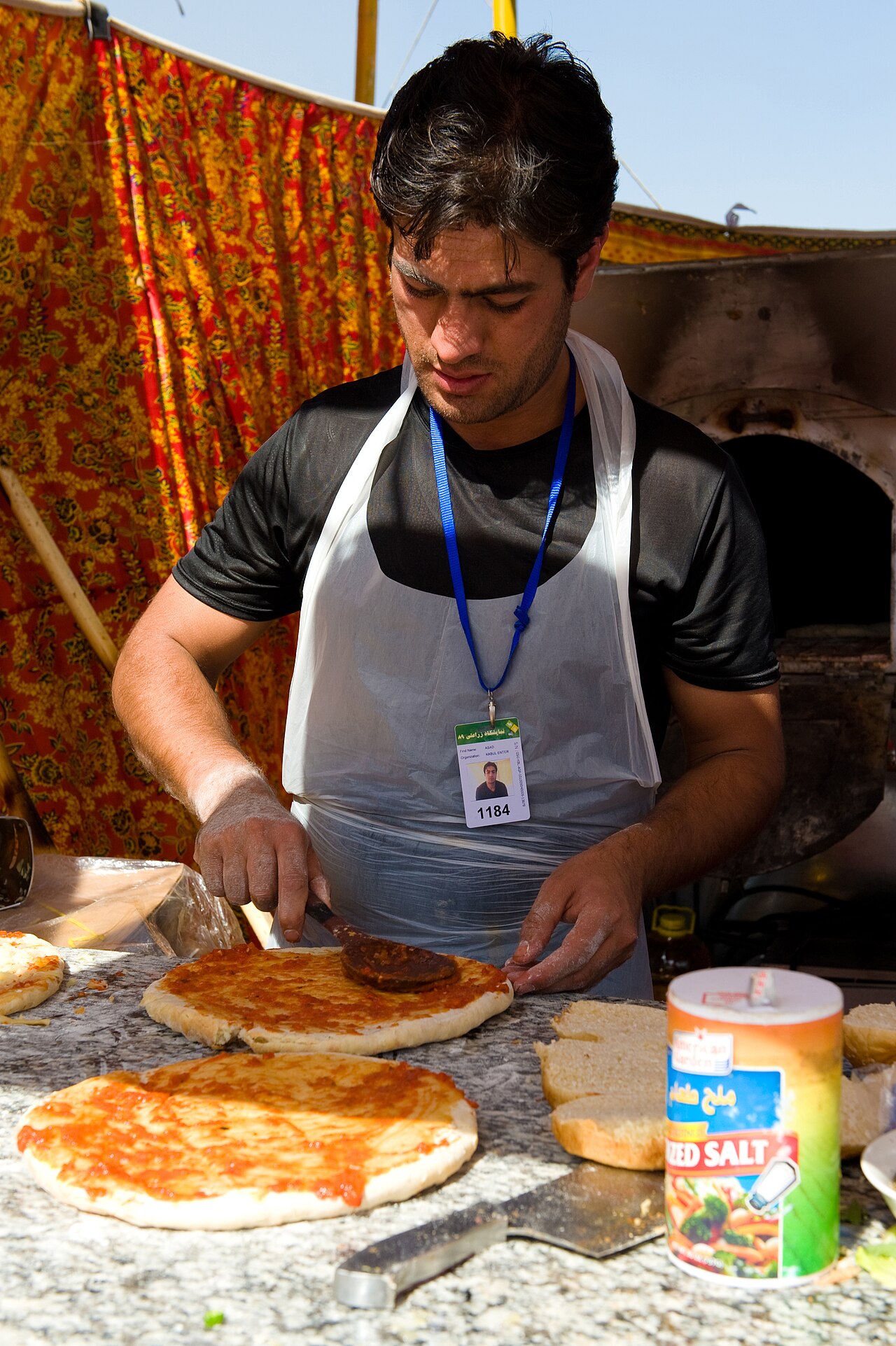
Wheat flour is the main staple, and the Afghan table is built on it — FAO forecast cereal imports of 4.6 million tonnes for the 2026/27 marketing year, about 7% above average, most of it wheat flour.
The answer, with local context
The grain year has two halves. FAO's country brief, with a reference date of 15 September 2026, records winter wheat as roughly 80% of Afghan output, mostly irrigated and harvested by June 2026, and spring wheat as about 20%, with its harvest completing in September. Production for 2025/26 was forecast above average, though some rainfed areas in the north and south came in below. Most imported flour arrives from Kazakhstan, Uzbekistan, the Russian Federation and Turkmenistan, so the bread in an Afghan market may be milled from Central Asian wheat as readily as Afghan.
Price context matters for anyone reading older accounts of cheap Afghan food. Retail prices were stable from January to August 2026 but ran about 10% to 20% higher year on year in several markets. Cereal import demand was rising partly because of population growth and returnees from Pakistan and Iran.
The festival food, by contrast, has a formal designation. UNESCO inscribed Nawrouz on the Representative List of the Intangible Cultural Heritage of Humanity in 2016, at the Committee's 11th session in Addis Ababa under decision 11.COM 10.B.1 — an inscription submitted by 12 states including Afghanistan, and one that replaced an earlier 2009 listing. The citation describes families gathering around a decorated table to share a special meal, with the objects on it symbolizing purity, brightness, livelihood and wealth.
Picture the place
Nawrouz marks the New Year beginning on 21 March across the submitting regions and runs for about 2 weeks. UNESCO's citation records gifts exchanged, especially for children and often made by artisans, visits to relatives and particularly to elders, street music and dance, public rituals involving water and fire, traditional sports and handicraft-making — the meal sitting inside a fortnight of practice rather than standing alone.
The easily missed detail
Nawrouz's listing is shared with 11 other states — Azerbaijan, India, Iran, Iraq, Kazakhstan, Kyrgyzstan, Pakistan, Tajikistan, Turkey, Turkmenistan and Uzbekistan — which is why its food is recognizably related across a vast region rather than uniquely Afghan. UNESCO also records that the practices pass from older to younger generations through observation and participation, not instruction, which is the reason the table varies household to household even inside one country.
A practical rhythm
- Daily — Wheat flour as the staple, drawn from a supply that mixes Afghan winter wheat with Central Asian imports.
- Harvest — Winter wheat in by June, spring wheat finishing in September.
- Late March — Nawrouz, from 21 March, across about 2 weeks of shared meals and public ritual.
What could complicate the plan
Food in Afghanistan is a humanitarian subject before it is a culinary one. FAO projected about 13.8 million people — roughly 28% of the population analyzed — in IPC Phase 3 or worse, including about 2.9 million in Phase 4, Emergency, an improvement on 17.4 million in the preceding period. Beyond that, the State Department's Level 4 advisory, reissued on 20 February 2026, instructs US citizens not to travel to Afghanistan for any reason, lists limited medical care among its grounds, and notes that the US Embassy in Kabul suspended operations on 31 August 2021, leaving no routine or emergency consular services.
What to do next
The Afghanistan places-and-experiences answer covers the Minaret of Jam and Band-i-Amir, and the trip-planning answer explains why the advisory overrides everything else.
Sources
- FAO GIEWS, Afghanistan country brief — reference date, winter and spring wheat shares and harvest timing, production outlook, cereal import forecast and drivers, flour origin countries, retail price trend, IPC food-insecurity figures
- UNESCO Intangible Cultural Heritage, Nawrouz decision 11.COM 10.B.1 — inscription year and session, element number, the 12 submitting states, replacement of the 2009 listing, 21 March start and 2-week duration, the shared table and its symbolism, gifts, rituals and transmission
- US Department of State, Afghanistan travel advisory — Level 4 designation and date, medical care note, embassy suspension