Afghanistan country guide Places and experiences
What should a first-time traveler see in Afghanistan beyond the obvious highlights?
The short answer
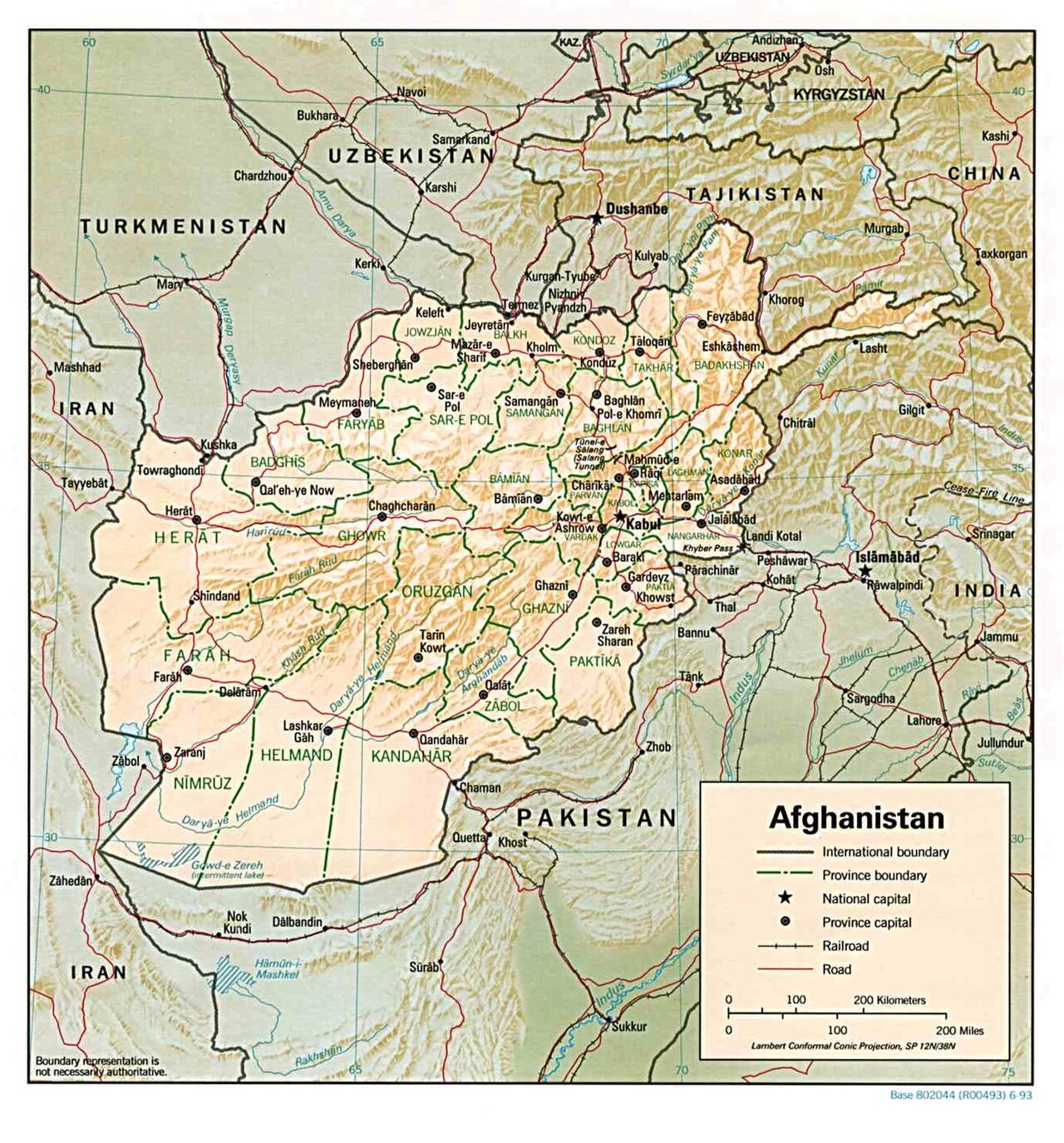
Both of Afghanistan's 2 World Heritage properties sit on the List of World Heritage in Danger — Bamiyan since 2003 and the Minaret and Archaeological Remains of Jam since 2002 — which is the single most important fact about seeing anything in the country.
The answer, with local context
Jam is the one that gets overlooked. UNESCO inscribed it in 2002 under criteria (ii), (iii) and (iv), and placed it on the Danger List in the same year; the Committee retained it there in 2019 under decision 43 COM 7A.42. The threats recorded are civil unrest, erosion with siltation and deposition, illicit excavation and looting, the absence of a management plan, and the inclination of the minaret itself — a lean attributed to river erosion.
The conservation record there reads as a catalogue of work planned and not done. An action plan was drawn up from documentation and 3D data captured in September 2017, covering stabilization of the wooden staircases and masonry, protection of tiles and stucco, and extension of gabion walls. Monitoring equipment intended to track the minaret's movement was never installed, because electricity was unreliable and the site insecure. A footbridge over the Hari Rud and a guesthouse both remained unbuilt. Funding had included 844,901 US dollars from Italy and 124,300 from Switzerland between 2003 and 2012, 16,800 from UNESCO's Heritage Emergency Fund in 2017, and 93,750 across 2 approved international assistance requests between 2002 and 2015. Expert missions ran annually from 2002 to 2006, stopped from 2007 to 2009 for security, and then took place in 2010, 2014 and September 2017.
For natural heritage, the country's flagship is Band-i-Amir National Park, which UNEP-WCMC records as a terrestrial and inland-waters protected area of 606.16 square kilometers.
Picture the place
Bamiyan's 8 component sites are strung along the valley and its tributaries rather than gathered at one viewpoint: the cliffs themselves, the Kakrak Valley caves with their 10-meter Buddha fragment and Sasanian sanctuary, the hill citadels of Shahr-i Ghulghulah and Shahr-i Zuhak, and the smaller sites at Qoul-i Akram, Lalai Ghami and Qallai Kaphari A and B.
The easily missed detail
Neither Afghan property has settled boundaries. UNESCO's record for Jam states that the property and buffer-zone boundaries are still not precisely defined, with a minor boundary modification proposal requested by 1 February 2020. For Bamiyan, the Committee asked for a boundary modification and new protective legislation because the cultural landscape falls outside existing protected zones. A property whose edges are undefined is one where illicit excavation is hard to police, which is exactly what the Jam record lists among its threats.
A practical rhythm
- Bamiyan — A serial property of 8 sites inscribed in 2003 under 5 criteria, on the Danger List from the start.
- Jam — Inscribed in 2002 under criteria (ii), (iii) and (iv), with a minaret leaning from river erosion.
- Band-i-Amir — 606.16 square kilometers of protected terrestrial and inland-water area.
What could complicate the plan
The State Department's advisory, reissued on 20 February 2026 at Level 4, tells US citizens not to travel to Afghanistan for any reason, and lists among its grounds a high risk of wrongful or arbitrary detention affecting tourists, Taliban surveillance of travelers, terrorism and kidnapping, and the fact that the Federal Aviation Administration has not assessed the country's civil aviation authority. The US Embassy in Kabul has been closed to operations since 31 August 2021, with no routine or emergency consular services available. At Jam, UNESCO's own record notes that conservation work had not been carried out for want of funds and access and that the 2017 survey data risked becoming obsolete — so the sites are not merely hard to reach but actively deteriorating.
What to do next
The Afghanistan when-to-visit answer deals with Bamiyan and the advisory in detail, and the food-and-drink answer covers the country's wheat-based diet.
Sources
- UNESCO World Heritage Centre, Minaret and Archaeological Remains of Jam, and Bamiyan Valley — inscription years and criteria, Danger List status and retention decisions, recorded threats, action plan and 2017 documentation, unbuilt footbridge and guesthouse, donor and assistance figures, mission years, boundary and legislation requests, Bamiyan component sites and Kakrak fragment
- UNEP-WCMC Protected Planet, Band-i-Amir National Park — reported area and protected-area type
- US Department of State, Afghanistan travel advisory — Level 4 designation and date, listed risks, FAA assessment status, embassy suspension