Argentina country guide Food and drink
What local dishes should I try in Argentina, and where should I look for them?
The short answer
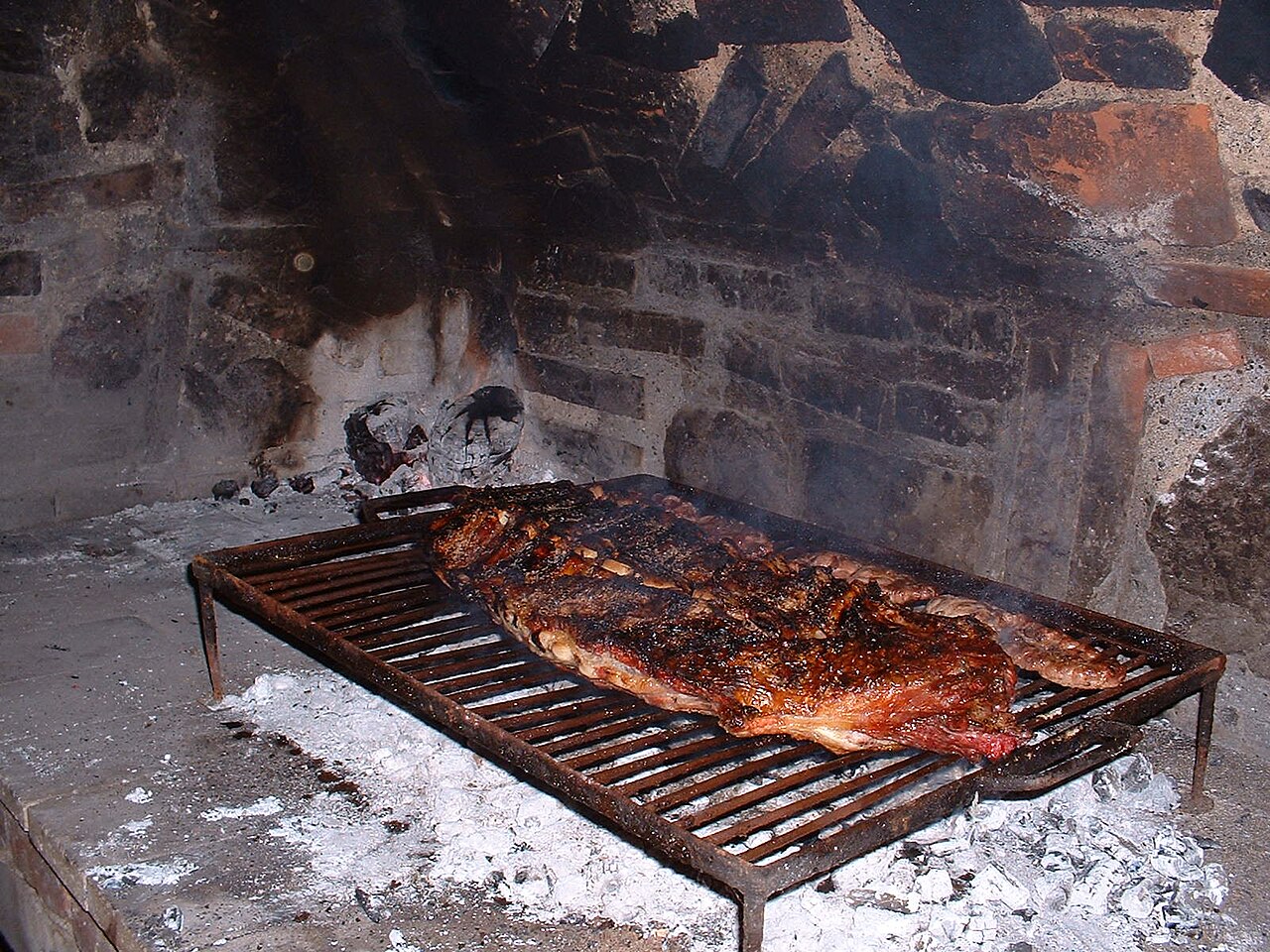
The asado is the national sacrament and Mendoza malbec its wine, but the dish to hunt region by region is the empanada — juicy in Salta, knife-cut in Tucumán, olive-studded in Mendoza — with torrontés in Cafayate and a round of mate, Argentina's legally declared national infusion, wherever one is offered.
The answer, with local context
The asado is a structure before it is a menu. A parrilla session runs in courses from a single grill: achuras first — morcilla blood sausage, chinchulín, sweetbreads — then provoleta, a disc of provolone grilled until it sags, an Argentine invention of the 1940s, and then the cuts in ascending order, tira de asado (short ribs cut across the bone), vacío (flank) and entraña (skirt), with chimichurri on the table. Sunday is its day, the asador its priest, and Buenos Aires' parrillas — from neighborhood institutions to the famous rooms of Palermo — its cathedrals. Beef this central needs its statistics handled carefully, but its ritual calendar is simple: weekend, family, fire, hours.
The empanada is where the provinces argue. Salta's are small and juicy, with potato and a chilli sauce, eaten leaning forward; Tucumán's use beef cut by knife rather than minced, and the province defends its title with a National Empanada Festival in the town of Famaillá. Mendoza's carry an olive and a slice of egg; Córdoba's break ranks entirely — sweet, dusted with sugar, with raisins inside. The fold of the crust, the repulgue, traditionally encodes the filling, which means the empanada is a written language as much as a snack: learn to read it in a Salta peña, with folk guitars going, and you have eaten the northwest properly.
The wine map is drawn by altitude and one institute's census. The Instituto Nacional de Vitivinicultura counts Mendoza holding 71.7 percent of the country's vineyard area, and malbec as the most planted variety of all — some 115,900 acres (46,890 ha), 23.9 percent of every vine in Argentina, in a country that ranks as the world's fifth-largest wine producer and declared wine its national drink in 2010. The white is the greater originality: torrontés, which Wines of Argentina notes grows only in Argentina, was shown by DNA research to be a crossing of Muscat of Alexandria and Criolla Chica born in colonial vineyards — and its finest ground is Cafayate, in Salta, where the vines grow at over 5,500 feet (1,700 m). And mate stands over all of it: in 2013, Law 26.871 declared mate Argentina's national infusion, the national yerba mate institute counts it present in more than 90 percent of households, and the yerba itself grows in the red earth of Misiones and Corrientes. Accept the gourd when it is passed; the etiquette is the flavour.
Picture the place
At a Salta peña the empanadas arrive a dozen at a time on a tin tray, blistered and steaming, a bowl of yasgua chilli beside them, while the guitar players work the tables and the torrontés sweats in its glass — the northwest's whole argument for itself on one table.
The easily missed detail
Buenos Aires invented a pizza dialect and a serving ritual to match. At Banchero in La Boca, trading since 1932 and credited with the fugazzeta — a cheese-stuffed, onion-topped deep pizza — the classic order is a slice of pizza al molde standing on a slice of fainá, the Genoese chickpea flatbread, with a small glass of moscato: "moscato, pizza y fainá" is a set phrase, a trinity ordered in one breath.
A practical rhythm
- Morning — Mate and medialunas: the croissant's smaller, syrup-glazed Argentine cousin is the café breakfast, taken with a cortado at a neighborhood confitería counter.
- Midday — Empanadas are the traveling lunch — a dozen mixed from a house of empanadas in whichever province you are crossing, eaten hot from the bag in a plaza.
- Evening — The parrilla runs late: porteños sit down at ten, the asador's courses take two hours by design, and a Mendoza malbec at a Buenos Aires parrilla is the two halves of the country meeting on one table.
What could complicate the plan
The empanada map has borders that locals patrol: ordering a sweet Córdoba empanada with a Salteño's expectations, or praising the wrong province's version at the wrong table, starts arguments that are only half joking. Wine country keeps winery hours — Mendoza's bodegas pour tastings by appointment and mostly at midday, and the Uco Valley's famous rooms book their lunches out. Mate, finally, has rules a visitor should not improvise: the cebador serves, you drink what you are handed, you return the gourd, and saying "gracias" closes your turn in the round for good — a detail with real social consequences.
What to do next
Eat one empanada style per province and keep score; book Mendoza's winery lunches before the flights; and read the timing answer in this group before fixing the trip — the harvest and the northwest's seasons put different dishes on the table.
Sources
- Instituto Nacional de Vitivinicultura (INV) — the national vineyard census: Mendoza's 71.7 percent of vineyard area and malbec's 46,890 ha as the most planted variety
- Wines of Argentina — torrontés as a variety grown only in Argentina, with Cafayate its benchmark region, and wine's 2010 declaration as the national drink
- Instituto Nacional de la Yerba Mate — mate's presence in more than 90 percent of Argentine households, and Law 26.871 of 2013 declaring it the national infusion
- Tucumán Turismo — the Famaillá National Empanada Festival and the province's knife-cut empanada style