Argentina country guide Places and experiences
What should a first-time traveler see in Argentina beyond the obvious highlights?
The short answer
Argentina holds twelve UNESCO World Heritage sites, and the least visited of them are the revelation: the hand-stencilled caves of Santa Cruz, the Triassic fossil deserts of San Juan and La Rioja, a forest of 3,000-year-old trees in Chubut, and the red Quebrada de Humahuaca in the northwest.
The answer, with local context
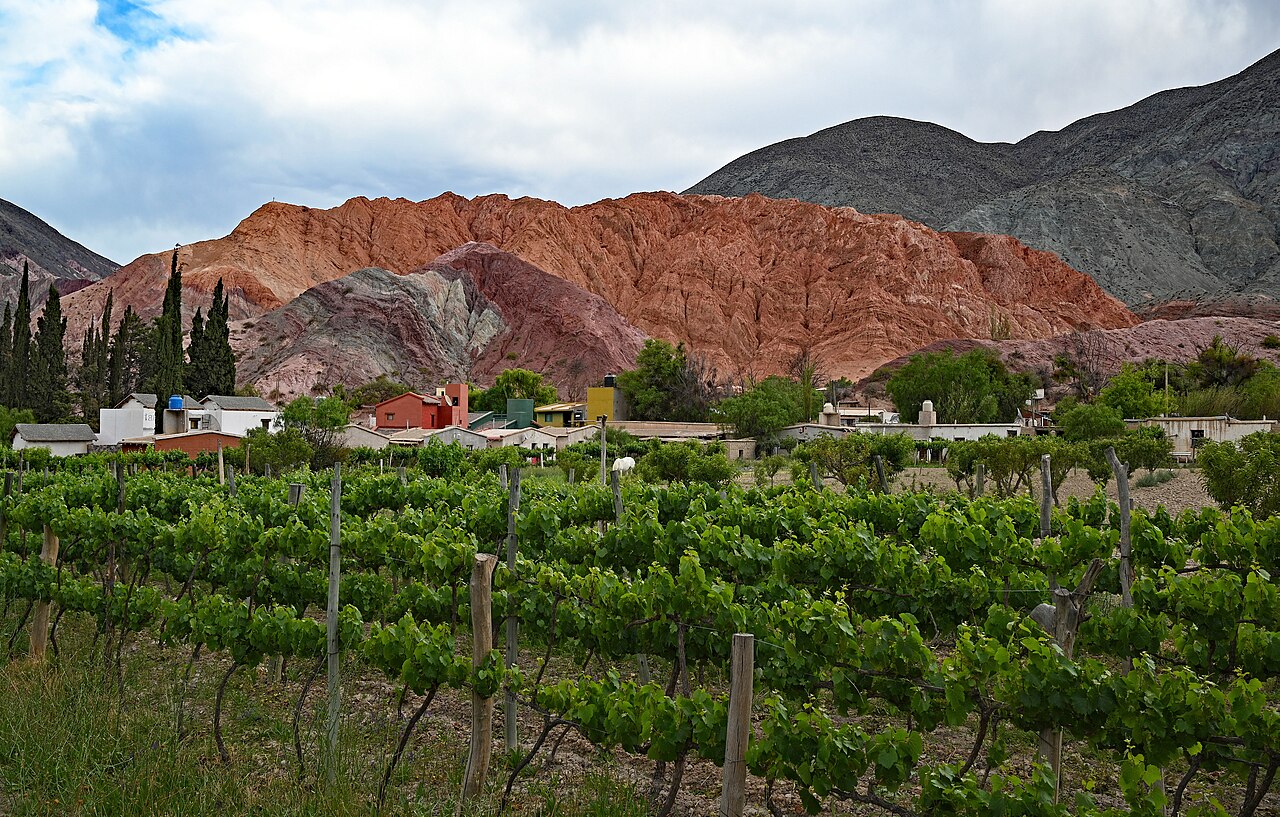
Start in the northwest, where the postcard stops at Salta. The Quebrada de Humahuaca, running north from Jujuy toward Bolivia, was inscribed as a cultural landscape in 2003: UNESCO frames it as a trade route in use for some 10,000 years, along the line of the Inca road. Its set piece is Purmamarca, a village of adobe and cardón cactus standing under the Cerro de los Siete Colores, a hill striped rose, ochre, green and violet by mineral bands. An hour further, Tilcara keeps a restored pre-Inca fortress, the Pucará, above the Río Grande — and the whole valley sleeps at altitude, around 8,000 feet (2,450 m), in a dry Andean light that the southern itineraries never see.
The center-west holds the deep-time entry. Ischigualasto and Talampaya, two contiguous parks covering 680,000 acres (275,300 ha), contain — in UNESCO's words — the most complete continental fossil record known from the Triassic Period, 245 to 208 million years ago: six geological formations holding early dinosaurs such as Eoraptor, mammal ancestors and petrified forests. Ischigualasto's eroded badlands are nicknamed the Valle de la Luna, the Valley of the Moon, and the parks sit within reach of each other on a circuit from San Juan or La Rioja that almost no international itinerary includes.
Patagonia's second tier outclasses most countries' first. In Chubut, Los Alerces National Park — inscribed in 2017 — protects Patagonian forest where the alerce, a conifer among the longest-lived trees on earth, stands at ages beyond 3,000 years. In Santa Cruz, the Cueva de las Manos preserves cave art executed, per UNESCO, between 13,000 and 9,500 years ago: hundreds of stencilled hands in ochre, white and black, with guanaco hunting scenes, in a canyon on the Río Pinturas. And in Corrientes, the Iberá wetlands — some 3.2 million acres (1.3 million ha) of marsh and lagoon — host South America's most ambitious rewilding project: Rewilding Argentina returned the jaguar to Iberá, where it had been extinct for some 70 years, and in 2018 the first cubs were born there. Above all of it stands Aconcagua, in Mendoza's provincial park: at 22,841 feet (6,961 m) the highest mountain outside Asia, climbable only in the November-to-March permit season but visible, on clear days, from the wine country at its feet.
Picture the place
At Purmamarca the late light does the hill's work for it: the Cerro de los Siete Colores deepens band by band — cream, rose, brick, sage, plum — above a whitewashed church and a square of artisans, while the dust of the Quebrada hangs gold in the air.
The easily missed detail
The Cueva de las Manos stays empty because it asks something of you: the cave sits in a canyon reached by gravel roads off Ruta 40, a half-day's detour from the nearest town of any size. The reward for the arithmetic is a ranger-led walk along a wall of hands stencilled when the pyramids' builders' ancestors were still hunter-gatherers — with, very often, nobody else there.
A practical rhythm
- Morning — The Quebrada's colors are a morning instrument: be at Purmamarca when the sun first strikes the Cerro de los Siete Colores, before the day-trip buses arrive from Salta.
- Midday — In the Triassic parks the heat writes the schedule: Ischigualasto's guided circuit runs in the cooler hours by design, and Talampaya's canyon walls shade its floor by early afternoon.
- Evening — Iberá inverts the resort day: the wildlife — capybara, marsh deer, caiman — moves at dawn and dusk, and the estancia evenings end with the southern stars over black water.
What could complicate the plan
Distance is the gatekeeper of this entire list. The Cueva de las Manos and Los Alerces sit hours from their nearest airports on roads that are part-gravel; Iberá's lodges are reached by long transfers from Posadas or Mercedes, some of them 4WD-only after rain. Altitude governs the northwest — the Quebrada and the Salinas Grandes salt flat, at some 11,300 feet (3,450 m), punish a first night taken too high. And the rewilding wetlands run on lodge seasons and small capacities, booked well ahead for the dry months from April to October.
What to do next
Add one second-tier name per region — Humahuaca in the northwest, Iberá in the northeast, Los Alerces in Patagonia — and let the planning answer in this group show how they fit without breaking the trip's back.
Sources
- UNESCO World Heritage Centre — Argentina's twelve inscriptions, including the Quebrada de Humahuaca (2003), the Cueva de las Manos art of 13,000 to 9,500 years ago, Ischigualasto/Talampaya's Triassic record across 275,300 ha, and Los Alerces (2017)
- Fundación Rewilding Argentina — the jaguar reintroduction to the Iberá wetlands and the first cubs born there in 2018 after some 70 years of absence
- Administración de Parques Nacionales — Los Alerces National Park and the alerce forests, and access for the Cueva de las Manos provincial reserve