Australia country guide Trip planning
How can I plan a memorable first trip to Australia without rushing?
The short answer
Three bases in two to three weeks, one region's season obeyed, and internal flights treated as infrastructure — because Australia is 2.97 million square miles (7.69 million km²), and the classic first-trip failure is planning it like a country the size of France.
The answer, with local context
Scale first, because everything follows from it. Australia is roughly the size of the contiguous United States with about 27 million people, nearly all of them strung along the coasts. The flight from Sydney to Perth takes about five hours and crosses 2,050 miles (3,300 km); Sydney to Cairns is three hours; even Brisbane to Cairns, both in Queensland, is a 1,060-mile (1,700 km) drive. A first trip that picks three bases — say Sydney, the reef coast and Uluru, or Melbourne, Tasmania and Sydney — and flies between them will see more, more slowly, than one that attempts six.
Season second. The country runs two calendars, as the reef question in this group sets out: the north has its Dry from May to October, the south its summer from December to February. A first trip gets one calendar or straddles the shoulder of both — August and September, or March and April — but it cannot have Kakadu's floodplains open and Melbourne in beach weather in the same fortnight. Choose which Australia leads, and let the other be the supporting act in its off-peak clothes; a cooler Sydney in August is still Sydney.
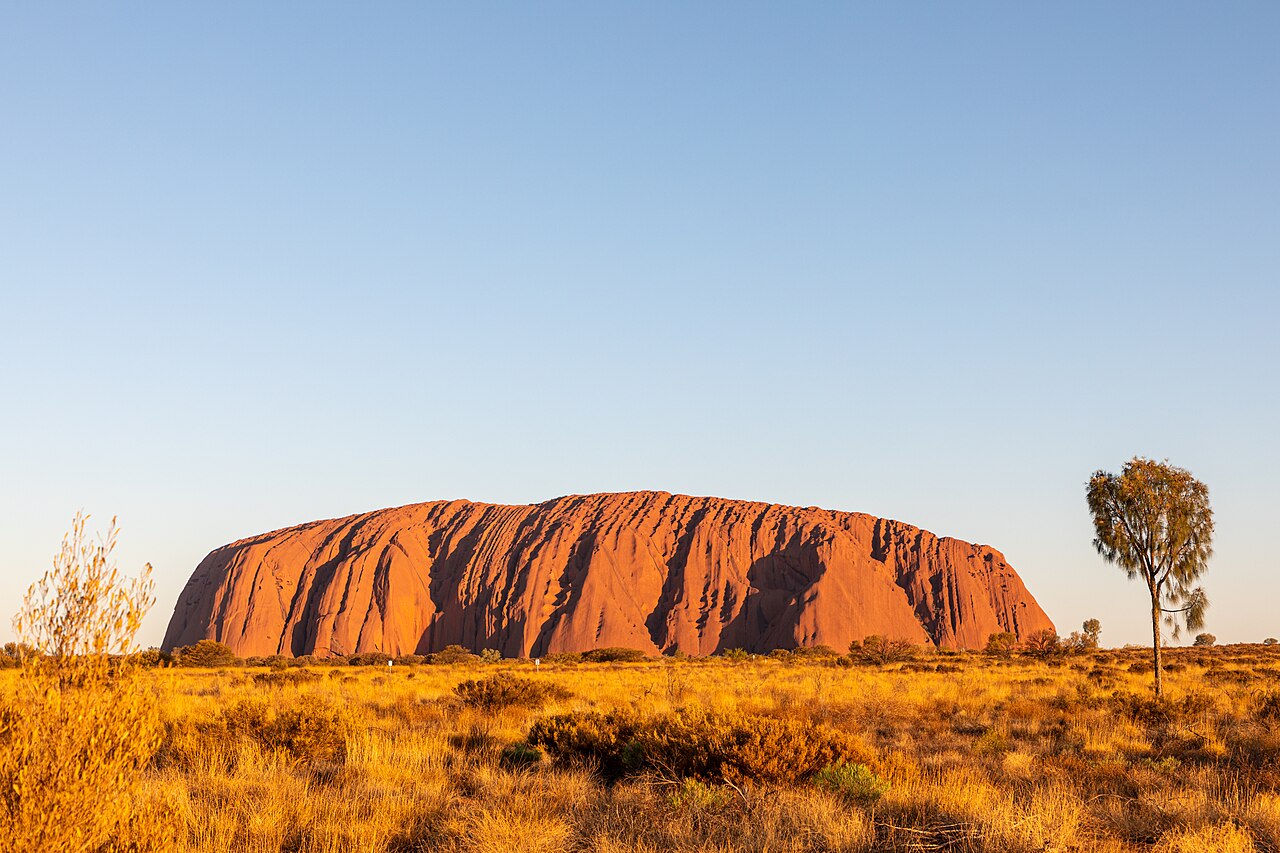
Then build in the friction the brochures omit. Most visitors need an Electronic Travel Authority or eVisitor arranged before they fly, a Department of Home Affairs requirement, not an airport errand. The mainland keeps three time zones, which daylight saving — observed from October to April in the southeast but not in Queensland, Western Australia or the Northern Territory — stretches to five in summer; a Sydney–Brisbane flight can cost you an hour of clock time across a state border. At Uluru, the Ayers Rock climb has been permanently closed since October 26, 2019, at the request of the Aṉangu Traditional Owners — plan the base walk, Kata Tjuta and a desert dinner instead, and buy the park pass from Parks Australia before you go. And respect the sun with local seriousness: summer ultraviolet indices in the northern cities regularly reach the "extreme" band on the Bureau of Meteorology's scale, the highest category there is.
Picture the place
On the map most first-timers sketch at the kitchen table, the red pins cluster hopefully from Cairns to Perth; on the map the trip actually becomes, three pins stand with white space honoured between them, and every line joining them is a flight number rather than a road.
The easily missed detail
Australians measure their own country in flight hours, and the distances hide inside single states: the drive from Brisbane to Cairns, without leaving Queensland, is longer than the drive from Paris to Rome. It is why "we'll just drive up the coast" is the most expensive sentence in Australian trip planning — the coast road days eat the reef days, every time.
A practical rhythm
- Morning — Put the long internal flight at breakfast: a 7 a.m. departure lands you in the next base by lunch, and no sightseeing day is halved.
- Midday — One anchor experience per day, booked ahead — the reef boat, the Uluru sunrise, the MONA ferry — with the hours around it left deliberately unplanned.
- Evening — Stay in each base long enough to have a "usual": the café that knows your order is the reliable test that a trip has stopped rushing.
What could complicate the plan
The school-holiday calendar — late December to late January above all, plus Easter and the July break — inflates every domestic flight and books out reef boats and Uluru's small hotel stock weeks ahead. Events do the same locally: a football final or a festival can double a city's room rates for a weekend. And the Wet rewrites northern itineraries without appeal: a first trip fixed on January should build its north days around Cairns' reef access, which runs year-round, rather than Kakadu's roads, which may not.
What to do next
Draw the three pins, name the season, and count the flights — then book the reef and Uluru first, because those two set the skeleton the rest hangs on.
Sources
- Geoscience Australia — Australia's land area of 7.69 million km² and the country's principal dimensions
- Parks Australia — the permanent closure of the Uluru climb on October 26, 2019, and the park pass requirement for Uluru-Kata Tjuta National Park
- Australian Government Department of Home Affairs — Electronic Travel Authority and eVisitor requirements before travel
- Australian Bureau of Meteorology — time zones and daylight saving arrangements, and summer ultraviolet indices reaching the extreme band