Australia country guide Food and drink
What local dishes should I try in Australia, and where should I look for them?
The short answer
The meat pie from a country bakery, a law-bound Anzac biscuit, barramundi and Moreton Bay bugs on the Queensland coast, and a pub chicken parmigiana — found, respectively, in bakeries, under federal guidelines, in fish markets and in every pub in the nation.
The answer, with local context
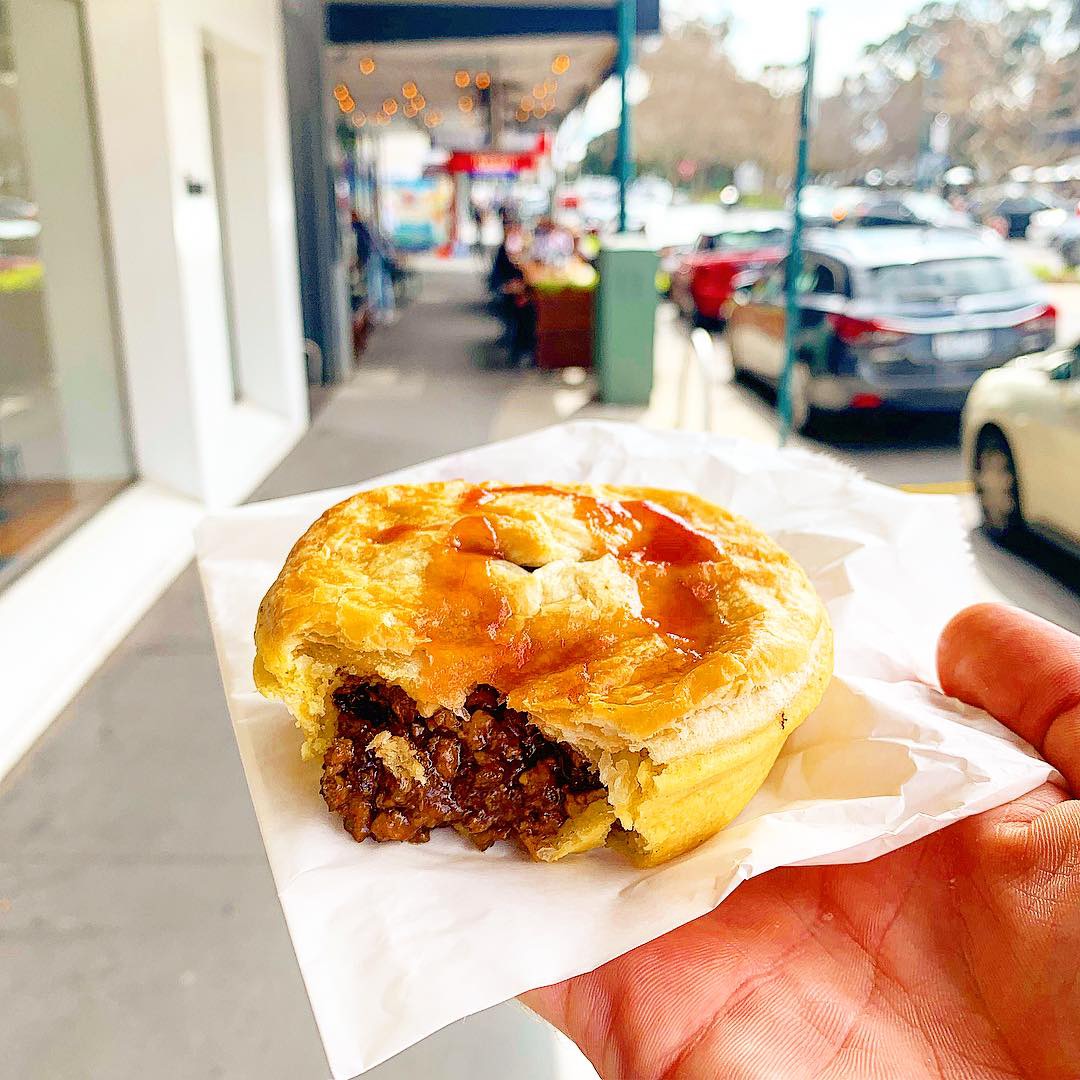
Australia's national dish is arguably a hand-held pastry: the meat pie, minced beef in gravy under a pastry lid, eaten from the paper bag with tomato sauce, the standard lunch of bakeries, service stations and football grounds. In Adelaide it reaches its ceremonial form as the pie floater — the same pie inverted in a bowl of thick pea soup. The bakery case around it holds the rest of the canon: the sausage roll, the vanilla slice, and the lamington, a cube of sponge rolled in chocolate icing and desiccated coconut, claimed by both Australia and New Zealand with no armistice in sight.
One Australian food is regulated by the state. The Anzac biscuit — oats, golden syrup and coconut, bound to the memory of the Australian and New Zealand Army Corps and to Anzac Day, April 25, the anniversary of the 1915 Gallipoli landing — sits under guidelines from the Department of Veterans' Affairs: commercial bakers must not substantially deviate from the traditional recipe, must call them biscuits and never cookies, and the word "Anzac" itself is otherwise restricted in commerce by federal law. In 2008 the department ordered a major sandwich chain to bake to the traditional recipe or stop; the chain stopped. Vegemite, the other breakfast-table icon, has a quieter origin: a dark yeast-extract spread developed in Melbourne in 1922 by Cyril Callister from brewers' yeast leftovers, sold in its yellow-lidded jar ever since and eaten spread thin — the beginner's error is thickness.
The serious eating is regional and comes out of the water and the paddock. Barramundi, a prized northern fish whose name comes from an Aboriginal language of Queensland's Fitzroy River region, is grilled in every coastal pub worth its licence; Moreton Bay bugs — slipper lobsters — and Sydney rock oysters carry their addresses in their names. Kangaroo, lean and iron-dark, is the one meat found almost nowhere else on Earth as a legal restaurant staple. In Melbourne, a city that treats eating as a civic sport, look in the Queen Victoria Market, trading since 1878, and for the dim sim — a plump, oversized dumpling created in Melbourne's Chinatown in 1945 by William Chen Wing Young and now a fish-and-chip-shop institution. Adelaide's Central Market, open since 1869 on its original site, does the same job for South Australia, an hour from the Barossa Valley, where Shiraz vines planted in the 1840s rank among the oldest still producing in the world.
Picture the place
At a country bakery at one o'clock the pie warmer glows behind the counter, the sauce bottle stands in a puddle of its own evidence, and the tradies ahead of you order without looking up — "a pie and a Big M" — the whole transaction done in the time it takes the bag to be folded.
The easily missed detail
Native ingredients have moved from novelty to pantry in a generation of Australian cooking: finger lime, whose pearls burst like citrus caviar; lemon myrtle, more lemon than lemon; wattleseed, roasted and coffee-dark. Look for them on the menus of the better city restaurants and in market spice stalls — they are the oldest flavours on the continent, older than the continent's farming by tens of thousands of years.
A practical rhythm
- Morning — Vegemite on toast, spread thin over butter, and a flat white in a Melbourne laneway café — the national breakfast, adopted or endured.
- Midday — The bakery lunch: a pie, a sausage roll and a vanilla slice, eaten at the park bench the bakery's regulars have used for decades.
- Evening — Pub night: a chicken parmigiana — "parma" in Victoria, "parmy" everywhere else, a debate with no neutral ground — followed by a pavlova if the kitchen runs to one.
What could complicate the plan
Anzac biscuits are the one item with a season written into law-adjacent custom: they are baked year-round but take over the bakeries in the fortnight around Anzac Day, April 25. The seafood calendar matters too — barramundi has a closed season in the Gulf of Carpentaria during its spawning months, and oyster quality follows the cold months in the south — while the pie floater, for all its fame, is found reliably in Adelaide and almost nowhere else.
What to do next
Eat by venue, not by dish list: bakery at lunch, market in the morning, pub at night, fish market on the coast. The planning question in this group shows how to route a first trip past all four.
Sources
- Australian Government Department of Veterans' Affairs — the Anzac biscuit guidelines: traditional recipe, "biscuits" not "cookies", and the restricted commercial use of the word "Anzac"
- National Museum of Australia — Vegemite's development in Melbourne in 1922 by Cyril Callister
- Adelaide Central Market Authority — Queen Victoria Market, since 1878
- Barossa Australia (Barossa Grape & Wine Association) — Shiraz plantings of the 1840s among the world's oldest productive vines