Australia country guide When to visit
When is the best time to visit Australia for Great Barrier Reef?
The short answer
August to September — the reef in its dry-season best, water around 77–79°F (25–26°C) with no stingers and no cyclones, while the rest of the country splits the difference: the tropical north warm and dry, the southern cities cool but brightening into spring.
The answer, with local context
Australia does not have one climate calendar; it has two that run opposite to each other. The tropical north — including the Great Barrier Reef coast — knows only the Dry (roughly May to October) and the Wet (November to April), while the temperate south keeps four reversed seasons, with summer from December to February and winter from June to August. Any answer about "Australia" that ignores the split fails somewhere: a June week that is perfect in Cairns is 57°F (14°C) and raining in Melbourne, and a January week of 79°F (26°C) in Sydney is monsoon in Darwin.
For the reef itself, the Dry season is the window and late Dry is the sweet spot. The reef the question is really about is the world's largest coral system: 1,430 miles (2,300 km) of it along the Queensland coast, some 2,900 individual reefs and 900 islands inside a Marine Park of 344,400 square kilometers (133,000 sq mi) created under federal law in 1975 and World Heritage-listed in 1981 — with coral accounting for only about seven percent of the park's area, the rest being seagrass, sand and deep water. From May to October the trade winds settle, visibility peaks and the water slides from about 73°F (23°C) in June toward 79°F (26°C) by October. August and September take the best of it: fully settled seas, warm water, dry-season light, and the southern cities climbing out of winter.
The Wet is the season to avoid for a reef-led trip, for three separate published reasons. The Bureau of Meteorology's official tropical cyclone season runs from November 1 to April 30, and the reef coast sits squarely in the cyclone belt. Marine stingers — box jellyfish and Irukandji — occupy northern coastal waters roughly from November to May, which is why stinger nets guard the mainland beaches and reef operators hand out stinger suits in those months. And the reef's own great event belongs to the Wet: the annual mass coral spawning, a few nights after the November full moon, when the system reproduces in a single synchronized blizzard — a wonder for divers who plan around it, an exception that proves the season's rule.
Picture the place
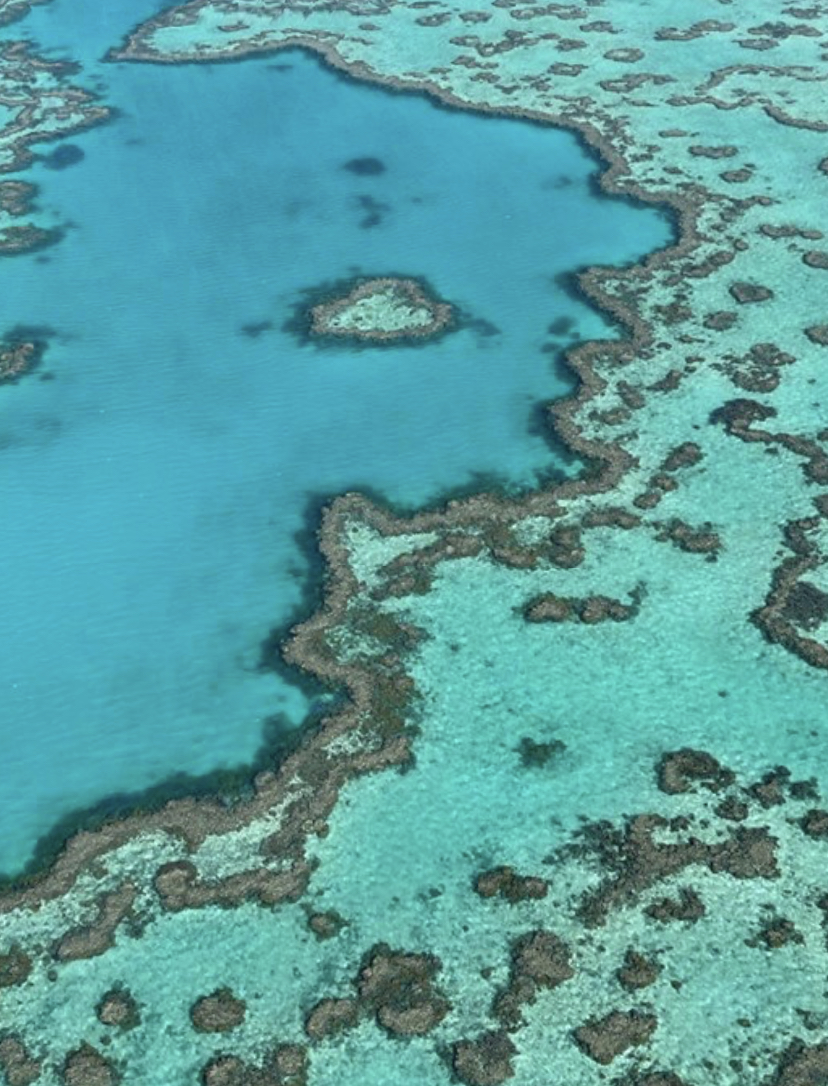
From a reef pontoon off Port Douglas in late August, the water is glass out to the edge of the shelf, the snorkelers' stinger suits are back in their lockers for another year, and the coral gardens show through water so clear the shadows of the fish are printed on the sand below them.
The easily missed detail
Your reef ticket has a tax built into it that almost no visitor notices. Every passenger on a reef trip pays an Environmental Management Charge — currently A$8.50 per person per day, capped at A$16.50 per trip — collected by the operator and paid to the Great Barrier Reef Marine Park Authority to fund the park's management. It is printed in the fine print of the fare, and it means every tourist on the reef is, in a small literal way, paying the reef's rent.
A practical rhythm
- Morning — Reef boats leave early in the Dry for a reason: the Coral Sea is calmest before the afternoon trade wind, and the outer reef deserves the still hours.
- Midday — In the south, winter midday is the day: Sydney at 63°F (17°C) and Melbourne bright between fronts are sightseeing weather if you dress for them.
- Evening — Uluru and the Red Centre in August: days in the low 70s°F (around 22°C), nights near freezing, and the Milky Way doing the evening shift.
What could complicate the plan
December and January stack the year's worst combination for this question: the reef in stinger season under cyclone watch, the outback above 100°F (38°C), and the whole southern half of the country on school holidays with prices to match. Even in the Dry, the reef can rough up — the trade winds that keep the tropics pleasant in June and July regularly push smaller boats around, and a seasick-prone traveler should favour the large outer-reef pontoons or the calmer months of August to October.
What to do next
Anchor the reef days first, in August or September, and arrange the rest of the country around them. The planning question in this group turns that anchor into an itinerary shape.
Sources
- Great Barrier Reef Marine Park Authority — the Marine Park's 344,400 km², some 2,900 reefs, protection under the Great Barrier Reef Marine Park Act 1975, and the Environmental Management Charge of A$8.50 per person per day
- UNESCO — Great Barrier Reef, inscribed on the World Heritage List in 1981
- Australian Bureau of Meteorology — the official tropical cyclone season, November 1 to April 30, and the north's Dry and Wet season structure
- Queensland Government (stinger safety) — marine stinger season in northern waters, roughly November to May, with nets on mainland beaches