Botswana country guide Food and drink
What local dishes should I try in Botswana, and where should I look for them?
The short answer
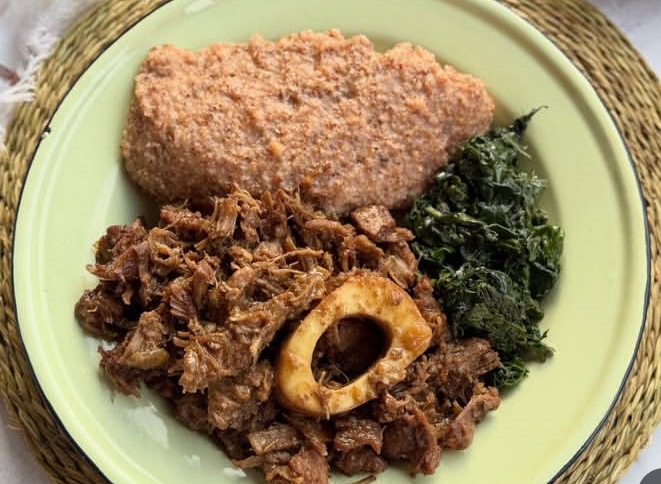
Try seswaa with bogobe and morogo for a traditional Setswana meal, then explore fermented sorghum porridge, fried magwinya, and other preparations associated with Botswana's farming and cattle-keeping culture.
The answer, with local context
Seswaa, also called chotlho in some communities, is one of Botswana's best-known traditional dishes. Research published in the Journal of Ethnic Foods identifies it as a preparation of beef cooked until soft and then pounded into strands. A traditional version uses three principal ingredients: beef, water, and salt. The research describes approximately four hours of boiling before the meat is pounded, often with a wooden implement.
Seswaa has an important social role. It is associated with weddings, funerals, public ceremonies, family gatherings, and other communal events. Different Setswana-speaking communities use distinct names for the preparation: the Bakgatla use chotlho, while the Bakwena use tshwaiwa. Its traditional significance extends beyond the ingredients because cooking and serving the meat have long been part of collective gatherings.
The customary accompaniment is bogobe, a porridge made from sorghum or sometimes maize. The Food and Agriculture Organization records two different methods: fermented sorghum porridge, known as motogo-wa-ting, and nonfermented bogobe, called mosokwana. Its reference recipe uses 300 grams of sorghum meal and, for the fermented version, 30 grams of starter. The finished texture depends on the grain and preparation method.
The Botswana Agricultural Marketing Board identifies locally produced sorghum grain, sorghum meal, sorghum bran meal, and sorghum rice as four marketed sorghum products. It also records the Setswana term mabele for sorghum and bopi jwa mabele for sorghum meal. These names are useful when reading local menus or food labels.
Vegetable accompaniments include morogo, a term used for edible leafy greens. The Hospitality and Tourism Association of Botswana also identifies lerotse, a cooking melon, and madila, soured milk, as traditional ingredients. Magwinya are fried dough snacks, while diphaphatha are flat breads prepared using different cooking methods.
For more adventurous eaters, the same tourism-industry association documents serobe, a preparation involving offal, and mopane caterpillars, which may be boiled, dried, or fried. Neither dish should be assumed to appear on every restaurant menu. The range of traditional food is broader than one meat-and-porridge plate.
Picture the place
Seswaa forms soft strands of cooked meat alongside a mound of thick porridge. Morogo adds a contrasting green component, while fried magwinya have a browned exterior.
The easily missed detail
Traditional bogobe is not always maize porridge. Sorghum is a longstanding staple, and the fermented version has a different flavor and preparation method from nonfermented porridge. A visitor ordering ting will encounter a sourer preparation than an ordinary maize-based side.
A practical rhythm
Breakfast — Porridge: Try a sorghum preparation such as motogo or ting.
Lunch — Setswana meal: Order seswaa with bogobe and morogo at a local restaurant serving traditional dishes.
Afternoon — Bakery or takeaway: Try magwinya or diphaphatha.
What could complicate the plan
Seswaa normally contains meat, while madila contains milk. Some bogobe recipes use fermented grain, and magwinya may be prepared with wheat flour. Botswana's currency is the pula (BWP); the State Department notes that cards may not be accepted in rural areas and at small businesses, where cash remains important.
What to do next
identifies the towns and regions where a traditional-food stop can fit into a wider journey. introduces the cultural landscapes beyond Botswana's wildlife reserves.
Sources
- Journal of Ethnic Foods, Beef as Intangible Cultural Heritage in Botswana — seswaa history, ingredients, preparation, and cultural significance.
- Food and Agriculture Organization, Sorghum and Millets in Human Nutrition — bogobe recipes and fermentation.
- Botswana Agricultural Marketing Board, Grains — sorghum products and Setswana terminology.
- Hospitality and Tourism Association of Botswana, Cuisine — traditional vegetables, porridges, pastries, and other foods.
- U.S. Department of State, Botswana Travel Guidance — currency and payment arrangements.