Botswana country guide Places and experiences
What should a first-time traveler see in Botswana beyond the obvious highlights?
The short answer
Explore the ancient rock art at Tsodilo, see elephants along the Chobe River, and experience the Makgadikgadi salt pans for three very different sides of Botswana beyond the familiar Okavango wetlands.
The answer, with local context
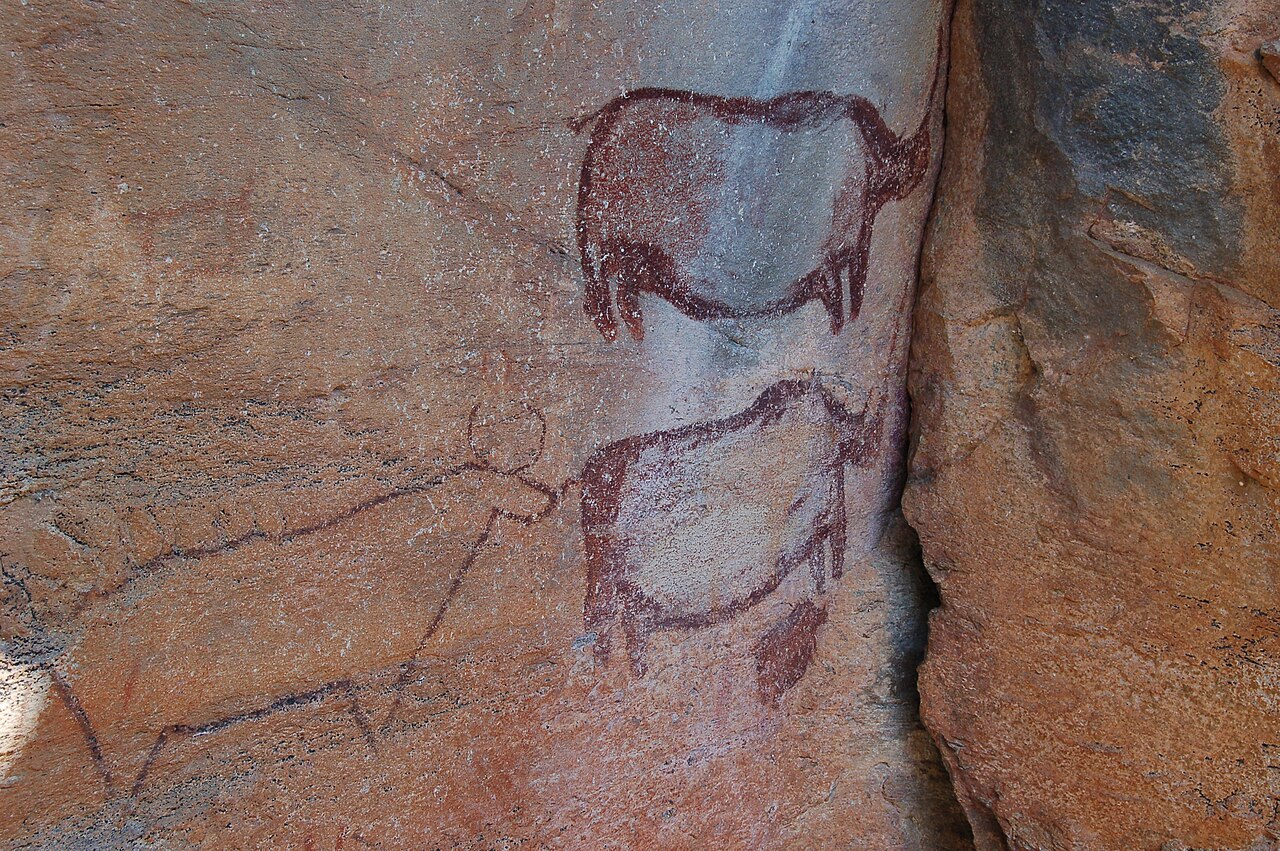
Tsodilo lies in northwestern Botswana near the Namibian border. UNESCO inscribed the cultural landscape in 2001, under criteria (i), (iii), and (vi). Its World Heritage property covers 4,800 hectares, with a 70,400-hectare buffer zone. The quartzite hills contain a record of human occupation and environmental change extending back at least 100,000 years, although settlement was not continuous throughout that period.
Botswana Tourism describes approximately 4,000 rock paintings distributed across the hills, including animal figures, geometric designs, and depictions of domestic animals. The principal hills are known as Male, Female, and Child. The site remains sacred to San and Hambukushu communities, and its visitor facilities include a museum, walking trails, and camping areas.
Chobe National Park offers a very different landscape. Established in 1968, the park covers approximately 11,700 square kilometers (4,517 square miles). Botswana Tourism identifies four major geographical areas: the Chobe Riverfront, Ngwezumba pans, Savuté, and Linyanti. The riverfront near Kasane is particularly associated with large elephant and Cape buffalo herds gathering to drink during the dry season.
The Makgadikgadi Pans introduce the vast open terrain of the Kalahari Basin. Botswana Tourism describes the pan system as covering approximately 12,000 square kilometers (4,633 square miles). The two principal pans are Sowa to the east and Ntwetwe to the west. During substantial summer rains, temporary flooding can attract flamingos and migrating grazers. During dry periods, the exposed salt surfaces create an almost entirely different landscape.
Another worthwhile destination is the Central Kalahari Game Reserve. Botswana Tourism records an area of approximately 52,800 square kilometers (20,386 square miles) and identifies its establishment in 1961. Deception Valley, Sunday Pan, and Passarge Valley are among its notable landscapes. Its size and isolation make it a specialist wilderness journey rather than an ordinary afternoon excursion.
Picture the place
Tsodilo's rocky outcrops rise above sandy Kalahari terrain. Chobe's riverbanks support dense vegetation and large animals, while Makgadikgadi's salt pans form broad, pale surfaces stretching toward a distant horizon.
The easily missed detail
Tsodilo is Botswana's cultural UNESCO World Heritage property; the Okavango Delta is its natural World Heritage property. Their different designations explain why a journey combining both can cover human history and wetland ecology without treating every heritage attraction as a wildlife safari.
A practical rhythm
Cultural heritage — Tsodilo: Explore selected rock-art trails with a local guide.
River wildlife — Chobe: Visit the riverfront near Kasane for elephant and buffalo viewing.
Open landscapes — Makgadikgadi: Explore an appropriate pan-edge area using a suitable vehicle and local arrangements.
What could complicate the plan
The destinations are separated by long distances and different road conditions. Tsodilo's protected paintings require careful visitor conduct, and UNESCO identifies guided visits as part of its conservation system. Makgadikgadi tracks can become difficult or impassable after heavy rain, while Central Kalahari excursions involve particularly remote terrain with limited services.
What to do next
explains which regions can realistically fit into a first journey. provides the best seasonal window for adding the Okavango Delta.
Sources
- UNESCO World Heritage Centre, Tsodilo — inscription, criteria, area, archaeology, and sacred status.
- Botswana Tourism Organisation, Tsodilo Hills — rock paintings, cultural traditions, and trails.
- Botswana Tourism Organisation, Chobe National Park — park area, foundation, geographical zones, and wildlife.
- Botswana Tourism Organisation, Makgadikgadi and Nxai Pans — pan geography and seasonal conditions.
- U.S. Department of State, Botswana Travel Guidance — wilderness and road-safety considerations.