Botswana country guide When to visit
When is the best time to visit Botswana for Okavango Delta?
The short answer
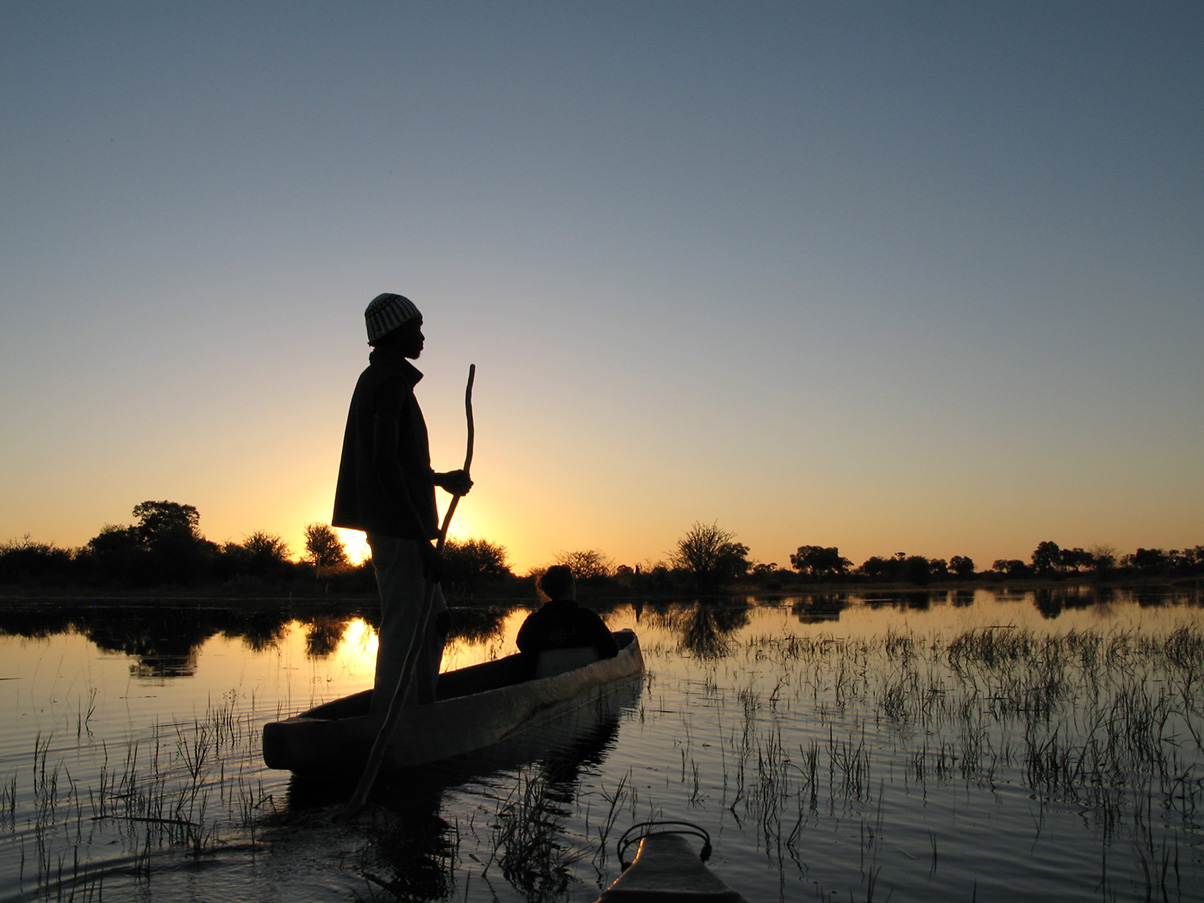
June through August is an especially rewarding period for Botswana's Okavango Delta, because floodwater arriving from the Angolan highlands expands its wetlands during Botswana's dry winter, attracting wildlife to the channels and floodplains.
The answer, with local context
Botswana's seasons create a remarkable geographical contrast. Much of the country is semi-arid, with a relatively dry period from May through October and summer rains generally concentrated between November and March. Yet the Okavango Delta in the northwest reaches its principal flood period during winter. Water from rainfall in Angola travels downstream through the Okavango River system and spreads across the Kalahari Basin months later.
The Convention on Wetlands identifies June through August as the period when floodwaters typically peak across the delta. Its description records more than 200,000 large mammals using the wider wetland landscape during the seasonal inundation, along with more than 400 bird species and 71 fish species. These are published ecological estimates rather than a guaranteed count for a particular safari.
UNESCO inscribed the Okavango Delta in 2014, under natural criteria (vii), (ix), and (x). The inscribed property covers 2,023,590 hectares, with an additional 2,286,630-hectare buffer zone. The wetlands are unusual because they do not drain into the sea. Instead, water disperses through a low-gradient inland system and eventually evaporates or infiltrates the Kalahari sands.
The timing also matters for travel methods. Botswana Tourism identifies three broad components of the region: the Panhandle, the main delta, and surrounding drylands. The Panhandle begins where the Okavango enters Botswana from Namibia at Mohembo and extends approximately 80 kilometers southeast. Permanent channels and seasonally flooded plains offer different wildlife-viewing conditions, so the location of a lodge determines whether water-based activities are available.
This is not Botswana's only seasonal experience. In the Makgadikgadi Pans, summer rains can produce temporary lakes and attract flamingos, zebra, and other animals. Chobe's riverfront becomes especially important to elephants and buffalo during the drier winter months. A nationwide itinerary therefore benefits from choosing the season according to the specific landscape.
Picture the place
The Okavango's clear channels wind between papyrus beds, palm-fringed islands, and seasonally flooded grassland. Beyond the waterways, dry Kalahari vegetation creates a sharp boundary between wetland and savanna.
The easily missed detail
The Okavango's flood season is not the same as Botswana's rainiest season. Rainfall originates far upstream in Angola, and the flood pulse takes months to reach the delta. This is why a water-based safari can be most rewarding while nearby parts of Botswana are experiencing dry winter weather.
A practical rhythm
Morning — Delta waterways: Join an authorized mokoro or boat excursion in an area where water activities are offered.
Afternoon — Dryland habitat: Explore an accessible wildlife-viewing area by vehicle.
Another day — Moremi: Visit a suitable sector of Moremi Game Reserve, which protects part of the delta's land-and-water ecosystem.
What could complicate the plan
Seasonal flooding changes which tracks and channels are accessible. Water-based safaris require suitable operators, and some remote camps can be reached only by light aircraft or boat. The U.S. State Department's Botswana advisory issued June 17, 2026 is Level 2: Exercise Increased Caution, citing crime. Its guidance also notes the limited availability of emergency medical evacuation in remote wilderness areas.
What to do next
explores the country's other major landscapes, including Chobe and Tsodilo. explains how to connect a delta stay with the rest of Botswana.
Sources
- UNESCO World Heritage Centre, Okavango Delta — inscription, criteria, property area, and seasonal flooding.
- Convention on Wetlands, Okavango Delta — flood timing and ecological estimates.
- Botswana Tourism Organisation, Okavango Delta — regional geography, Panhandle, and visitor experiences.
- U.S. Department of State, Botswana Travel Advisory — advisory and remote-area risks.