Brazil country guide Trip planning
How can I plan a memorable first trip to Brazil without rushing?
The short answer
Fly everything, give each region the better part of a week, and let Rio anchor the ends of the trip — Rio to Manaus alone is 1,765 miles (2,841 km), four hours by air and a fifty-eight-hour drive, and Brazil punishes every itinerary that forgets it.
The answer, with local context
Start with the clock, because Brazil's distances come with time zones attached. The country keeps four of them, from Fernando de Noronha at UTC−2 to Acre at UTC−5; Rio runs one hour ahead of Manaus, so the four-hour nonstop flight northwest lands you, by the clock, three hours later than you left. Daylight saving was abolished in 2019, so at least the offsets never move. Entry formalities moved recently instead: since April 2026, United States, Canadian and Australian passport holders have needed an eVisa arranged online before travel — the one piece of paperwork on a first trip that cannot be fixed at the airport.
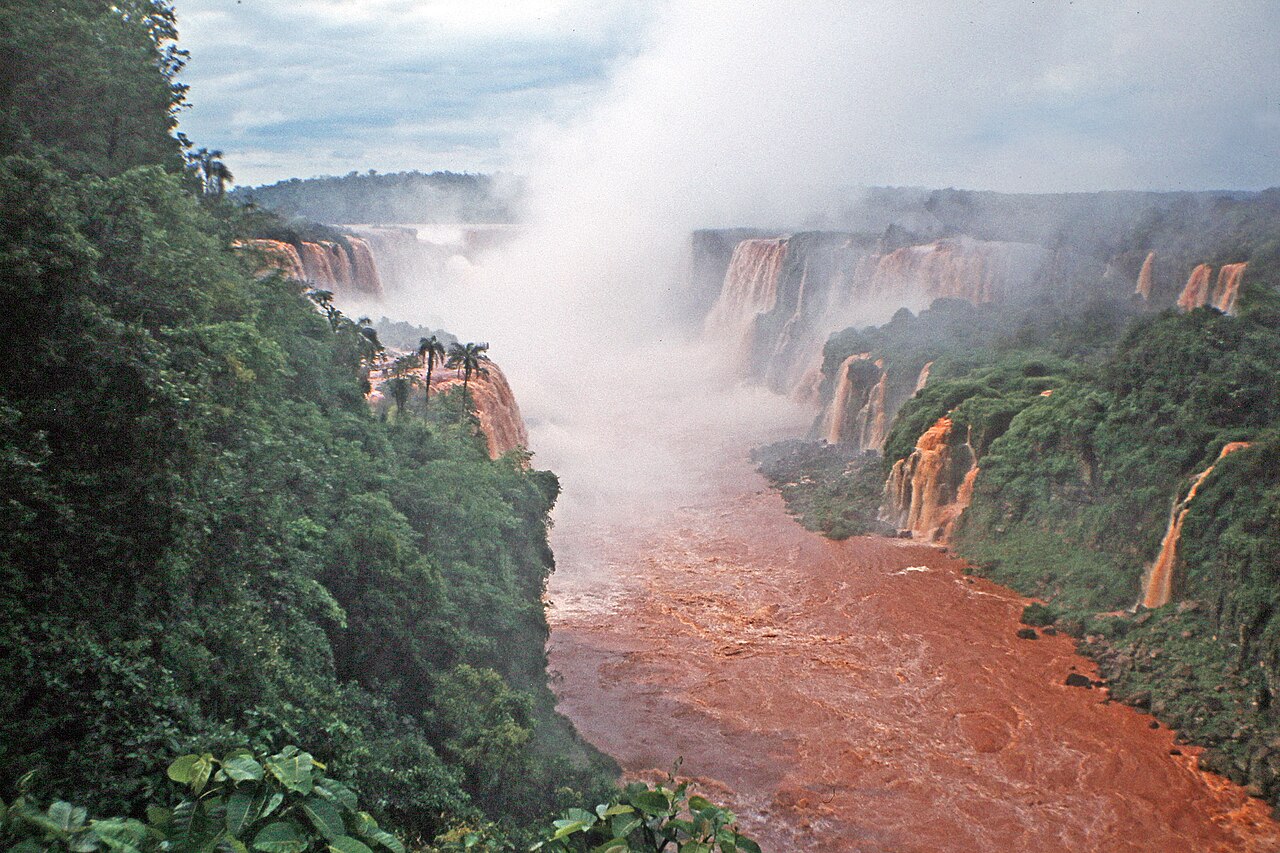
The working structure is a spine and a rule. The spine is the flight network: São Paulo's Guarulhos is the main international gateway, Congonhas its domestic twin, Campinas the home of Azul, and LATAM, GOL and Azul between them make almost any two Brazilian cities connectable in a day — at the price of a connection through a hub. The rule is one region per week. Two weeks therefore buys Rio for four nights, Iguaçu for two, and one expedition — the Amazon or the Pantanal — done properly. Three weeks adds the northeast: Salvador and, in season, the Lençóis. Iguaçu itself is a model of the country's planning logic: the Brazilian park, a UNESCO site since 1986, gives the great panorama of some 275 falls spread over 1.7 miles (2.7 km) from its walkway; the walkways inside the falls are on the Argentine side, an easy border crossing with a passport, and the falls run fullest from December to March.
Each expedition has one road that defines it, and the itinerary should budget for the road. The northern Pantanal is reached from Cuiabá down the Transpantaneira — about 90 miles (145 km) of unpaved road crossing more than 100 wooden bridges to Porto Jofre, where the jaguar boats work the Cuiabá River; the southern Pantanal answers to Campo Grande and its fazenda lodges, a different trip entirely. The Amazon is reached at Manaus, where the Teatro Amazonas — rubber money made marble, inaugurated in 1896 and a World Heritage site as of 2026 — stands a short drive from the Meeting of the Waters, where the black Rio Negro and the sandy Solimões run side by side, unmixed, for some 3.7 miles (6 km). Lodges take it from there, three or four nights upriver, and the city nights bookend them.
Picture the place
On the Transpantaneira at dawn the road is a causeway through a world of water and birds — caiman hauled out on the banks, jabiru storks standing in the shallows, capybara families crossing between bridge and bridge in single file, and dust rising gold behind the truck.
The easily missed detail
The domestic flight you book may not be the flight you think: Brazil's cheapest domestic fares routinely exclude checked baggage, and the two Rio airports — Galeão for most international and long domestic flights, Santos Dumont, downtown, for the São Paulo shuttle — are an hour apart in traffic. A self-connection between them is the classic first-timer's own goal; the country's size begins at its own capital's airport map.
A practical rhythm
- Morning — Fly in the mornings: Brazil's long domestic legs reward an early departure and punish an evening one, and every expedition lodge transfer — boat, truck, Transpantaneira — is a daylight operation.
- Midday — Lunch is the day's anchor everywhere in Brazil; plan sightseeing in two blocks around it, and let the midday heat of the north do what it does to the locals — nothing, slowly.
- Evening — Keep arrival evenings empty. The distances extract their toll after dinner, not during the flight, and the trip that starts rested stays unhurried.
What could complicate the plan
One sight will usually be season-locked — the Lençóis lagoons exist only from about June to September, the jaguars concentrate from July to October — so the right first move is to choose the trip's anchor spectacle and let the timing answer in this group place everything else around it. Connections through São Paulo add hidden hours: a "day" of travel between the Pantanal and the Amazon is genuinely a day. And Rio's two-airport trap, the eVisa lead time and basic fares without bags are the three clerical errors that cost first trips their ease.
What to do next
Pick the anchor — jaguars, lagoons or the flooded forest — then book the domestic flights as one multi-city chain, Rio in and Rio out, and hold the third week for the northeast if the season allows.
Sources
- ICMBio — Iguaçu National Park and the Brazilian park system, including the Pantanal gateways at Cuiabá and Campo Grande
- Federal Government of Brazil (gov.br) — the eVisa requirement in force for US, Canadian and Australian passport holders since April 2026, and the 2019 abolition of daylight saving across Brazil's four time zones
- Embratur (Visit Brasil) — the national route structures linking Rio de Janeiro, Iguaçu, Manaus and the Pantanal, and the Transpantaneira's 145 km and hundred-plus bridges to Porto Jofre