Brazil country guide Food and drink
What local dishes should I try in Brazil, and where should I look for them?
The short answer
Eat Brazil by region and by calendar: feijoada on a Wednesday or a Saturday, acarajé hot from a baiana's tray in Salvador, the two rival moquecas of Bahia and Espírito Santo, and in Minas Gerais the pão de queijo and artisanal cheese that in 2024 became the first Brazilian food tradition UNESCO has ever listed.
The answer, with local context
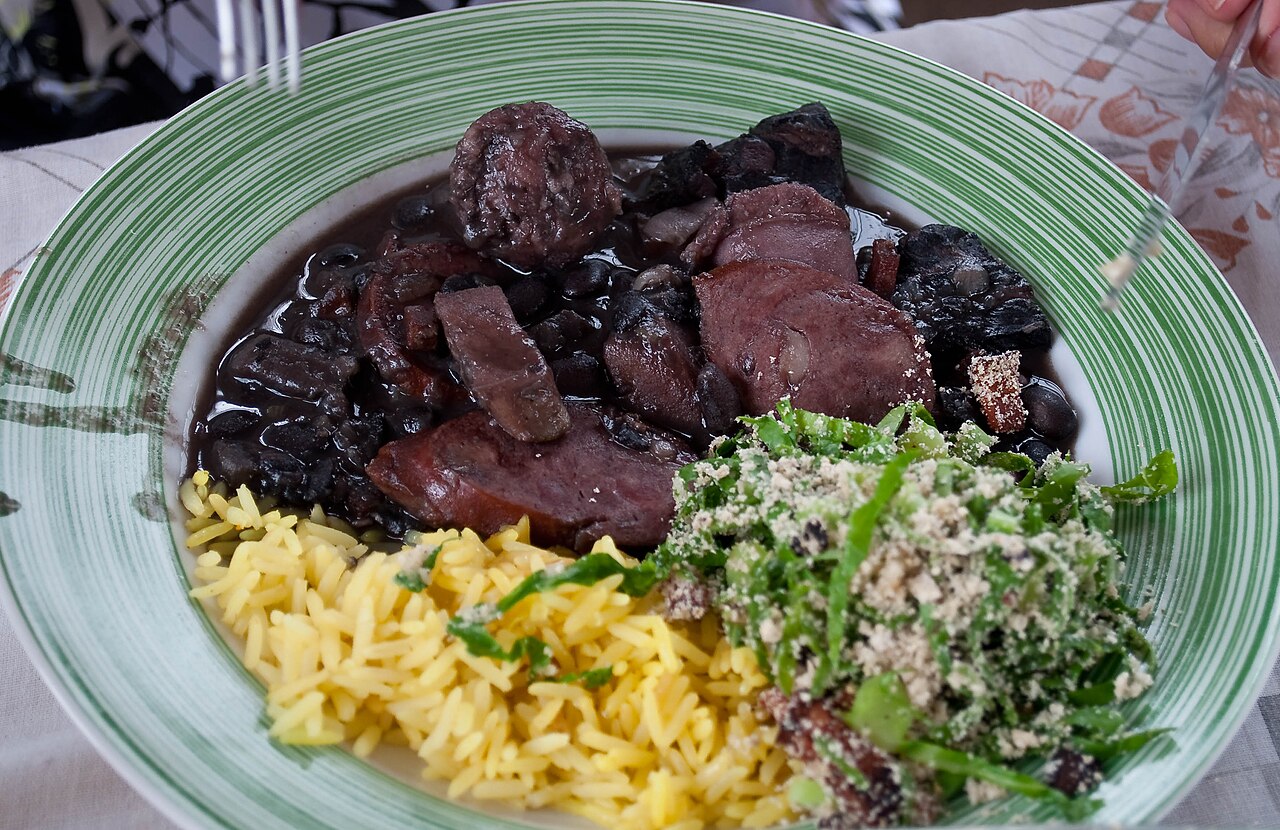
Feijoada is the national dish with a timetable. The completa — black beans stewed with pork in its many cuts, served with rice, shredded couve greens, farofa and slices of orange — is a restaurant institution across Rio and São Paulo on Wednesdays and Saturdays, the two feijoada days, when lunch runs long by decree of custom. In Salvador the kitchen is Afro-Brazilian and older: acarajé, black-eyed pea fritters fried in dendê palm oil, are sold by the baianas, the white-dressed vendors whose craft IPHAN registered as cultural heritage of Brazil in 2005. The word itself is Yoruba — akará, fireball, plus je, to eat — and in Candomblé the fritter is a sacred food of the orixá Iansã; the stuffed version, split and filled with vatapá and dried shrimp, dates to 1950s Salvador, and an estimated 7,000 baianas still work the city's corners.
The moqueca is two dishes sharing a name and a rivalry. Bahia's is cooked with coconut milk and dendê and arrives loud and orange; Espírito Santo's capixaba version refuses both, coloring itself with annatto and olive oil instead, and is cooked in a black clay pot made by the paneleiras of Goiabeiras in Vitória — a craft IPHAN registered as intangible heritage. In Minas Gerais, the food landmark is legal as well as edible: in December 2024 UNESCO inscribed the traditional ways of making artisanal Minas cheese on its Intangible Cultural Heritage list — the first Brazilian food tradition so honoured — protecting a raw-milk cheese culture spread across 106 municipalities, nationally registered by IPHAN since 2008, and best met at source with its inseparable partner, pão de queijo, the cassava-starch cheese bread that is gluten-free by ancestry rather than by fashion.
The rest of the map fills quickly once the pattern — every region argues through food — is clear. In Belém, tacacá is sold at dusk by tacacazeiras: a broth of tucupi, fermented cassava juice, with jambu leaf, which makes the lips tingle and then go faintly numb. Açaí, before it was an export, is Pará's savoury staple, eaten with fried fish and farinha. The caipirinha and its spirit, cachaça, are protected by a 2003 federal decree as typically Brazilian — drink the cachaça unmixed in Minas or Paraty, where small stills age it in native woods. And the brigadeiro, the chocolate sweet at every Brazilian birthday, was dreamed up in the 1940s as a fundraiser for a presidential candidate, Brigadier Eduardo Gomes — the only dish on this list named after a brigadier.
Picture the place
On a Salvador corner at six in the evening the baiana's tray is a small altar of work: the glass case of acarajé, the pot of vatapá, dried shrimp in a heap, her white lace and turban immaculate above the smoking dendê — and the first question is always the same, quente ou frio, hot with pepper or without.
The easily missed detail
São Paulo's Municipal Market, opened in 1933, sells a mortadella sandwich so overfilled it has become a civic monument — layers of grilled mortadella stacked inches high on a French roll — alongside the bacalhau codfish pastel. The market proves the rule of this whole answer: in Brazil, even the sandwich has a heritage listing's worth of local pride behind it.
A practical rhythm
- Morning — Pão de queijo and coffee in Minas style: the cheese bread warm from the oven is the country's best breakfast argument, and São Paulo's padarias run on it.
- Midday — Feijoada discipline: on Wednesday or Saturday, lunch is the event. Order the completa, accept the caipirinha, and surrender the afternoon.
- Evening — Street food takes the evening shift: acarajé in Salvador, tacacá in Belém, and in the south the churrascarias' rodízio, where the picanha — the gaúcho's prized sirloin cap — is the cut the whole parade of meats is building toward.
What could complicate the plan
Dendê divides the country as surely as the moqueca does: it is heavy, unmistakable and not for every stomach, and Bahia's food is built on it. The feijoada timetable is real — arrive on a Thursday expecting the completa and you will be politely offered something else. Tacacá's jambu effect surprises first-timers, and açaí in its Amazonian form bears no resemblance to the sweetened bowls sold abroad, which has disappointed more than one traveler. Finally, the baianas' trade is heritage under pressure — an aging workforce, IPHAN's protection notwithstanding — so the corner tray is not a permanent fixture to be postponed to a later trip.
What to do next
Schedule the trip's Wednesdays and Saturdays in feijoada cities; eat acarajé in Salvador before anywhere else; and if Minas is on the route, read the places answer in this group for the colonial towns the cheese country surrounds.
Sources
- IPHAN — the 2005 registration of the baianas de acarajé's craft as cultural heritage of Brazil, the Goiabeiras paneleiras' clay-pot craft, and the 2008 national recognition of artisanal Minas cheese making
- UNESCO Intangible Cultural Heritage — the December 2024 inscription of the Traditional Ways of Making Artisan Minas Cheese, the first Brazilian food tradition on the list
- Federal Government of Brazil — the 2003 decree (Decreto nº 4.851) protecting cachaça and the caipirinha as typically Brazilian, and Embrapa's research on cassava and açaí as Amazonian domestications
- Association of Baianas de Acarajé (ABAM) — the estimated 7,000 baianas working in Bahia and the history of the stuffed acarajé in 1950s Salvador