Chile country guide Food and drink
What local dishes should I try in Chile, and where should I look for them?
The short answer
Follow three threads: the empanada de pino and a terremoto at a September fonda, pisco at its legally protected source in the Elqui Valley — Chile reserved the name by decree in 1931 — and the seafood of a 2,670-mile coast, from a raw mariscal in the north to a pit-cooked curanto in Chiloé.
The answer, with local context
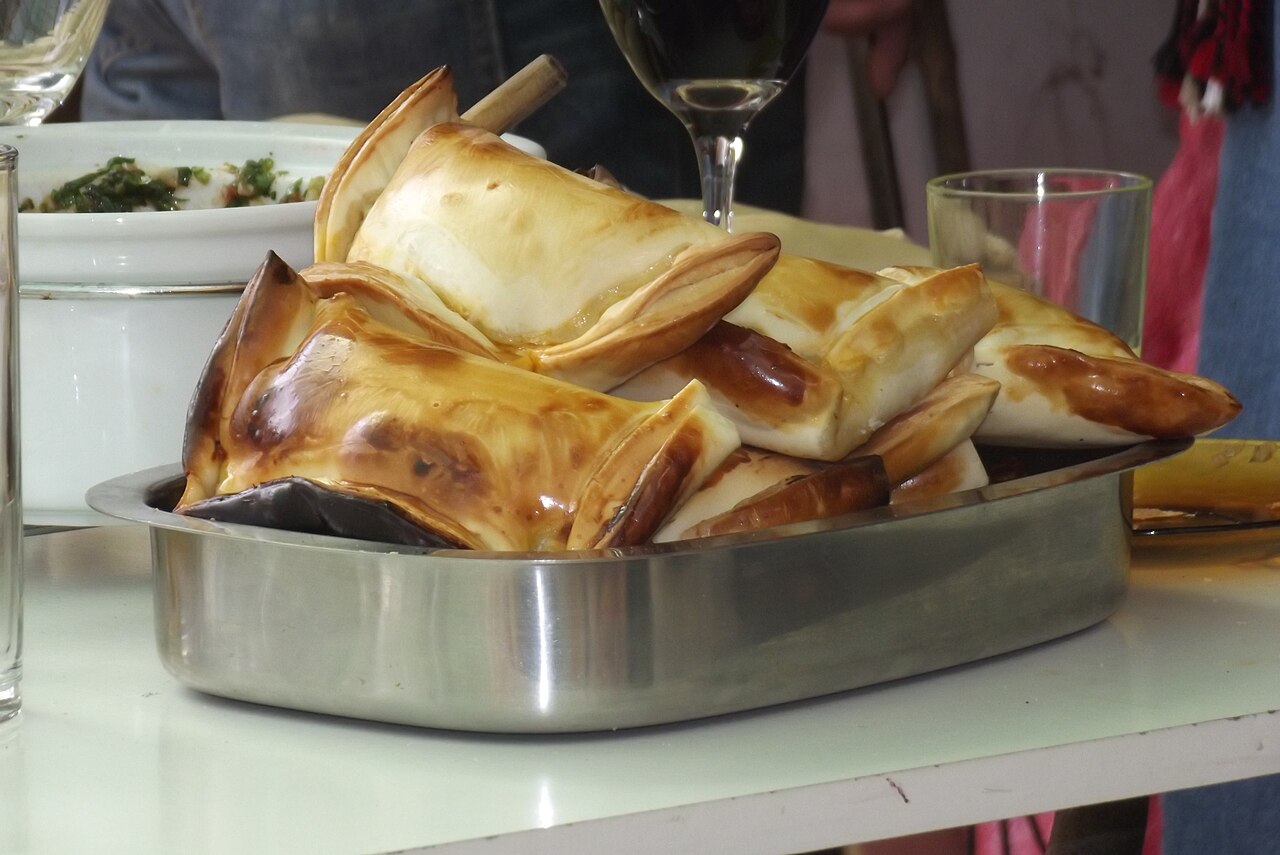
The empanada de pino is the national dish in its portable form: baked, burnished, filled with pino — seasoned beef minced with onion, a raisin, a black olive and a quarter of hard-boiled egg, a combination whose sweet-salt logic runs through the whole Chilean kitchen, up to and including the pastel de choclo, the same filling under a baked corn crust. Its season is September, when the fondas of the Fiestas Patrias — ramadas of dancing, grills and flags — serve empanadas with the terremoto: pipeño, a young sweet wine, drowned under pineapple ice cream, named, as the story is told in Santiago's bars, for the 1985 earthquake. The summer equivalent is mote con huesillo, husked wheat in a cold dried-peach syrup, sold from street carts with a spoon and a straw.
Pisco is where Chilean food becomes law. On May 15, 1931, Decree No. 181 created one of the first denominations of origin in the Americas, reserving the name pisco for grape brandy distilled in what are now the Atacama and Coquimbo regions — the Copiapó, Huasco, Elqui, Limarí and Choapa valleys — from aromatic Muscat-family grapes; the date is now National Pisco Day. Chile pressed the claim in 1936 by renaming the Elqui village of La Unión as Pisco Elqui, a fact Peru — whose own pisco denomination dates from 1991 — has never forgiven. Taste it at the source: distilleries line the Elqui Valley under some of the clearest skies on earth, and the Chilean pisco sour, with key lime and a cap of foam, is the country's handshake.
The coast feeds the rest. In Santiago's Mercado Central, the iron-framed market hall trading since 1872, the stalls serve mariscal — raw shellfish in their liquor — and paila marina, the great seafood stew; the congrio, the conger eel of Neruda's famous ode to its broth, is the connoisseur's order. Chiloé cooks the other way, by burial: the curanto digs a pit, heats stones, and layers shellfish, meats and the island's potato cakes — milcao and chapalele — under nalca leaves to steam in the earth, in an archipelago that is one of the potato's original homelands, with native varieties by the hundred. Two practicalities complete the education. Chilean law (Ley 20.729, of 2014) requires restaurants to suggest a tip of at least 10 percent on the bill — the la cuenta will ask. And the wine to order with all of it is carménère: a Bordeaux variety thought extinct after phylloxera, whose cuttings had reached Chile in the mid-1800s and grew for a century mislabelled as merlot, until the ampelographer Jean-Michel Boursiquot identified it on November 24, 1994, walking a Maipo vineyard — in a country phylloxera never reached, where vines still grow on their own roots. Peumo and Apalta pour the benchmarks.
Picture the place
At a fonda in mid-September the empanadas come out of the clay oven in waves — a dozen at a time, blistered and shining, the cueca playing, flags overhead, and a terremoto sweating beside them in a glass big enough to share: Independence Day, eaten standing up.
The easily missed detail
The completo, Chile's hot dog, is a lesson in national taste disguised as a snack: the completo italiano layers tomato, mayonnaise and a startling quantity of avocado — palta — whose green-white-red gave the thing its name, after the Italian flag. Chile puts avocado on the way other countries put ketchup, and the completo is where a first-time visitor learns the exchange rate.
A practical rhythm
- Morning — Mote con huesillo is a morning drink in summer: take it from a cart in Santiago's center, cold and amber, before the day heats.
- Midday — Seafood is a lunch food at the caletas and the Mercado Central: mariscal and paila marina at one, when the morning's catch is on the ice and the dining room is full of office workers.
- Evening — The parrilla and the pisco sour divide the evening between them: anticuchos and empanadas off the grill first, the sour as the night's punctuation, and in Elqui the distillery tastings end before the observatories open.
What could complicate the plan
The pisco argument is a genuine diplomatic sore: order "a Peruvian pisco sour" in Chile, or vice versa, and you will receive an education whether you wanted one or not. Raw shellfish demands judgement — eat mariscal where turnover is high and the season is kind, and know that red tides periodically close shellfish beds, with Sernapesca's closures announced and absolute. The terremoto, finally, is sweeter and stronger than it reads: pipeño and ice cream conceal a drink that has ended more than one fonda afternoon early.
What to do next
Time the food to the calendar if you can — September for the fondas, harvest in the wine valleys — and otherwise build the route north to south: mariscal in the Central Market, pisco in Elqui, curanto in Chiloé.
Sources
- Servicio Agrícola y Ganadero (SAG) — the pisco denomination of origin created by Decree No. 181 of May 15, 1931, covering the Atacama and Coquimbo regions and Muscat-family grapes
- Wines of Chile — carménère's identification by Jean-Michel Boursiquot on November 24, 1994, and Chile's phylloxera-free, own-rooted vineyards
- Biblioteca del Congreso Nacional — Ley 20.729 (2014), requiring restaurants to suggest a tip of at least 10 percent
- SERNATUR — the Fiestas Patrias fondas, the terremoto and mote con huesillo as the season's emblematic tastes