Ecuador country guide Trip planning
How can I plan a memorable first trip to Ecuador without rushing?
The short answer
Ecuador is sized for the job: two weeks covers a week down the Avenue of the Volcanoes, three or four nights in the Amazon and five days in the Galápagos — paid for in US dollars, with no exchange to make and barely a flight over an hour.
The answer, with local context
Scale is the gift. At 109,484 square miles (283,561 km²), Ecuador is about the size of the United Kingdom, and its four regions stack rather than sprawl. From Quito, the drive times form a ladder: Otavalo, Cotopaxi and Mindo at about two hours; Baños at three to three and a half; Quilotoa at three and a half. The one long leg is the south — Cuenca is nine hours by bus or 55 minutes by plane, so fly it — and the Amazon resolves the same way, with a short flight to Coca and a motorized canoe to the lodge. The classic fortnight writes itself: three nights in Quito, four working south through Cotopaxi, Quilotoa and Baños, three or four in an Amazon lodge, then the flight out to the islands for five — and the Galápagos, 560 miles (900 km) offshore and reachable only by air from Quito or Guayaquil, sits at the end like a second country, which in every practical sense it is.
The money could not be simpler, and the detail is worth knowing: Ecuador adopted the US dollar as its official currency in January 2000, after the sucre's collapse, and has run on it since. There is no exchange rate to learn and no conversion to do; Ecuador mints its own centavo coins, worth exactly their US counterparts, and the only discipline required is denominations — small bills are the working currency, and $50 and $100 notes are hard to break outside the big cities. Entry matches the money for ease: most nationalities receive 90 days on arrival, with a passport valid for six months. The islands then add their own toll, already detailed in this group's timing answer: the $200 park fee in cash on arrival and the $20 transit control card arranged before the flight.
Altitude and advisories are the two honest constraints. Quito sleeps at 9,350 feet (2,850 m) and every volcano day climbs from there — the Teleférico alone rises to about 13,000 feet (4,000 m) on Pichincha's flank — so the capital's first day should be its flattest, and the city's new Metro, opened in 2023, makes that easy. On safety, the US State Department's current advisory rates Ecuador Level 2 overall, with higher-level warnings for parts of Guayaquil, the Esmeraldas coast and some border and coastal provinces; the standard first circuit — Quito, Cuenca, Baños, Otavalo and the Galápagos — is ordinary-tourist-caution country. Build the route to the advisory map, not the headlines: fly the Galápagos from Quito or through Guayaquil's airport without lingering, and give the coast's flagged districts a miss.
Picture the place
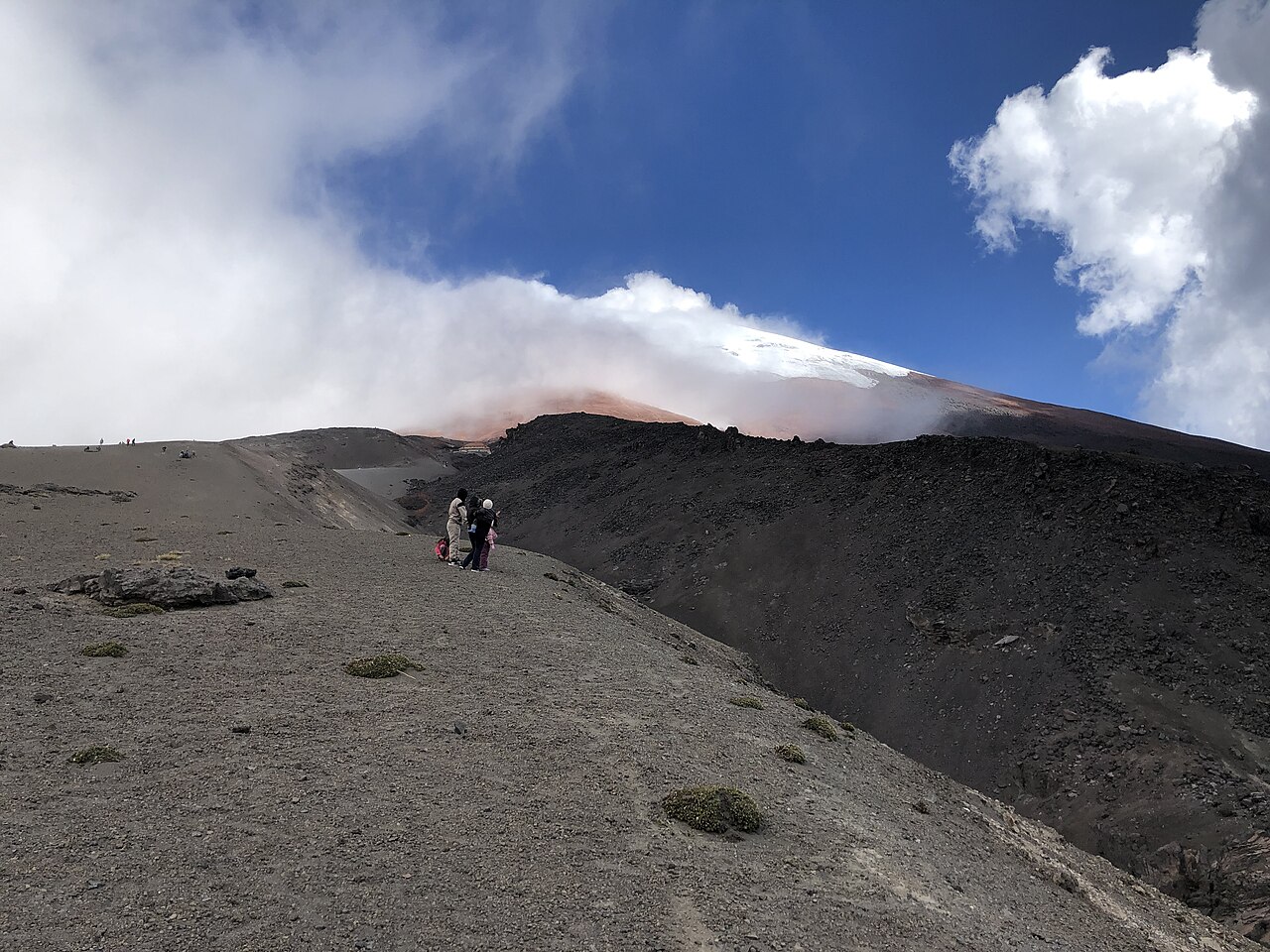
On the Avenue of the Volcanoes south of Quito, the road runs ruler-straight between páramo walls and the cones take turns on the horizon — Cotopaxi's perfect snow triangle ahead at breakfast, Chimborazo's vast bulk by the second day — a landscape arranged like a procession, which is what Humboldt named it for.
The easily missed detail
Quito's airport is not in Quito: it sits across the hills at Tababela, some 45 minutes from the old town on a good run. The missed detail that follows is scheduling — a Galápagos flight's early departure and a same-morning airport run from a Centro hotel make a miserable pairing, so the night before the islands belongs near the airport or in the north of the city, and the old town gets its nights at the trip's start, not its end.
A practical rhythm
- Morning — Travel in the mornings and arrive by lunch: Ecuador's buses and domestic flights are front-loaded, the volcano views are a morning phenomenon, and a new town reached at midday still gives you its afternoon.
- Midday — Hold one unplanned midday per base — the market lunch in Otavalo, the riverside in Cuenca, the lodge's hammock hours in the Amazon — because a compact country tempts travelers to spend the slack they were meant to enjoy.
- Evening — Highland evenings are early and cold: dinner near the hotel, the canelazo, and sleep, since every volcano day starts at dawn. The islands invert it — the day's second act there is the sunset landing and the briefing over dinner.
What could complicate the plan
The Galápagos will not be compressed: under five days the fees and the flights outweigh the islands, and the choice between a cruise and island-hopping from Santa Cruz is the trip's biggest fork — the boats reach the remote islands; the land base is cheaper and slower. The Amazon has a floor too, at three nights, below which the canoe hours dominate the wildlife hours. And Ecuador's volcanoes are monitored for a reason: the Instituto Geofísico's alerts govern access to Cotopaxi and the rest, and an eruption warning rearranges an itinerary without appeal — the fortnight's slack days are its insurance.
What to do next
Book in this order: the Galápagos boat or island base, the Amazon lodge, then the domestic flights — Quito in, Cuenca by air, the islands last — and hold the dollar bills small and the first Quito day flat.
Sources
- Banco Central del Ecuador — the US dollar as official currency since January 2000, with Ecuadorian centavo coins circulating at par
- Galápagos National Park Directorate / Consejo de Gobierno de Galápagos — the $200 park entry fee paid on arrival and the $20 transit control card required before departure
- US Department of State, Ecuador Travel Advisory — Level 2 overall, with higher-level warnings for parts of Guayaquil, Esmeraldas and border and coastal provinces
- Ministerio de Turismo — 90-day stays for most nationalities and the domestic drive-time ladder from Quito: about two hours to Otavalo, Cotopaxi and Mindo; three and a half to Baños and Quilotoa; 55 minutes by air to Cuenca against nine hours by road