Ecuador country guide When to visit
When is the best time to visit Ecuador for Galápagos?
The short answer
June — the Sierra is entering its dry, clear season, the mainland's regions align, and in the Galápagos the cool garúa season brings the year's richest wildlife: boobies dancing, albatrosses in residence and the first whale sharks arriving.
The answer, with local context
Ecuador packs four climates into 109,484 square miles (283,561 km²) — coast, Andes, Amazon and islands — and they rarely peak together. The Sierra runs on a highland calendar: a dry season from about June to September, and rains from October to April that crest around April. The coast inverts it, wet from December to May. June is when the mainland compromises best: the volcanoes of the central corridor are at their clearest, the Amazon is past its highest water, and only the coast sits in its grey, dry half of the year — which, for Guayaquil, means less rain rather than worse weather.
The Galápagos, the anchor, obey the ocean instead. The archipelago sits on the equator some 560 miles (900 km) offshore, but the cold Humboldt Current keeps it far cooler than its latitude promises, and it has two genuine seasons. From December to May the warm season brings air of 77–86°F (25–30°C), seas of 72–79°F (22–26°C), calm water and short afternoon showers; green turtles nest from January to March and the marine iguanas breed. From June to November the garúa takes over: air of 66–79°F (19–26°C), sea temperatures down to 64–72°F (18–22°C), overcast mist in the highlands and rougher crossings — but the strengthening current pumps nutrients to the surface and the food web ignites. The Galápagos National Park's own rules frame every visit regardless of month: 97 percent of the land has been national park since 1959, the entry fee stands at $200 per foreign adult (doubled in August 2024; $100 for children under 12), a $20 transit control card must be bought before departure, and the park's visitor sites may be visited only with a licensed naturalist guide.
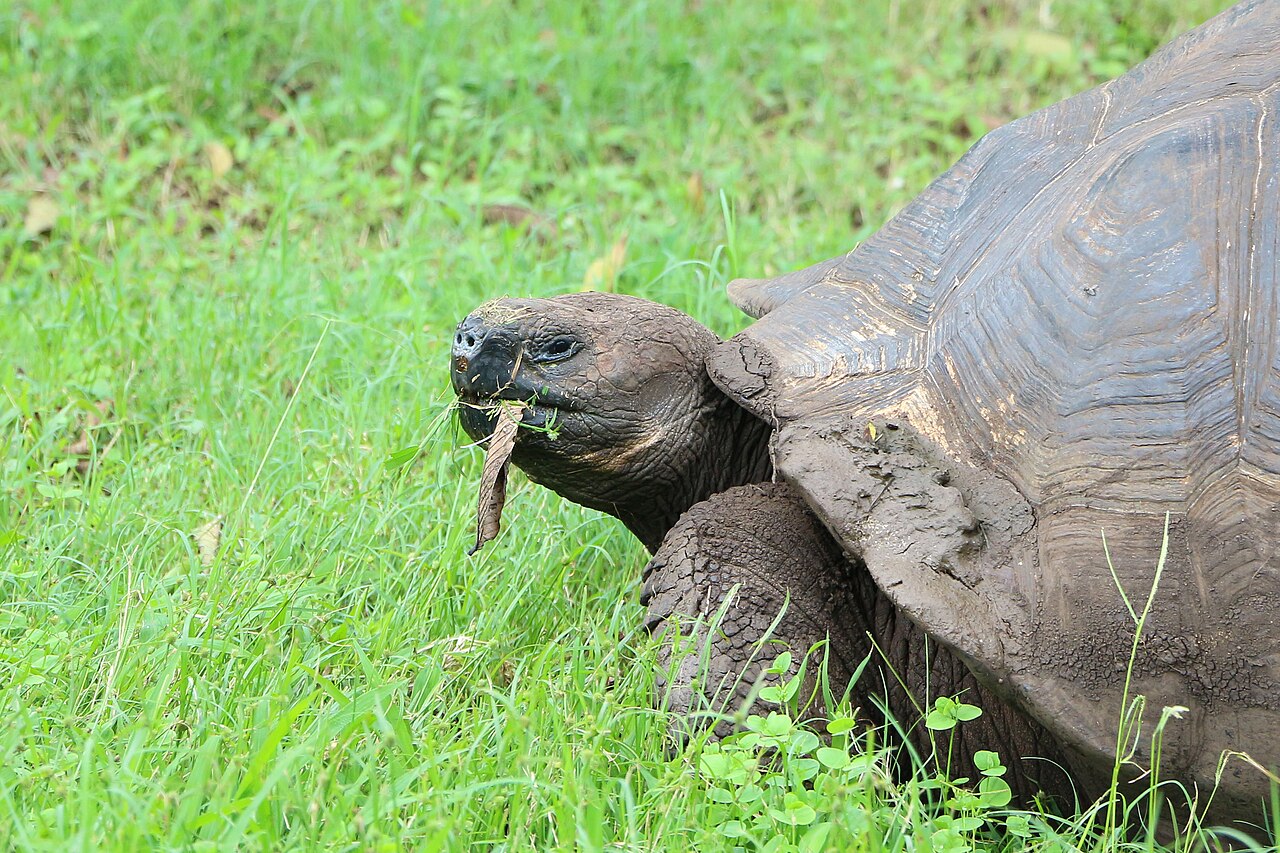
June catches the garúa at its most generous. The waved albatrosses are on Española, where they breed from April to December and nowhere else on Earth; blue-footed boobies perform their courtship dances mainly from June to August; whale sharks reach the northern islands of Darwin and Wolf from June onward; and the giant tortoises begin their nesting season. Set against that, the mainland is simultaneously at its most cooperative — the one month when a Galápagos week and a volcano week stop competing.
Picture the place
In the Santa Cruz highlands in June the garúa hangs as a fine mist over green pasture, and the giant tortoises graze through it like slow grey boulders, unbothered by the drizzle that has kept the lowlands' heat away entirely.
The easily missed detail
The archipelago's two seasons are a trade, not a ranking: June buys the wildlife at the price of cold water — a wetsuit is standard kit in the garúa, and snorkellers who came for December's bathwater sea will feel every degree of the Humboldt. Equally, December's calm crossings are the season for anyone prone to seasickness, when the inter-island boats stop being an ordeal. Choose by what you fear more: cold water or rough water.
A practical rhythm
- Morning — In the Sierra, June mornings are the volcano hours: Cotopaxi and Chimborazo show themselves before the clouds build, so viewpoint drives and páramo walks belong early.
- Midday — Galápagos days are built around the visitor sites' schedules: a landing in the morning, snorkelling in the middle hours when the light is strongest in the water, and the second landing toward evening.
- Evening — June evenings at altitude are cold and clear — Quito's old town under a hard bright sky — while in the islands the day ends early, with the boats' briefings and the sea lions taking the benches of Puerto Ayora for the night.
What could complicate the plan
The 2026–27 El Niño hangs over every Galápagos booking: Ecuador's authorities have issued a red alert for the forecast event, and El Niño is the archipelago's known catastrophe — the warm water shuts down the upwelling, and in strong events marine iguanas starve, penguins and cormorants stop breeding and sea lion pups die. Check the current outlook before committing to a marine-heavy trip. June to August is also the islands' busiest stretch alongside the Christmas period, and the good boats sell out four to six months ahead. On the mainland, June's one gap is the coast: Guayaquil and the beaches are in their overcast season, pleasant but not postcard weather.
What to do next
Book June, split it islands-first or volcanoes-first by the flights, and read the planning answer in this group for the fee, card and routing mechanics — then verify the El Niño outlook again before you pay for the boat.
Sources
- Galápagos National Park Directorate — 97 percent of the archipelago's land protected since 1959; entry fee of $200 per foreign adult (doubled August 2024) and $100 for children under 12, the $20 transit control card, and licensed naturalist guides required at visitor sites
- INAMHI (Instituto Nacional de Meteorología e Hidrología) — Ecuador's seasonal patterns: the Sierra's dry season from June to September with rains cresting around April, the coast's wet season from December to May, and the Galápagos' garúa from June to November
- UK Foreign, Commonwealth & Development Office, Ecuador travel advice — Ecuador's red alert for the forecast 2026–27 El Niño and its expected disruption
- UNESCO World Heritage Centre — the Galápagos Islands, inscribed in 1978 among the first twelve properties on the World Heritage List