Ecuador country guide Food and drink
What local dishes should I try in Ecuador, and where should I look for them?
The short answer
Eat Ecuador by region and calendar: encebollado for breakfast in Guayaquil — declared national heritage in 2024 — locro and llapingachos in the Sierra, hornado carved to order in the markets, and fanesca, the twelve-grain soup that exists for Holy Week alone.
The answer, with local context
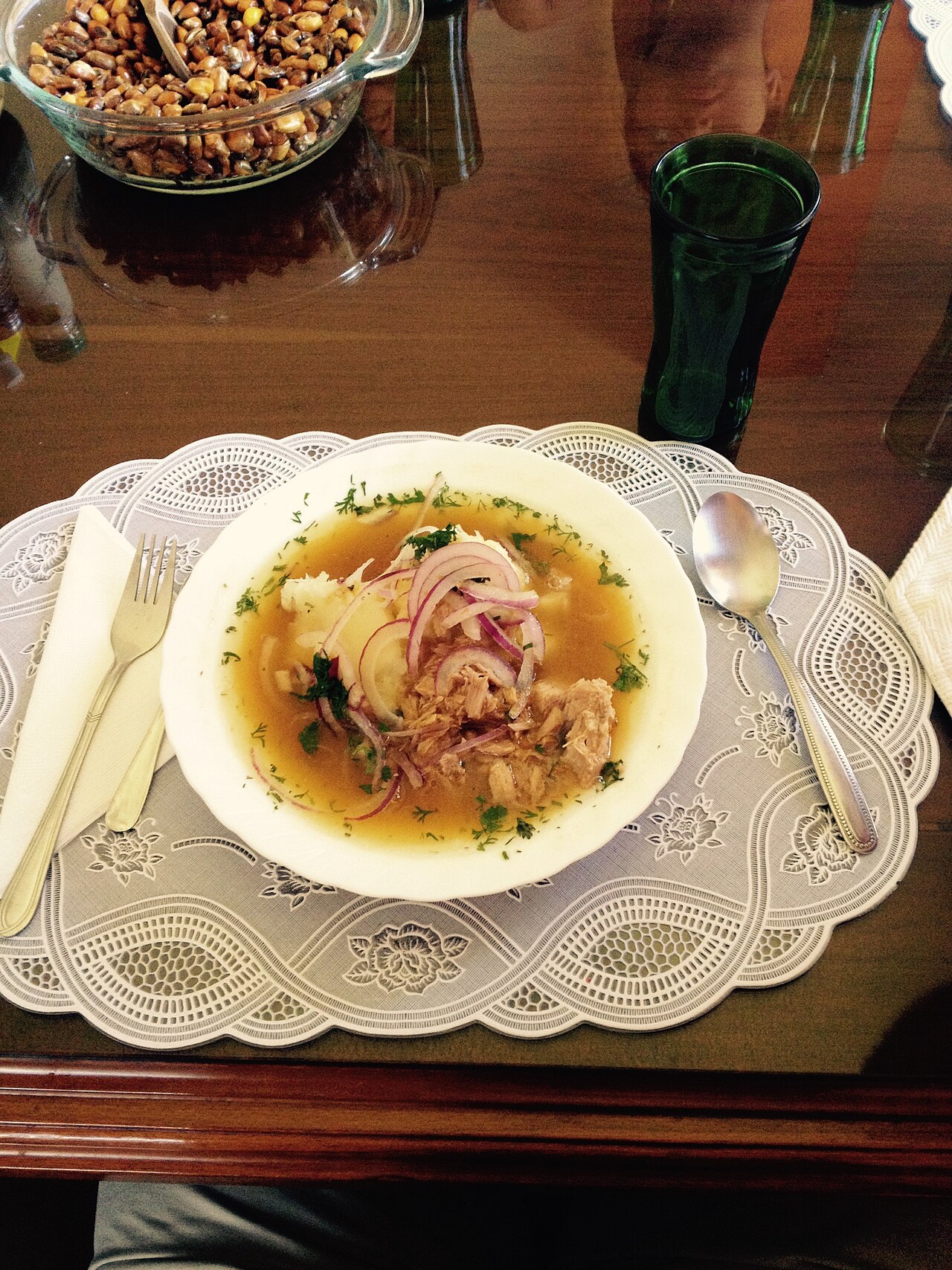
The encebollado is the dish Ecuador argues least about. It is a brothy soup of albacore tuna and yuca under a mound of red onion pickled in lime, eaten with chifles — thin plantain chips — and it is a morning food, the country's sovereign hangover cure, nicknamed levanta muertos, raiser of the dead. In July 2024 the Minister of Culture declared Guayaquil's encebollado part of Ecuador's intangible heritage; Manabí's provincial records trace a boiled-fish antecedent on this coast to the Valdivia culture around 3500 BC. Guayaquil, the port that perfected it, eats it at dedicated encebollado houses from early morning, and the rest of the country has simply surrendered.
The Sierra cooks from the cold pantry — potatoes by the dozen varieties, corn, fava beans, chocho lupini, fresh cheese. Its emblem is the locro de papa: potatoes simmered down with cheese and cream, colored with achiote, served with avocado. Llapingachos — the name is Kichwa, llapin, crushed, and gacho, fried — are patties of mashed potato and cheese fried until crisp, and they exist largely as the hornado's partner: a whole pig marinated in chicha, garlic and cumin, roasted for hours in a wood-fired adobe oven until the skin turns to glass, carved to order in the market halls and served with llapingachos, mote and the sharp agrio sauce. The highlands keep two dishes hostage to the calendar. Fanesca, eaten through Holy Week and centered on Good Friday, is a soup of twelve tender grains and beans — one for each apostle, in the telling — with squash and salt cod cooked in milk standing for Christ; its roots reach back to uchucuta, the pre-Hispanic harvest stew of the March equinox, and Quito's restaurants contest an annual fanesca competition. On November 2, the Day of the Dead, the drink is colada morada: purple-corn flour cooked with mortiño, the Andean blueberry, blackberry, naranjilla, pineapple and babaco, spiced with cinnamon, cloves and ishpingo.
The sweetest argument is chocolate, and it is a livelihood before it is a dessert: the Food and Agriculture Organization counts about 150,000 cocoa producers in Ecuador, roughly 80 percent of them small-scale, and cocoa exports of about 360,000 tons in 2021 worth close to US$940 million. Ecuador's traditional Nacional cacao is its inheritance: the International Cocoa Organization classes 75 percent of the country's cocoa exports as fine or flavor cocoa. Taste it at the source in the cacao country around Guayaquil and Machala, and in Quito's chocolate houses — and keep an eye on the new Amazonian pantry arriving in the capital's kitchens: arazá, guayusa tea and Amazonian cacao, the Oriente restocking the Sierra's menus.
Picture the place
At a highland market's hornado stall the pig lies whole and lacquered under the heat lamps, and the vendor carves with a long knife in one motion — a slab of meat, a shard of glass-crisp skin — straight onto the llapingachos, while the queue debates whose turn the crackling is.
The easily missed detail
The encebollado's onion is not a garnish but the dish's name and mechanism: encebollado means "onioned," and the pickled red onion is cut fresh and marinated in lime to order, so a bowl assembled ten minutes ago already tastes different from one built in front of you. Order where the onions are being sliced, not where they are waiting.
A practical rhythm
- Morning — Encebollado is a breakfast institution: Guayaquil's houses fill from seven, and the bowl, a coffee and chifles is the coastal day's foundation.
- Midday — The Sierra eats its main meal at midday: locro to open, hornado and llapingachos in the markets at their freshest, and the set lunches of Quito and Cuenca running the same canon at working prices.
- Evening — Evenings suit the drinks: a canelazo — hot aguardiente with cinnamon and naranjilla — against the highland cold, and in November the colada morada stalls, which belong to the early evening of the Day of the Dead season.
What could complicate the plan
The calendar closes kitchens: fanesca vanishes after Holy Week for another year, and colada morada is a late-October-to-November affair — a trip in June eats neither, whatever the restaurants promise. The coast's other law is the hour: encebollado sold at dinner is a compromise, since the dish is built for mornings and the best houses sell out by early afternoon. And the cuy question follows the traveler from Peru: Ecuador's Sierra roasts it too, for fiestas and family occasions — order it where it is the specialty of the house, in the highland towns, and expect the whole animal, presented as it was cooked.
What to do next
Give Guayaquil a morning for the encebollado, a market midday to the hornado, and — if the trip touches Holy Week or early November — let the calendar pick one meal for you.
Sources
- Ministerio de Cultura y Patrimonio — the declaration of Guayaquil's encebollado as intangible heritage in July 2024
- International Cocoa Organization — 75 percent of Ecuador's cocoa exports classed as fine or flavor cocoa, from the traditional Nacional variety
- Food and Agriculture Organization of the United Nations — 2024 information brief on Ecuador's cocoa sector: about 150,000 producers, roughly 80 percent small-scale, and about 360,000 tons exported in 2021 for nearly US$940 million