Egypt country guide Trip planning
How can I plan a memorable first trip to Egypt without rushing?
The short answer
Build an approximately nine- to eleven-night trip around Cairo, Luxor, and Aswan, allowing several nights in each region and treating flights, longer rail journeys, visas, and archaeological ticketing as separate planning decisions.
The answer, with local context
A first trip works best when the route follows the geography of the Nile. Cairo provides the northern entry point and access to the capital’s historical districts. Luxor lies approximately 435 miles (700 kilometers) south of Cairo, according to UNESCO’s geographical description of Ancient Thebes. Farther south, Aswan offers a river setting with islands, quarries, and access to Nubian heritage sites. These regions warrant separate overnight bases rather than attempts to connect everything through day trips. UNESCO World Heritage Centre
For a U.S. passport holder, Egypt requires a visa. The official Egyptian Ministry of Interior e-Visa portal lists the United States among the nationalities eligible to apply electronically. Its published tourism e-Visa fees are US$30 for a single-entry visa and US$65 for a multiple-entry visa. These are application fees for the respective visa types, not entry tickets to attractions. The portal also requires a passport valid for at least six months from the arrival date. Applicants must carry a printed e-Visa, travel itinerary, and details of accommodation or intended places to visit. Visa to Egypt
The application itself has a timing rule: the government instructs travelers to submit an e-Visa application at least seven days before departure. The process requires creating an account, completing an application, making an electronic payment, and retrieving the approved document. Egypt’s national tourism portal separately publishes information about visa-on-arrival arrangements, including a US$25 figure. Because the official e-Visa portal publishes a different amount for electronic single-entry visas, these should be treated as different application channels, not interchangeable prices. Visa fees and eligibility require refresh because they are time-sensitive government rules. Visa to Egypt +1
The broader route should also reflect the type of archaeology being visited. Cairo’s historical districts, the large open complexes around Luxor, and Aswan’s river-island monuments offer different experiences and cannot be covered at the same pace. A workable first itinerary is three nights in Cairo, three in Luxor, two in Aswan, and one or two additional nights for travel connections or a more leisurely exploration of the Nile. This is a suggested allocation, not an official minimum stay.
Egypt’s U.S. travel advisory is another substantive planning factor. The State Department’s Level 2 advisory issued July 15, 2025, with guidance updated August 11, 2025, calls for increased caution because of terrorism, crime, and health concerns. It identifies Northern and Middle Sinai, certain Western Desert travel, and military border areas as having higher restrictions. Those dates describe the published advisory edition, not a future event. The advisory must be checked as a time-sensitive item before the page is released. U.S. Department of State - Travel +1
Picture the place
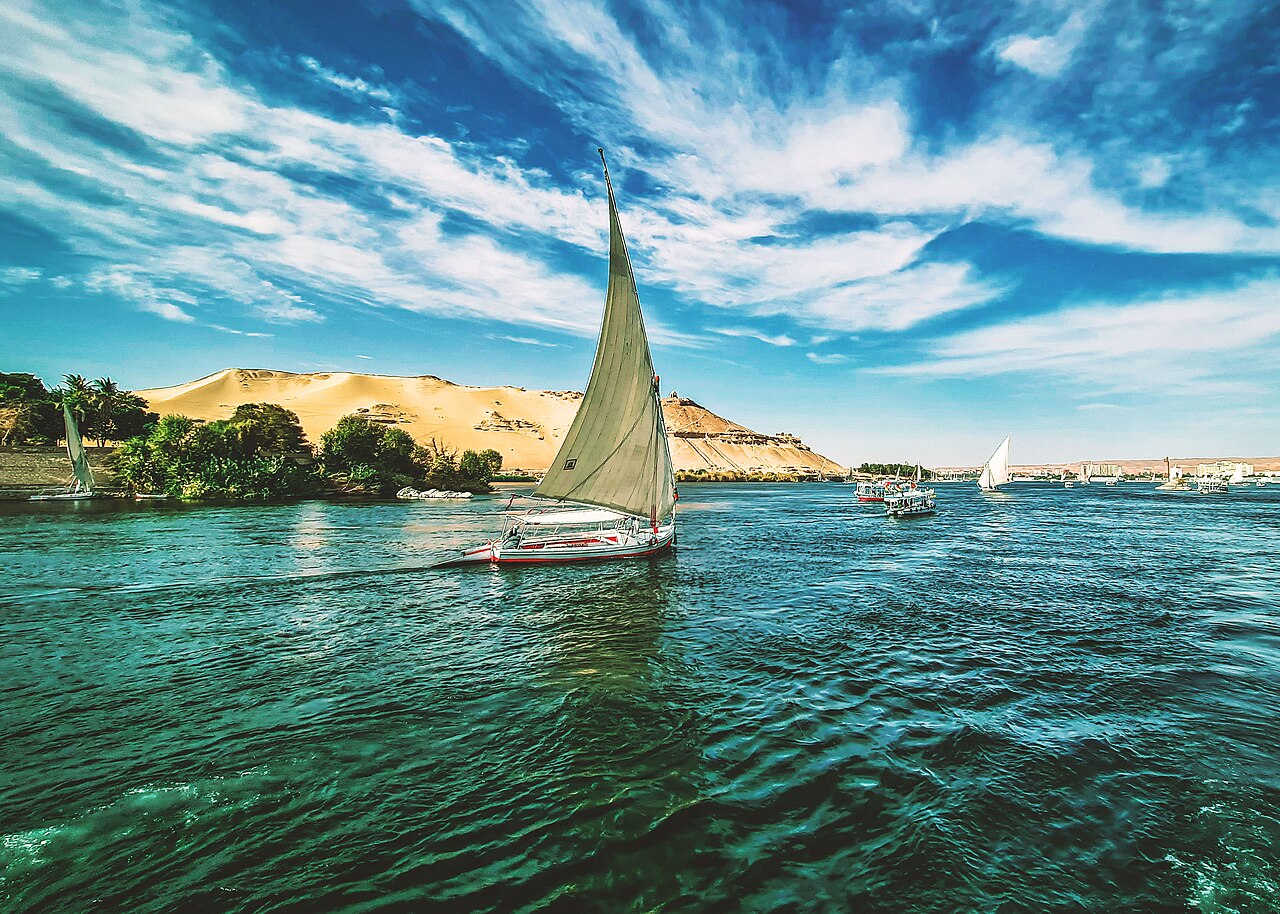
The Nile provides a visual thread through the journey. Around Cairo, the river passes through a dense capital; farther south, Luxor’s temples and cultivated riverbanks sit close to the desert; around Aswan, large rock formations and islands interrupt the water.
The easily missed detail
A traveler can hold the correct visa and still plan an unrealistic itinerary. Egypt’s main heritage centers are spread along a long north-to-south corridor, and the costs of archaeological entry are separate from intercity transport, accommodation, and guided services. Some temples are on islands, while others occupy exposed desert sites or opposite banks of the Nile. That geography should determine the order of the journey.
A practical rhythm
- Days 1–3 — Cairo: Stay in one base, giving separate time to the central historic districts and the western archaeological sites.
- Days 4–6 — Luxor: Divide time between the east-bank temple complexes and the west-bank necropolis rather than combining them into one long day.
- Days 7–9 or longer — Aswan: Explore the river and nearby archaeological heritage, adding longer excursions only when they fit the available nights.
What could complicate the plan
An e-Visa is not itself a guarantee of entry; Egyptian border authorities retain the right to refuse admission. The country also has geographically specific security restrictions, which can affect routes through the Western Desert and Sinai. Travelers with less than a week may need to reduce the number of regions rather than eliminate overnight stays. For U.S. visitors, the most useful administrative distinction is between the official electronic visa channel and visa-on-arrival procedures, because their published fees and requirements are not identical.
What to do next
provides the climate basis for choosing dates and the specific visiting rules at Giza. identifies additional sites worth incorporating into a longer itinerary.
Sources
- UNESCO World Heritage Centre, Ancient Thebes with its Necropolis — location of Luxor relative to Cairo and Nile Valley geography.
- Egyptian Ministry of Interior, Official e-Visa FAQ — eligible nationalities, fees, documents, and passport-validity requirements.
- Egyptian Ministry of Interior, e-Visa Portal — application process and seven-day advance application requirement.
- Experience Egypt, Official Tourist Visa FAQ — separate visa-on-arrival information.
- U.S. Department of State, Egypt Travel Advisory — advisory level, publication dates, and higher-risk areas.