Egypt country guide When to visit
When is the best time to visit Egypt for Giza pyramids?
The short answer
November through February is the strongest season for a first trip centered on the Giza pyramids, because it combines relatively mild conditions on the Giza Plateau with substantially cooler weather at Egypt’s major Nile Valley archaeological sites.
The answer, with local context
Egypt’s climate cannot be represented by one city. The Mediterranean coast, Nile Valley, Red Sea coast, and southern desert have markedly different temperature patterns. Egyptian Meteorological Authority records published through the World Meteorological Organization illustrate the contrast. In January, Alexandria averages a daytime high of 65°F (18.3°C) and 2.08 inches (52.9 mm) of rain. Luxor averages 73°F (23°C) and just 0.06 inches (1.6 mm) of rain. At Hurghada on the Red Sea, January’s average high is 71°F (21.7°C), with only 0.02 inches (0.6 mm) of rain. World Weather +2
Southern Egypt becomes much hotter in summer. Luxor’s average July high reaches 107°F (41.4°C), and Aswan records the same average daytime maximum. Alexandria, moderated by the Mediterranean, averages 86°F (29.9°C) in July. This regional difference matters if a traveler wants to combine the pyramids with the tombs and temples of Upper Egypt rather than remain in the Cairo metropolitan area.
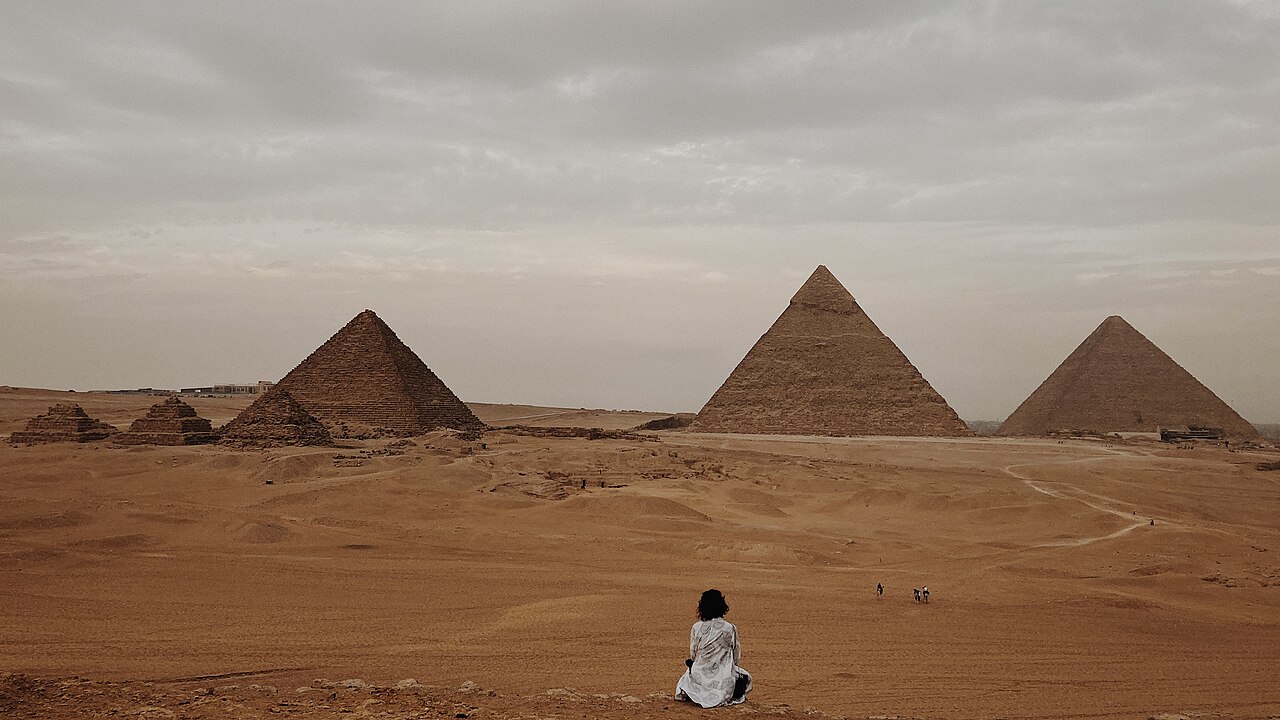
The Giza Plateau has its own significance and access rules. The Great Pyramid was built for Khufu, a king of Egypt’s Fourth Dynasty, whose reign is dated approximately 2589–2566 BCE by Egypt’s antiquities ministry. The other two principal pyramids were constructed for Khafre and Menkaure. The site also contains the Great Sphinx, smaller queens’ pyramids, mastaba tombs, funerary temples, and associated causeways. UNESCO inscribed the wider property, Memphis and its Necropolis – the Pyramid Fields from Giza to Dahshur, in 1979 under criteria (i), (iii), and (vi). Ministry of Tourism and Antiquities +1
Egypt’s antiquities ministry currently lists the Giza Plateau as open daily from 8 a.m. to 4 p.m. The published foreign-adult plateau entry price is 700 Egyptian pounds. Importantly, that ticket covers the archaeological area, not entry inside the Great Pyramid or the pyramids of Khafre and Menkaure, nor certain other separately ticketed tombs. These prices are a snapshot of the ministry’s published information, not a permanent tariff.
Picture the place
Giza’s pyramids rise from a limestone plateau on the western edge of the Greater Cairo metropolitan area. Their massive stone courses sit above open, largely unshaded ground, with the desert extending beyond the monumental complex.
The easily missed detail
The pyramids are not three isolated structures. Each royal pyramid formed part of a larger funerary complex that included smaller pyramids, temples, tombs, and a ceremonial approach. That explains why an itinerary focused only on photographing the three largest pyramids leaves out important evidence of how the ancient site functioned.
A practical rhythm
- Opening hours — Giza Plateau: Begin with the exterior monuments while the morning temperature is lower.
- Late morning — Sphinx and associated structures: Continue to the surrounding funerary remains rather than leaving immediately after seeing Khufu’s pyramid.
- Another day — Memphis and Saqqara: Explore the broader pyramid-building tradition within the same UNESCO-listed archaeological region.
What could complicate the plan
The Giza Plateau has exposed stone terrain, and the summer heat is severe for extended walking. Inside-pyramid admission is separate from site entry, and the available internal routes differ in physical difficulty from walking outside. Egypt’s published archaeological ticket prices and hours are time-sensitive; the Ministry of Tourism and Antiquities is the authoritative publisher of changes.
What to do next
expands the journey beyond Giza to other important Egyptian archaeological and natural sites. explains how to connect these regions without compressing the journey into a rushed itinerary.
Sources
- World Meteorological Organization, Egyptian Meteorological Authority, Alexandria — 1981–2010 coastal temperature and rainfall normals.
- World Meteorological Organization, Egyptian Meteorological Authority, Luxor — Upper Egypt monthly temperature and rainfall normals.
- World Meteorological Organization, Egyptian Meteorological Authority, Aswan — southern Nile Valley summer temperatures.
- World Meteorological Organization, Egyptian Meteorological Authority, Hurghada — Red Sea coastal climate.
- UNESCO World Heritage Centre, Memphis and its Necropolis — inscription date, criteria, and archaeological components.
- Egyptian Ministry of Tourism and Antiquities, Giza Plateau — historical details, opening hours, entry fees, and ticket exclusions.