Egypt country guide Places and experiences
What should a first-time traveler see in Egypt beyond the obvious highlights?
The short answer
Saqqara’s Step Pyramid, the tomb landscapes of Luxor, Nubian monuments around Aswan, and Wadi Al-Hitan’s fossil beds reveal four very different chapters of Egyptian history and natural heritage beyond the famous pyramids at Giza.
The answer, with local context
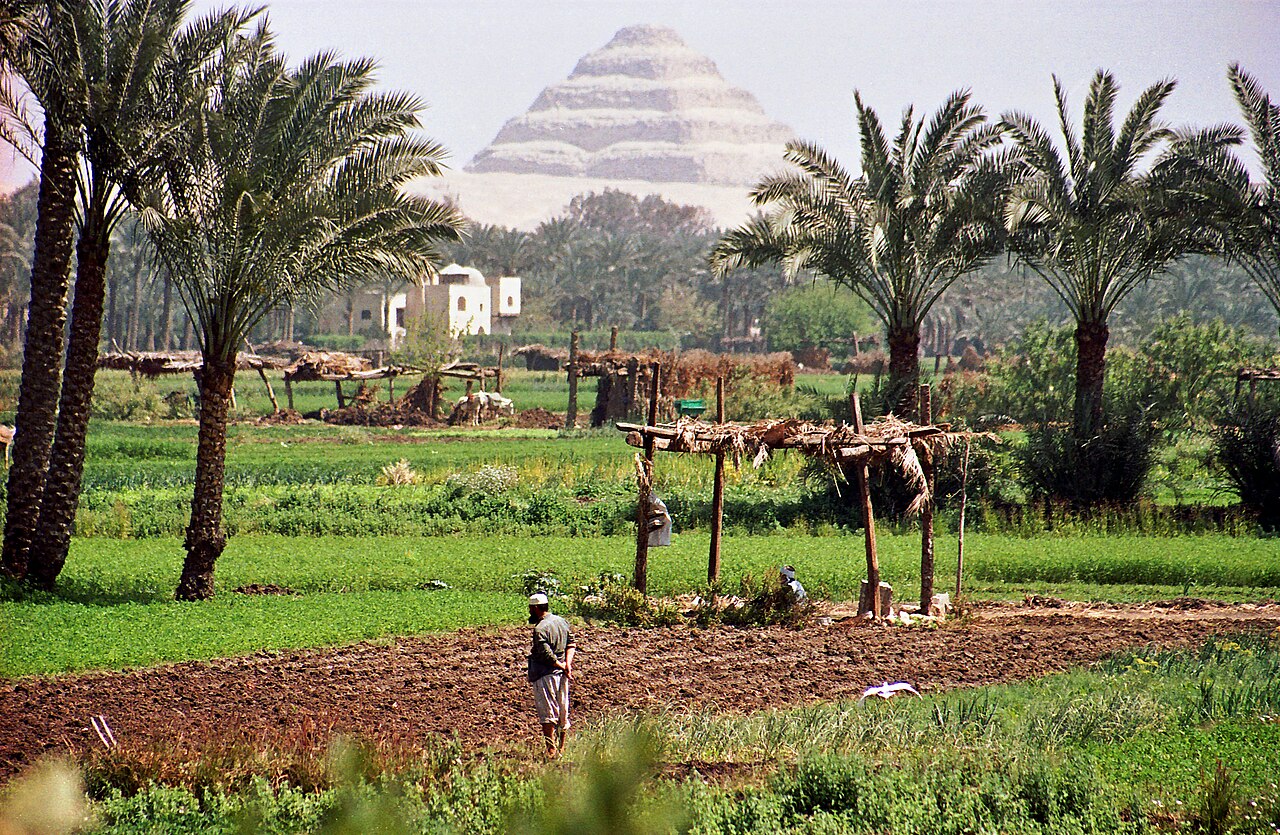
Start at Saqqara, approximately 25 miles (40 kilometers) southwest of Cairo according to Egypt’s Ministry of Tourism and Antiquities. This ancient necropolis preserves burial sites from many periods of Egyptian history. Its most famous monument is the Step Pyramid associated with King Djoser, dating to the early Third Dynasty, around the 27th century BCE. The pyramid rises in six stepped levels and represents a major shift from the earlier rectangular funerary structures called mastabas. The ministry identifies Imhotep as the architect traditionally associated with the design. Ministry of Tourism and Antiquities +1
Saqqara also holds evidence of later royal funerary practices. The Pyramid of Unas contains early examples of the Pyramid Texts, funerary inscriptions intended to assist a deceased ruler in the afterlife. The underground Serapeum housed burials of sacred Apis bulls, associated with the god Ptah. These monuments show that Saqqara continued to matter long after the earliest pyramid builders.
Travel south to Luxor for a different historical period. UNESCO’s Ancient Thebes with its Necropolis, inscribed in 1979, includes the temples of Karnak and Luxor on the Nile’s east bank and extensive burial areas on the west bank. The west bank contains the Valley of the Kings, Valley of the Queens, and the terraced mortuary temple of Hatshepsut at Deir el-Bahari. Karnak’s Great Hypostyle Hall contains 134 columns; UNESCO records the hall as approximately 102 meters wide and 53 meters deep. This monumental scale belongs to a later phase of Egyptian civilization than the earliest pyramid complexes. UNESCO World Heritage Centre
Around Aswan, the UNESCO-listed Nubian Monuments from Abu Simbel to Philae preserve another historical setting. The property includes 10 component areas, among them Abu Simbel, Philae on Agilkia Island, the ruins of Elephantine, and Aswan’s ancient stone quarries. UNESCO’s international campaign from 1960 to 1980 helped relocate threatened monuments in response to the creation of Lake Nasser. Seeing these temples is also an encounter with one of the most ambitious archaeological rescue campaigns of the twentieth century. UNESCO World Heritage Centre
A fourth possibility lies outside the usual ancient-temple itinerary. Wadi Al-Hitan, in the Faiyum Governorate, entered UNESCO’s World Heritage List in 2005 under natural criterion (viii). Its fossil assemblages document the evolution of early whales from land-dwelling ancestors into marine mammals. The World Heritage area covers approximately 20,015 hectares and forms part of the wider Wadi El-Rayan protected landscape. However, its Western Desert setting makes current travel-security restrictions particularly important. UNESCO World Heritage Centre
Picture the place
Saqqara combines low desert terrain with an unmistakably stepped stone pyramid. Luxor’s temples stand near fertile Nile farmland and mountain-backed tomb valleys. Around Aswan, islands interrupt the river, while Wadi Al-Hitan occupies a dry landscape of exposed rock and fossil-bearing sediments.
The easily missed detail
The relocated Nubian temples are historically important in two different ways. They preserve ancient architecture, but they also demonstrate modern international heritage protection. Philae’s principal sanctuary now stands on Agilkia Island, and the Abu Simbel temples were moved from their original locations to avoid flooding.
A practical rhythm
- Northern Egypt — Saqqara: Study the transition from mastaba tombs to monumental pyramid architecture.
- Middle Nile journey — Luxor: Give separate attention to the temple complexes on the east bank and the royal necropolises on the west.
- Southern Egypt — Aswan: Explore the Nubian monuments and the river-island setting, with Abu Simbel as a separately organized excursion.
What could complicate the plan
The sites occupy widely separated regions. Some tombs and archaeological interiors require additional tickets beyond general area admission. For Wadi Al-Hitan, the U.S. Department of State’s travel advisory explicitly identifies the Western Desert as a Do Not Travel area unless traveling with a professionally licensed tour company. Its exceptional fossil record should therefore be treated as a reference or specialist-tour subject, not as an ordinary independent desert-driving recommendation.
What to do next
explains how to divide a first visit into manageable regional stages. adds the food traditions that distinguish the Nile Valley, countryside, and coastal regions.
Sources
- Egyptian Ministry of Tourism and Antiquities, Saqqara — geography, royal tombs, Pyramid Texts, and Serapeum.
- Egyptian Ministry of Tourism and Antiquities, Step Pyramid of Djoser — architecture, dating, and funerary purpose.
- UNESCO World Heritage Centre, Ancient Thebes with its Necropolis — heritage designation, temples, tombs, and architectural dimensions.
- UNESCO World Heritage Centre, Nubian Monuments from Abu Simbel to Philae — relocation campaign and protected components.
- UNESCO World Heritage Centre, Wadi Al-Hitan — designation, fossil significance, and protected area.
- U.S. Department of State, Egypt Travel Advisory — Western Desert travel restrictions.