Estonia country guide When to visit
When is the best time to visit Estonia for Tallinn Old Town?
The short answer
Late June, around Midsummer — the Old Town glows in near-midnight light at 59°N, the whole country empties toward its bonfires for Jaanipäev, and Tallinn's terraces, towers and markets are at full summer stretch.
The answer, with local context
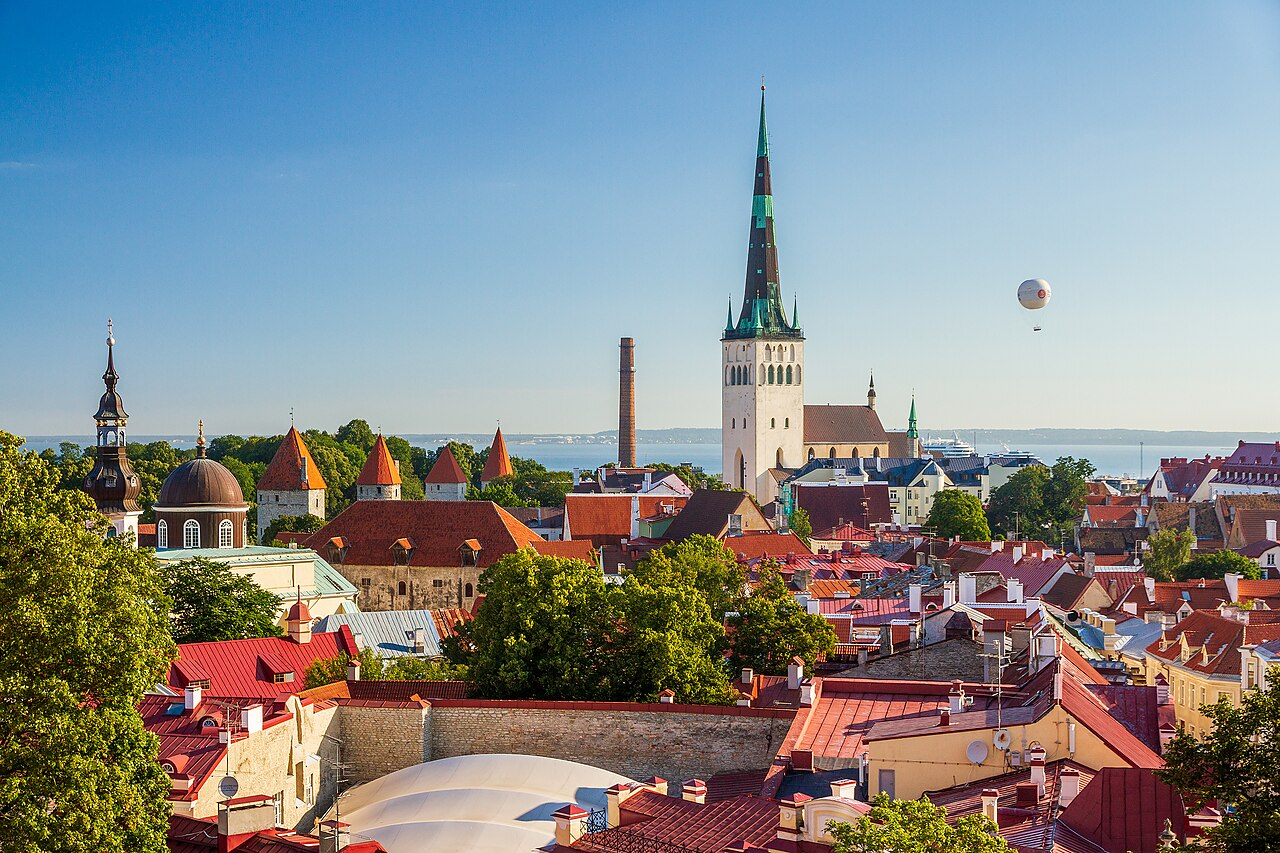
Tallinn's Old Town is the anchor, so understand what you are timing. The Old Town UNESCO inscribed in 1997 is among the best-preserved medieval cities in northern Europe — a Hanseatic trading town (Tallinn joined the Hanse in 1285) whose defences still stand in daily use: roughly 1.2 miles (1.9 km) of the town wall survive with more than 20 of its towers, the Town Hall (1402–1404) is the oldest surviving Gothic town hall in northern Europe, and the Town Hall Pharmacy, the Raeapteek, has traded from the same address since 1422 — one of Europe's oldest continuously operating pharmacies, museum and shop in one. In late June the light honors all of it: at this latitude the sun sets after 10:30 p.m. and true darkness never quite arrives, so the limestone streets and the Kohtuotsa viewing platform hold their amber for hours, the café terraces on Town Hall Square run to midnight, and St Olaf's spire — at 405 feet (123.7 m), for a time after 1549 the tallest building on earth — catches the last light over the Baltic.
The national picture agrees. Late June is when Estonia opens its whole summer estate: the island ferries to Saaremaa and Hiiumaa run their full schedules, Lahemaa's manor hotels and bog boardwalks are in peak green, Pärnu's beach season begins, and the country's second city, Tartu, sits in lilac season. The centerpiece lands on June 23–24: Jaanipäev, Midsummer, Estonia's biggest holiday (June 23, Victory Day, and June 24 are national holidays), when the country lights bonfires from the Old Town's edge to every village green and island shore — Tallinners combine a festive city evening with the bonfire at the Estonian Open Air Museum at Rocca al Mare, and travelers who base in the capital can join both worlds in one night. The great Song Celebration (Laulupidu) runs only every five years — most recently in July 2025, next due in 2029 — but ordinary Julys keep the song grounds' echo in smaller festivals.
Winter's counter-case is December, when the Town Hall Square Christmas market (Estonia claims the first public Christmas tree, erected in 1441) wraps the Old Town in snow and glögi — magical, and five hours of daylight deep. Summer's white nights double the usable day. For a first Estonia, late June is the answer the country itself gives.
Picture the place
From the Patkuli platform at 10 p.m. in late June: the Old Town's red roofs and green spires still in full daylight-gold, the harbor ferries crossing a silver gulf, and no true night coming to end the evening.
The easily missed detail
June's white nights invert the sightseeing logic: the Old Town's cruise-ship crowds (Tallinn is a major Baltic cruise call) peak between 10 a.m. and 4 p.m., while the city's finest hours — 7 to 11 p.m. — are nearly empty and fully lit. Eat late, walk the wall and the Toompea platforms after dinner, and your medieval city comes without the queue: at midsummer, evening is the new morning.
A practical rhythm
- Aim for June 20–26 — Midsummer week: the city in festival trim, Jaanipäev bonfires on the 23rd, everything open, light until nearly midnight
- Sleep in or beside the Old Town — The evening hours are the prize; a base outside the walls wastes them
- One island bolt-on — A night on Saaremaa or in Lahemaa while the summer systems run at full strength
What could complicate the plan
Midsummer is a national exodus: on June 23–24 many restaurants and sights close or shorten hours as staff leave for the countryside, island ferries and rural hotels book solid, and Tallinn itself half-empties — plan the feast days around the bonfire rather than a museum list. June weather at 59°N is generous but not guaranteed: 68°F (20°C) and sun is typical, with cool rain never far away. And in Song Celebration years (next in 2029) the July peak around the festival swamps accommodation nationwide.
What to do next
Book Old Town lodging for the week of June 23 early, plan the Jaanipäev evening at the Open Air Museum's bonfire, and schedule the pharmacy, the wall towers and the platforms for the long evenings.
Sources
- UNESCO World Heritage Centre — Historic Centre (Old Town) of Tallinn, inscribed 1997: among the best-preserved medieval northern European trading towns
- Tallinn City Museum / City of Tallinn — the surviving town wall (about 1.9 km, with more than 20 towers) and the Town Hall of 1402–1404
- Raeapteek (Tallinn Town Hall Pharmacy) — dispensing from the same premises since 1422
- Statistics Estonia / Visit Estonia — Midsummer (June 23–24) as national holidays; the five-yearly Song Celebration cycle (2025, next 2029)