Guyana country guide Trip planning
How can I plan a memorable first trip to Guyana without rushing?
The short answer
Give Guyana 12–14 days in the long dry season: Georgetown at both ends (2 + 2 nights), the Kaieteur day flight slotted early, and an Iwokrama–Rupununi lodge circuit of 8–9 nights in between — with the Level 3 advisory planned for, not ignored, and a spare day after every interior flight.
The answer, with local context
The planning constants: gateways are Cheddi Jagan International at Timehri (GEO, 41 km south of Georgetown — the transfer is 45–60 minutes and is arranged, never flagged) for the internationals (American from Miami and New York, JetBlue from JFK, Caribbean Airlines across the region, United from Houston since 2024, Copa via Panama) and Ogle (OGL), the capital's second airport, for everything domestic (Kaieteur Cessnas, Trans Guyana and Roraima runs to Lethem and the interior strips). Entry is easy (this guide's first answer): no visa for 90 days or less for U.S. citizens, passport in order, yellow-fever certificate only if arriving from a risk country (vaccination strongly advised anyway, with malaria prophylaxis for the interior). Money is the Guyana dollar (GYD, about 209 per U.S. dollar); cards work in Georgetown's hotels and supermarkets, cash rules the interior, and the oil economy (production since December 2019; Guyana has posted the world's fastest GDP growth rates of the 2020s) is visibly rebuilding the capital — new bridge, new hotels, rising prices in the Georgetown tier.
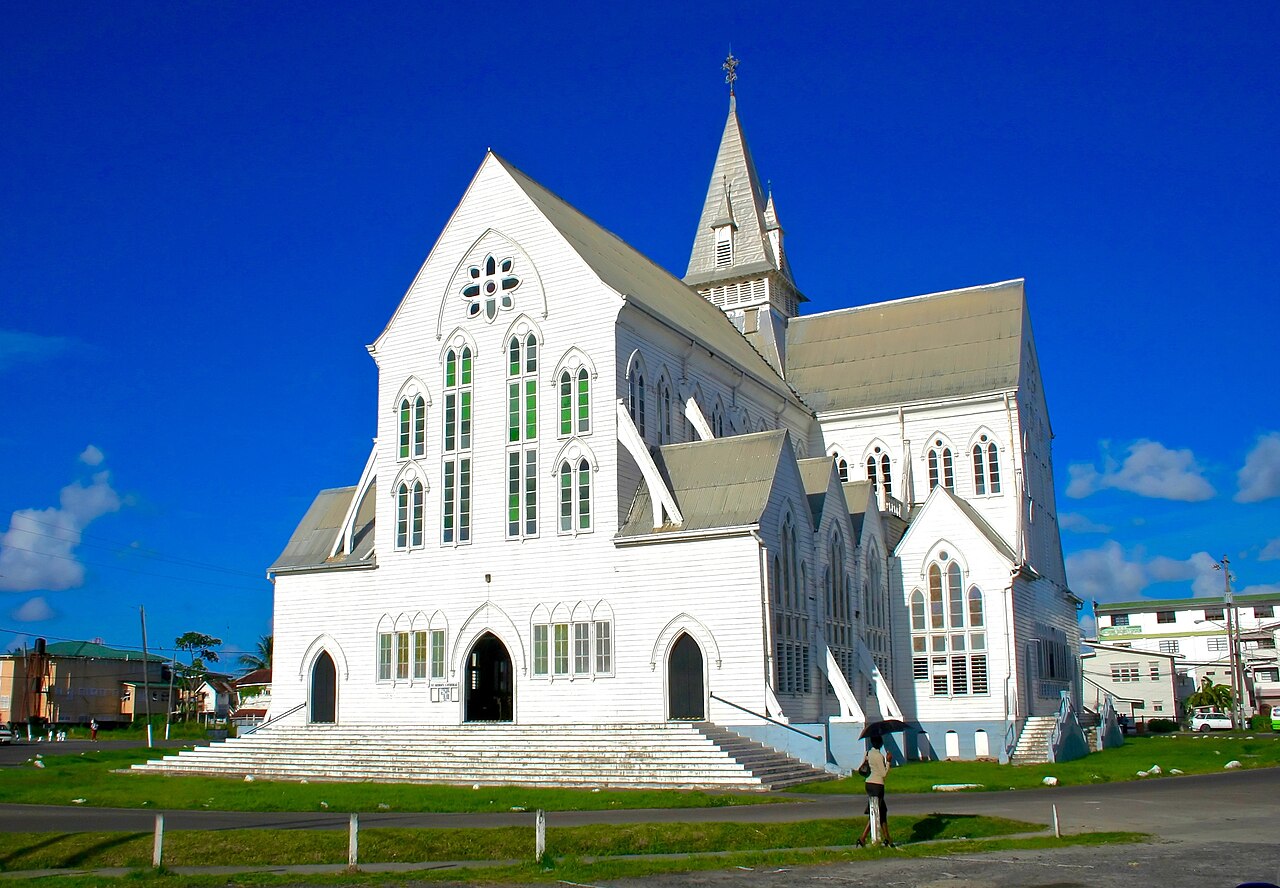
The itinerary that respects the map: Days 1–2, Georgetown (cathedral, museum, markets in accompanied daylight, seawall dusk, the city's excellent lunch scene) — and the Kaieteur day flight placed on day 2 or 3, early in the trip, so weather gets multiple chances. Then south: fly or drive the Lethem road to the Iwokrama circuit (River Lodge 2 nights, Atta canopy 2 nights), on to Surama (2 nights) and Karanambu or Rewa (2–3 nights) by lodge transfers, exiting via Lethem's flight back to Ogle (or the full road for the committed). Days 13–14, Georgetown again: the buffer that absorbs the interior's weather, the rum tour at Diamond, last markets, out. Health spine: malaria prophylaxis for all interior nights (Regions 7, 8, 9 and the Rupununi are transmission country; Georgetown's coast is far lower risk), dengue awareness, reef-of-river care (caiman and piranha briefings are the lodges' standard, and swimming is a guide-led decision, never an impulse). Safety spine, stated plainly: the State Department's Level 3 (crime, August 2026) is the trip's governing document — read it, travel with operators, keep Georgetown nights hotel-shaped, and know that the interior circuit's safety record is the industry's pride.
Picture the place
The flight back from Lethem at golden hour: the Rupununi's savannah unrolling gold to the Kanuku Mountains, the forest wall of Iwokrama rising ahead, and Georgetown's lights the last page of the map.
The easily missed detail
Book the interior as 1 chain, not as lodges: the Georgetown–Lethem corridor's flights, ferries and lodge transfers interlock (the Iwokrama ferry crossing, the weekly patterns, the shared vehicles), and the operators (Wilderness Explorers as the classic coordinator) sequence the whole arc with 1 booking — self-assembling the same chain from abroad is how travelers end up sleeping in Kurupukari's queue. The second detail is Lethem's double life: the Rupununi's gateway town faces Brazil across the Takutu (the bridge to Bomfim/Brazil since 2009), so its weekends run on Brazilian shoppers and rodeo season (the Rupununi Rodeo at Easter fills every bed in the south — glorious if intended, catastrophic if accidental).
A practical rhythm
- 12–14 days, 3 blocks — Georgetown 2, interior 8–9, Georgetown 2: the country's honest minimum
- Kaieteur early — Day 2–3, with 2 weather retries built behind it
- 1 coordinator for the south — Lodges, road, ferry and flights in a single chain
What could complicate the plan
Crime and its advisory sit over the capital like weather: the trip works (thousands do it) by making Georgetown a managed environment (arranged transfers, vetted hotels, daylight commerce, no night walking) and the interior a hosted one — the failure mode is treating Georgetown like a Caribbean beach town. Transport fragility is the second system: interior flights cancel for weather and load, the Lethem road's wet-season state can add a day, the Kurupukari ferry queues unpredictably, and every connection downstream of a small plane needs its spare day (this is why Kaieteur goes first and Georgetown closes the trip). The oil boom prices and books up the capital (conference and energy-sector demand spikes hotel rates and fills the good tables; book Georgetown early). Permit-free entry masks 1 wrinkle: interior travel to Indigenous villages runs on village permission arranged by your operator (titled lands, entry protocols, fees) — independent wandering south is neither legal custom nor wise. And the Essequibo file (the ICJ case, Venezuela's rhetoric, December 2023's referendum and the Argyle peace declaration after) stays a headline, not an itinerary factor, for the standard circuit — keep it that way by staying inside the operators' map.
What to do next
Book the interior chain first for a September–October window (1 coordinator, 8–9 nights), then wrap Georgetown nights and the Kaieteur day around it.
Sources
- U.S. Department of State, Guyana (advisory August 26, 2026; Level 3) — no visa for 90 days or less; crime patterns and market restrictions
- Guyana Tourism Authority / operators — Ogle (OGL) domestic network; Timehri (GEO) international gateways (American, JetBlue, Caribbean Airlines, United, Copa)
- Iwokrama / community lodges — the Kurupukari ferry crossing and lodge-transfer chain; village entry protocols
- Health authorities — malaria transmission in the interior regions; yellow fever vaccination advice; Georgetown's lower-risk coast