Guyana country guide Food and drink
What local dishes should I try in Guyana, and where should I look for them?
The short answer
Pepperpot (the cassareep-dark national dish), cook-up rice, roti with curry, metemgee and a glass of mauby: Guyana's table is the Caribbean's fullest fusion — Amerindian, African, Indian, Chinese, Portuguese and British kitchens sharing 1 market.
The answer, with local context
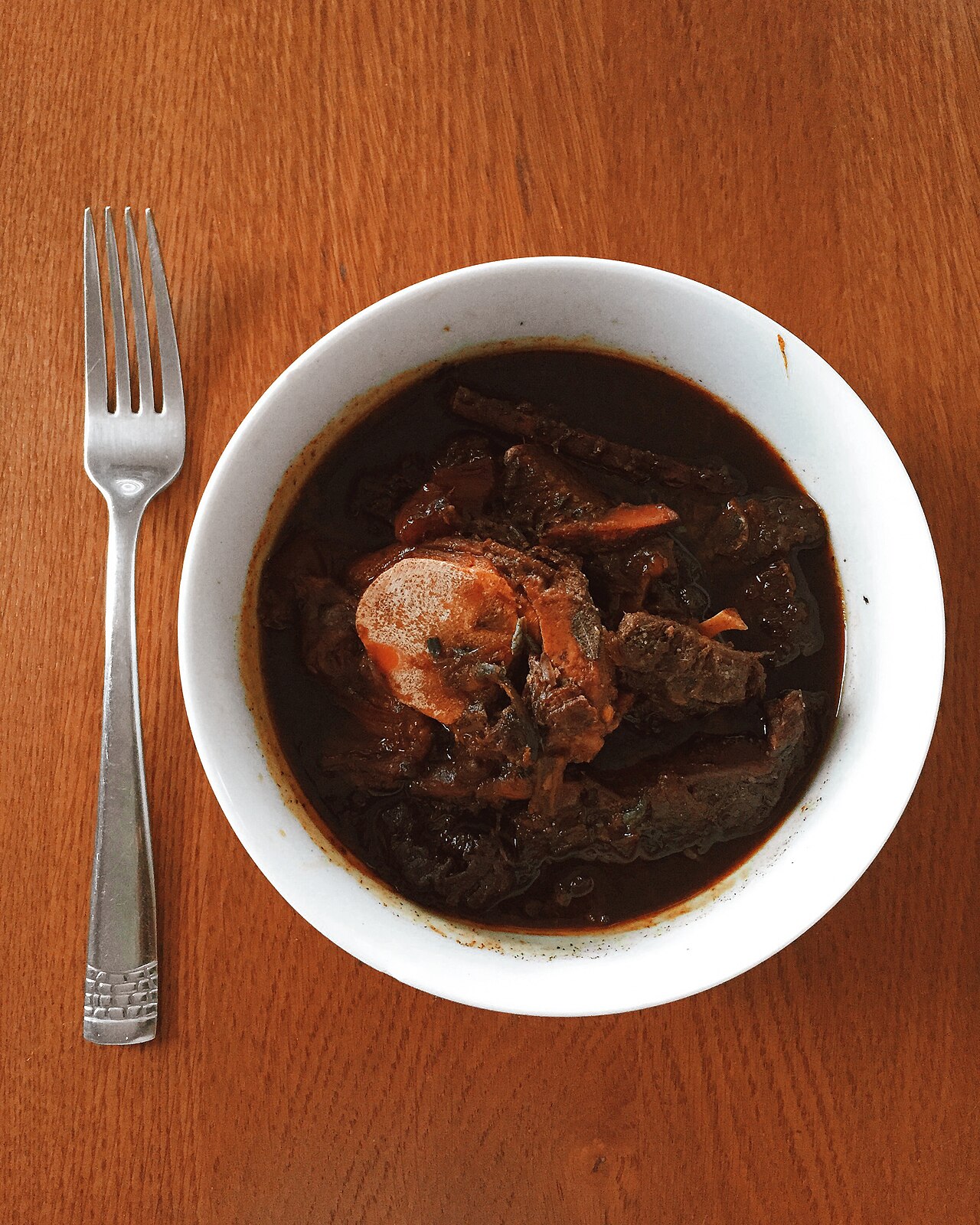
Pepperpot is the thesis dish: a slow, dark stew of beef or pork simmered in cassareep — the boiled-down juice of bitter cassava, an Amerindian preservation technology that keeps the pot safely re-heatable for days — with cinnamon, cloves, orange peel and wiri wiri peppers, eaten with homemade bread at Christmas above all (a Guyanese Christmas without pepperpot is a clerical error) and year-round at the restaurants that know. Around it, the kitchens stack by heritage. Afro-Guyanese: cook-up rice (rice, peas/beans, coconut milk and whatever meats the day provides, cooked to the dry-bottomed ideal), metemgee (ground provisions — eddoe, plantain, cassava, yam — in coconut sauce, often with duff, the steamed dumplings), foo-foo, and black cake at Christmas (rum-soaked fruits, months in the making). Indo-Guyanese: roti (dhalpuri and paratha "buss-up-shut") with curries of chicken, goat and duck (duck curry is a national sporting event, cooked outdoors in karahi pots at creek limes), dhal, aloo balls, pholourie with sour, and sweets (mithai, gulab jamun cousins). Chinese-Guyanese: chow mein and special fried rice in the creole style, wantons, and the "Chinese" as a restaurant category of its own. Portuguese-Guyanese: garlic pork (vinegar-preserved, another Christmas pillar) and bread-making dynasties. Amerindian: tuma pot (fish or meat in a cassareep-and-pepper broth), cassava bread from the interior, and pepperpot's own roots. Drinks close the circle: mauby (bitter bark brew), ginger beer (fiery, homemade), sorrel at Christmas, fresh coconut water and cane juice at markets, and the rums — Demerara rum from Demerara Distillers at Diamond (El Dorado's aged rums are the country's liquid flagship), Banks beer (since 1955) as the lager of record.
Where to eat is Georgetown by day and the lodges by arrangement: Bourda Market and Stabroek Market (daylight, accompanied — the safety note stands) for produce, spices, cassareep bottles and street snacks (salara coconut rolls, pine tarts, cheese rolls, patties from the bakeries — Shanta's and the Portuguese bakeries carry the canon); the Backyard Café (chef Delven Adams' farm-to-table creole kitchen, breakfast pepperpot-adjacent fame), the Oasis Café, Kamboat and New Thriving (Chinese institutions), the Cara Lodge and Pegasus hotel tables, and the seawall food stalls at dusk for fried fish and plantain chips. In the interior, lodge kitchens do the river: labba (paca) and other bush meats appear on lodge and village tables under community rules (a matter for your guide's judgment and local law — the visitor eats what's offered lawfully and asks no sourcing questions at a family table), arapaima where fisheries rules allow, and cashew wine in the Rupununi's season. El Dorado's heritage center at Diamond distillery runs tours and tastings — the rum answer with an address.
Picture the place
Christmas morning in a Georgetown kitchen, any day you can arrange it: the pepperpot dark as mahogany at a low simmer since dawn, fresh bread tearing, sorrel sweating in a jug, and the whole street smelling of cassareep and clove.
The easily missed detail
Cassareep is chemistry as heritage: bitter cassava's juice is poisonous raw (cyanogenic) and becomes pepperpot's preservative soul only by long boiling — an Indigenous food technology that let a meat pot live for days without refrigeration, reheated daily, topped up, theoretically immortal (families keep pepperpots "going" across a season; the rule is a daily boil). When you taste it, you're tasting the Amazon's answer to refrigeration, pre-dating the fridge by centuries. The second detail is the roti test: paratha "buss-up-shut" (named for a torn shirt — beaten soft with 2 wooden paddles as it comes off the tawa) should shatter and drape at once; the Georgetown shops that achieve it have queues at 7 a.m. to prove it.
A practical rhythm
- Market breakfast — Bourda at 8 a.m. for salara, cheese rolls and the cassareep aisle
- Pepperpot somewhere real — The Backyard Café or a hotel's Sunday/creole night; Christmas if you can
- Rum as the souvenir course — The Diamond distillery tour and an El Dorado 15 for the bag
What could complicate the plan
Markets carry the advisory's asterisk: Stabroek is off-limits to U.S. government staff at all times and Bourda after dark — go mid-morning, go with a driver or guide who shops with you, keep phones and jewellery invisible, and enjoy them as the working markets they are rather than as photo safaris. Pepperpot timing is real (Christmas is its high season; outside it, specific restaurants and Sunday specials carry it) and duck curry is an event dish (weekend creek limes, weddings) more than a menu line — ask locally rather than ordering hopefully. Interior eating is lodge-determined (bush meat legality is permit-and-community territory — the lodge's word governs; declining politely is always fine) and Georgetown's restaurant scene runs on lunch more than dinner (the city dines early; late-night options are hotel tables and the seawall, with the safety pattern of the first answer). Hygiene is market-standard (hot, fresh, busy stalls), tap water in Georgetown is treated but brown-ish from the Demerara's silt (hotels filter; bottles abound), and the wiri wiri pepper — pepperpot's spark — is genuinely hot in a way the uninitiated underestimate: respect the small red berry.
What to do next
Breakfast at Bourda, lunch at the Backyard Café, and ask every Georgetown driver the same question: who makes the best pepperpot in town right now?
Sources
- Guyanese culinary record — pepperpot and cassareep; cook-up rice; metemgee; duck curry; garlic pork; the Christmas canon (black cake, sorrel, ginger beer)
- Georgetown listings — Bourda and Stabroek Markets; the Backyard Café; New Thriving; Demerara Distillers (El Dorado rums, Diamond) and Banks DIH (beer since 1955)
- U.S. Department of State, Guyana — market-specific cautions within the Level 3 advisory
- Community tourism record — lodge tables in Iwokrama and the Rupununi; tuma pot and cassava bread