India country guide Trip planning
How can I plan a memorable first trip to India without rushing?
The short answer
Allow at least two weeks, choose two regions rather than five, and start the paperwork early — a US citizen's Indian visa is valid for 10 years, but the passport must have six months of validity beyond the visa application date and two blank pages before the application can proceed at all.
The answer, with local context
The entry rules are the first real constraint, and they are more specific than most. The US Department of State states that a visa is required for India and that travelers must enter with a visa in their passport. For US citizens those visas are issued with 10 years of validity. The alternative for short trips is the electronic travel authorization, available for tourist stays of under 60 days, which must be submitted at least four days before arrival — a deadline that quietly rules out a last-minute booking. The passport conditions apply either way: six months of validity beyond the visa application date, and two blank pages.
The second constraint is the country's size. India holds 44 UNESCO World Heritage properties distributed from the Himalaya to the southern peninsula, and no two-week itinerary covers more than a fraction of them without becoming a series of airports. The workable shape is one northern anchor and one other region, linked by a single domestic flight or an overnight train, with four or five nights in each place rather than two.
The third is the monsoon, which moves. The India Meteorological Department puts the normal onset over Jaipur at about 25 June and normal withdrawal at about 15 September, with onset varying by roughly a week in either direction — the earliest recorded was 16 June 2008 and the latest 11 July 2006. Over those months Jaipur receives 555.8 of its 633 millimeters of average annual rainfall, about 88 percent. The monsoon reaches the southwest coast considerably earlier than it reaches Rajasthan, so a June trip is a wet trip in Kerala and a brutally hot one in the desert north.
Put together, that argues for the October-to-March half of the year, two regions, and bookings made far enough ahead that the visa or authorization is never the reason a date slips.
Picture the place
A Jaipur morning in late December starts near 48°F (9.1°C) and climbs to about 76°F (24.4°C) by afternoon, which is the whole argument for the cool season in one sentence: you can be outside at nine in the morning and still outside at four.
The easily missed detail
India's advisory is not uniform, and that detail changes itineraries. The US Department of State advises travelers to exercise increased caution in India due to crime and terrorism, while Level 4 — Do Not Travel applies to named regions including Jammu and Kashmir and the India–Pakistan border area. A traveler planning a Himalayan leg needs to check which Himalayan region they mean, because the national headline and the regional detail say different things. The CDC separately lists India among the destinations in its Global Measles travel health notice at Level 1 — Practice Usual Precautions, dated 28 May 2025.
A practical rhythm
- Three months out — Confirm passport validity against the six-month rule and the two blank pages, then apply for the visa or the e-Visa. The electronic route closes four days before arrival.
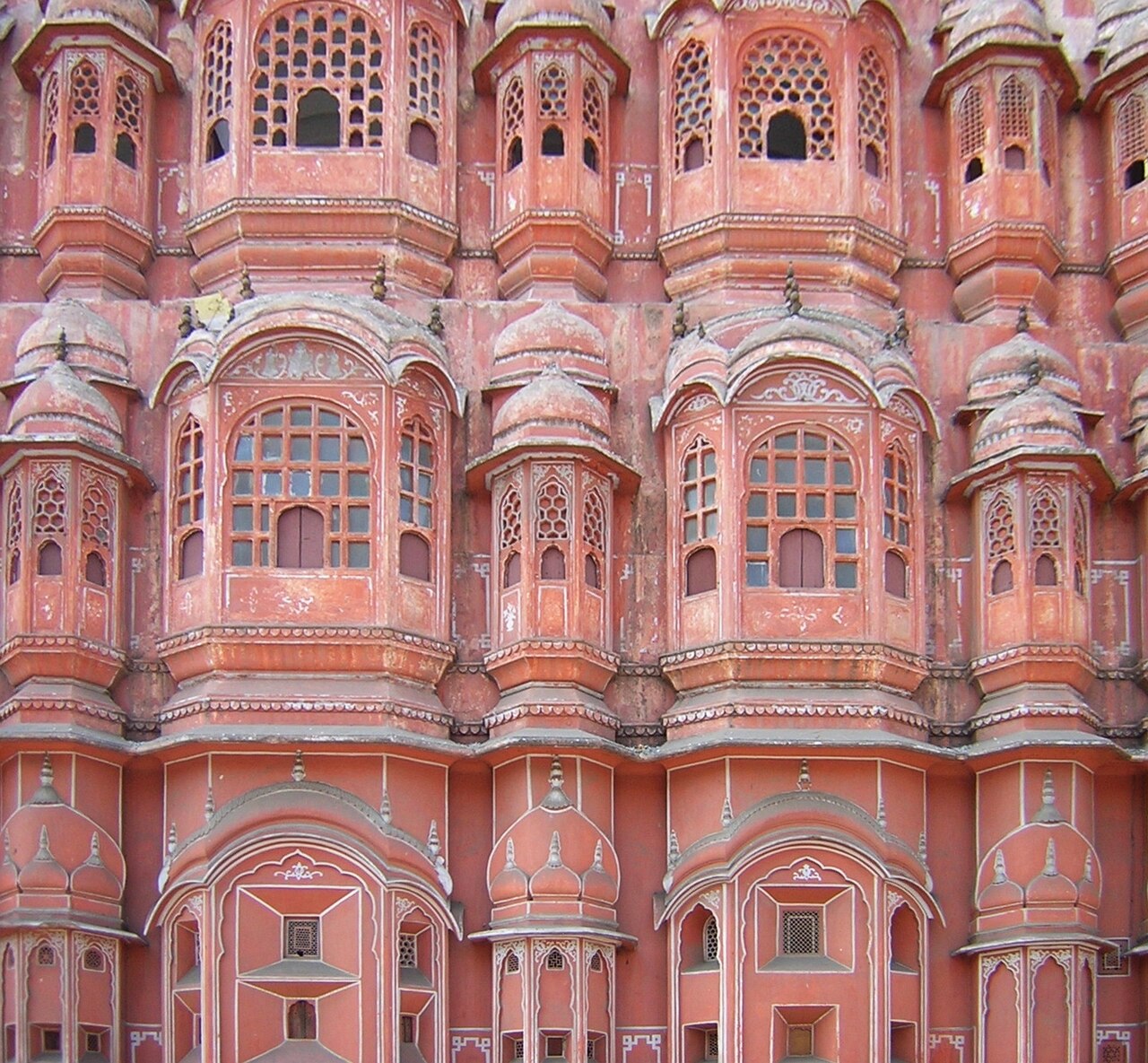
- Weeks one and two of the trip — One region each, with four to five nights per base. Jaipur's walled city, inscribed in 2019, and its Jantar Mantar, inscribed in 2010, can fill several days on their own.
- One travel day between them — Treat the domestic flight or overnight train as a day of the itinerary, not a gap in it.
What could complicate the plan
Monsoon timing varies by up to a week at either end, so a trip planned for the days immediately after the normal 15 September withdrawal can still meet rain. Pre-monsoon heat is severe: Jaipur's May mean maximum is 105°F (40.5°C) with a mean minimum of 82°F (27.5°C). Regional advisory levels differ from the national one. And the e-Visa's four-day submission deadline, combined with the passport validity rule, means paperwork is the item most likely to break an otherwise unhurried plan.
What to do next
The India when-to-visit question sets out Jaipur's month-by-month temperature and rainfall figures; the places-and-experiences question suggests which second region to pair with the north.
Sources
- US Department of State, India country information — visa requirement and 10-year validity, passport validity and blank pages, e-Visa deadline and 60-day limit, advisory wording and Level 4 regions
- India Meteorological Department, Jaipur, Climate of Jaipur — monsoon onset and withdrawal dates and variability, monthly and annual rainfall, monthly temperature means
- UNESCO World Heritage Centre, States Parties statistics — India's 44 inscribed properties
- UNESCO World Heritage Committee, Decisions 34 COM 8B.17 and 43 COM 8B.16 — Jantar Mantar and Jaipur City inscription years
- US Centers for Disease Control and Prevention, Travel Health Notices — Global Measles notice level and date