India country guide Places and experiences
What should a first-time traveler see in India beyond the obvious highlights?
The short answer
Pick one of the 44 World Heritage properties that is not in the Delhi–Agra–Jaipur triangle and build a week around it — Hampi in Karnataka, the Western Ghats, or the cave temples of Ajanta and Ellora in Maharashtra each reward a stay rather than a stop.
The answer, with local context
The scale of India is the thing most first itineraries get wrong. The country holds 44 properties on the UNESCO World Heritage List, spread from the Sundarbans delta on the Bay of Bengal to Nanda Devi in the Himalaya and the Great Living Chola Temples in Tamil Nadu. Three or four of them sit within a day's drive of one another in the north; the rest require either a domestic flight or a long overnight train, and that choice shapes everything else.
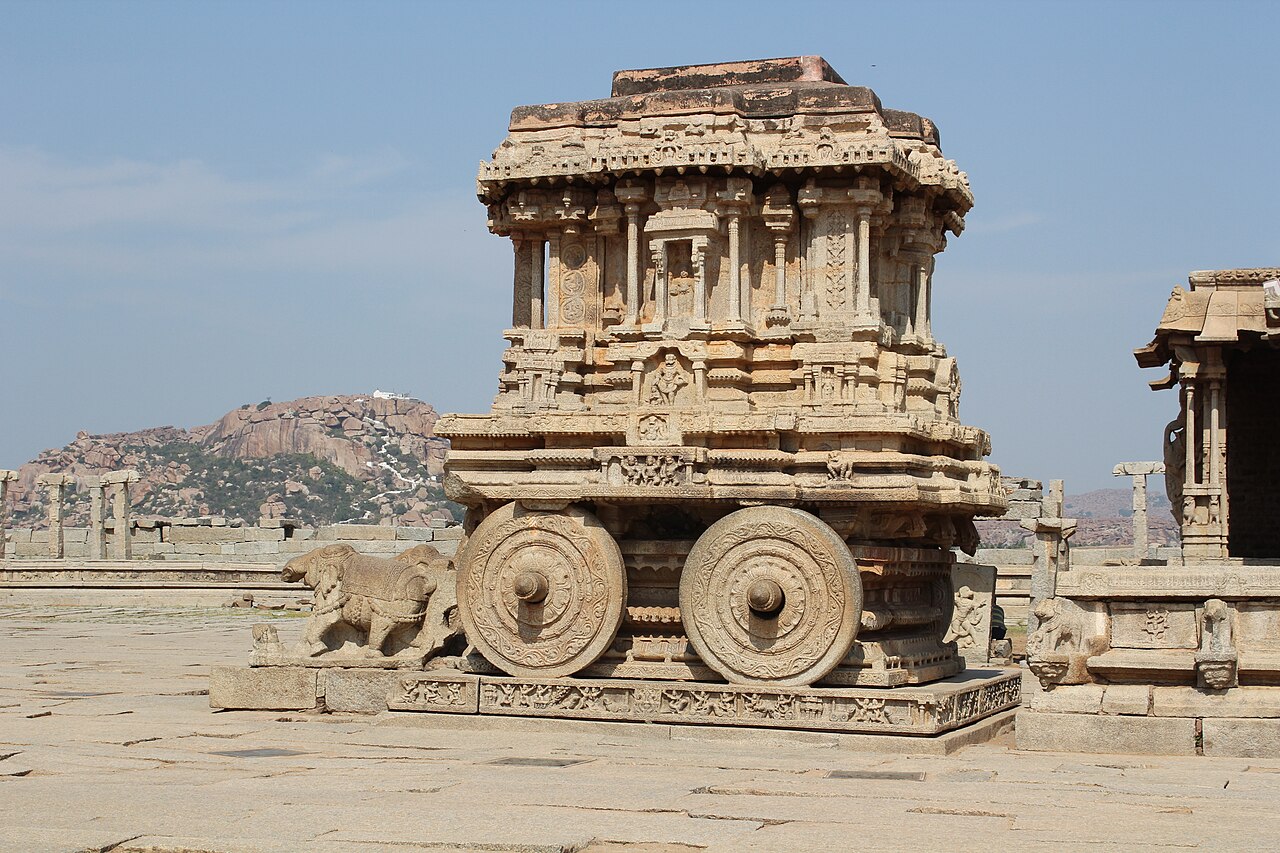
Hampi makes the strongest case for a slower second region. It occupies the ruins of Vijayanagara in northern Karnataka, inscribed by UNESCO in 1986, and its monuments are spread across granite boulder country rather than concentrated behind a single gate — the stone chariot in front of the Vittala temple is one structure among a landscape of temple streets, tanks and gateways that takes days rather than hours. The Deccan interior it sits in has a different climate from Rajasthan: drier than the coast, far less extreme than the desert north.
For a different register entirely, the rock-cut monasteries of Ajanta and the temples of Ellora in Maharashtra were both inscribed in 1983, and the Western Ghats were inscribed as a serial natural property in 2012 — a mountain chain running most of the length of India's west coast and one of the world's recognized biodiversity concentrations. The Mountain Railways of India, inscribed in stages beginning in 1999, offer the rarest thing on an Indian itinerary: a World Heritage property you experience by sitting still while it moves.
The practical constraint is the monsoon's geography. The India Meteorological Department's figures for Jaipur show 88 percent of the year's rain falling between June and September, and the same compression applies across most of the subcontinent — but it arrives in Kerala weeks before it reaches Rajasthan, and the Western Ghats receive it hardest of all. A region chosen for its greenery in August is a region chosen for heavy rain.
Picture the place
Hampi's setting is unlike anywhere else on a standard India route: rounded granite boulders the size of buildings, stacked across low hills, with temple colonnades and the Tungabhadra river threading between them. The stone is pale and the light on it at the end of the day is the reason photographers stay a week.
The easily missed detail
Several of India's less-visited World Heritage properties are living places rather than monuments, and that changes how you plan. The 2019 inscription of Jaipur City was granted partly under criterion (vi) for its continuing craft traditions, with specific streets historically given to specific crafts — a precedent for how to read Hampi's temple streets or the Chola temples, which remain in active worship. Opening hours are the wrong question at a site like this; the right question is which hours the community itself uses the space.
A practical rhythm
- Week one — One northern anchor. Jaipur's walled city and the Jantar Mantar, both inscribed, both walkable.
- Week two — One southern or central anchor reached by flight. Hampi for ruins in boulder country, Ajanta and Ellora for rock-cut sculpture, the Western Ghats for forest and elevation.
- Between them — One mountain railway leg rather than another monument, for the change of pace.
What could complicate the plan
Distances are the real obstacle: pairing a northern and a southern anchor means a domestic flight or an overnight train, not a day trip. Entry formalities add their own lead time — the US Department of State requires a visa in the passport for India, with the passport valid for six months beyond the visa application date and two blank pages, while the electronic travel authorization route for tourist stays of under 60 days must be submitted at least four days before arrival. The State Department's advice is to exercise increased caution in India due to crime and terrorism, and Level 4 — Do Not Travel applies to named regions including Jammu and Kashmir and the India–Pakistan border, which rules out some Himalayan itineraries outright.
What to do next
Pair this with the India trip-planning question for how many of these anchors fit a realistic first trip, and with the when-to-visit question for the monsoon dates that decide the order.
Sources
- UNESCO World Heritage Centre, States Parties statistics — India's 44 inscribed properties
- UNESCO World Heritage Committee, Decision 43 COM 8B.16 — Jaipur City criterion (vi) and craft-street basis
- India Meteorological Department, Jaipur, Climate of Jaipur — monsoon share of annual rainfall and onset dates
- US Department of State, India country information — visa and passport requirements, e-Visa deadline, advisory wording and Level 4 regions