India country guide Food and drink
What local dishes should I try in India, and where should I look for them?
The short answer
Eat by region rather than by dish, and let one protected name anchor the trip — Darjeeling, entered in the European Union's register as a Protected Geographical Indication by Commission Implementing Regulation (EU) No 1050/2011 of 20 October 2011, the first Indian product to hold that status.
The answer, with local context
India's food map does not follow its tourist map. The grain changes, the fat changes and the heat changes as you move: wheat and dairy across the northern plains, rice and coconut down the western and eastern coasts, rice and lentils through the Deccan, mustard oil in Bengal, and a distinct vegetarian thali culture across Gujarat and much of Rajasthan. A traveler who eats "Indian food" in Delhi and again in Karnataka has eaten two different cuisines with different staples.
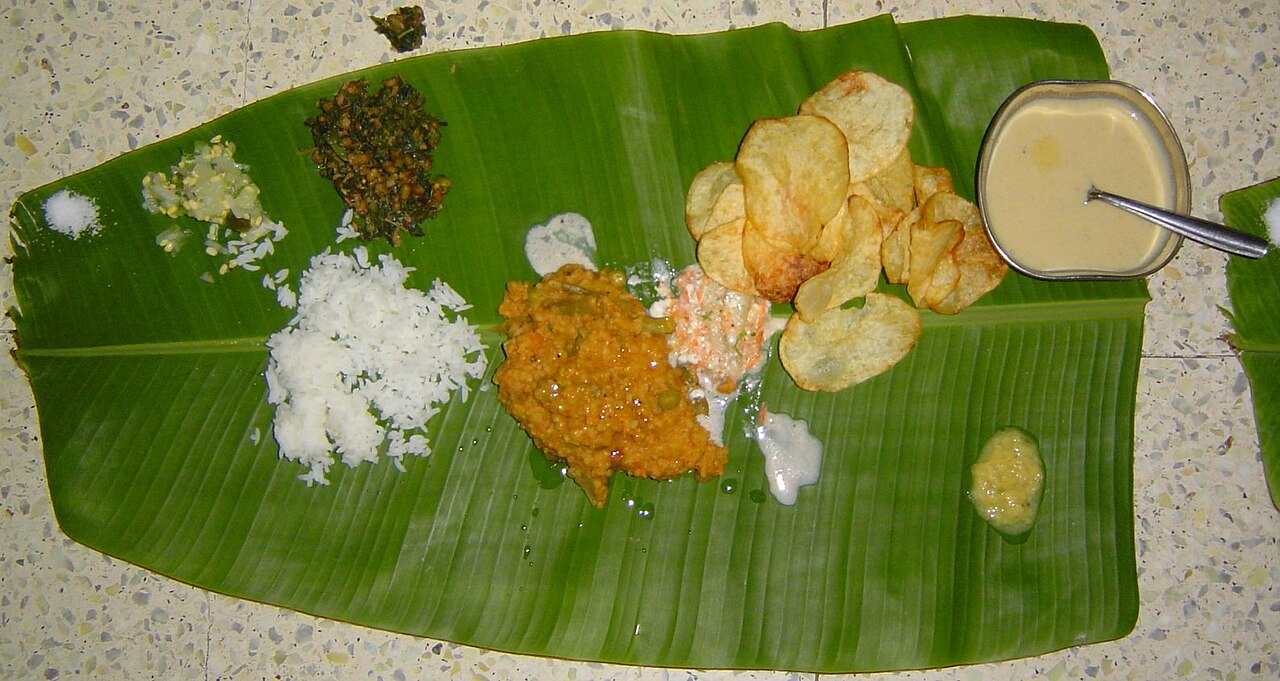
The clearest way in is the regional thali — a composed plate or leaf rather than a single dish. A South Indian meal served on a banana leaf is eaten in a set order: a salad such as cucumber kosambari, a curry of greens and green gram, a lentil side such as thovve, raita, a rice-and-lentil preparation such as bisibele bath, plain boiled rice, and a sweet such as gasagase payasa made with poppy seed, with edible salt set at the leaf's edge. Nothing on that plate is a restaurant invention; it is a sequence, and knowing it is the difference between tasting six things and eating a meal.
Darjeeling is the drink equivalent, and the EU registration explains why the name matters. The regulation of 20 October 2011 entered Darjeeling in the register of protected designations of origin and protected geographical indications as a PGI from India under Class 1.8, which covers other products listed in Annex I to the Treaty. A protected geographical indication ties the name to a defined area and production method, so the word on the packet is a legal statement about where the leaf grew, not a flavor description. Buying it in the hill town itself, or in Kolkata, puts you closest to the auction and estate chain.
Season matters more than most visitors expect. The India Meteorological Department records the normal onset of the monsoon over Jaipur at about 25 June, and the pre-monsoon weeks — March through May, when mean maxima in Jaipur climb from 89°F (31.5°C) to 105°F (40.5°C) — are the hot months that carry the mango harvest. Once the rain arrives, the cooking shifts with it.
Picture the place
A banana leaf arrives dry and is rinsed with a splash of water at the table before anything is served on it. Mounds go down in a fixed arc, the rice last, in the center; there is no plate to clear and nothing to stack.
The easily missed detail
The order on the leaf is not decoration — the numbering in the traditional sequence tells you what to eat when, and the salt placed at the edge is eaten or sprinkled with water at the end of the meal if it has not been used. Travelers who mix everything at once lose the structure the meal was built around. The same principle governs a protected name like Darjeeling: the registration defines a place and a process, which is why a blend sold under the name outside those rules is not the same product in law.
A practical rhythm
- North — Wheat breads, dairy and tandoor cooking across the plains, at their best in the cool months when Jaipur's mean maximum sits near 73°F (22.5°C).
- South — A banana-leaf meal eaten in sequence, in Karnataka, Tamil Nadu or Kerala; rice and coconut rather than wheat and dairy.
- The hills — Darjeeling tea bought where the PGI area actually is, in the eastern Himalayan foothills.
What could complicate the plan
Pre-monsoon heat is the main physical constraint on an eating trip through the north: Jaipur's May mean minimum of 82°F (27.5°C) means nights do not cool, and midday markets become unpleasant. The CDC lists India among the destinations in its Global Measles travel health notice at Level 1 — Practice Usual Precautions, dated 28 May 2025, so routine vaccinations are worth checking. And the trip has to be legal before it is delicious: the US Department of State requires a visa in the passport, with the passport valid for six months beyond the visa application date, or an electronic travel authorization submitted at least four days before arrival for tourist stays of under 60 days.
What to do next
The India places-and-experiences question suggests which regions to build those meals around; the when-to-visit question gives the monsoon dates that decide which harvest you will be eating.
Sources
- Commission Implementing Regulation (EU) No 1050/2011 of 20 October 2011, as published by the UK National Archives — Darjeeling entered as a Protected Geographical Indication from India, Class 1.8, and the date of the regulation
- India Meteorological Department, Jaipur, Climate of Jaipur — monsoon onset date and pre-monsoon temperature range
- US Department of State, India country information — visa, passport and e-Visa requirements
- US Centers for Disease Control and Prevention, Travel Health Notices — Global Measles notice level and date
- Wikimedia Commons file description, Lunch from Karnataka on a plantain leaf — composition and eating order of the South Indian banana-leaf meal