Israel country guide Trip planning
How can I plan a memorable first trip to Israel without rushing?
The short answer
Apply for the Electronic Travel Authorisation first — 25 NIS, valid for two years, covering stays of up to 90 days — then plan around two fixed realities: the weekly Shabbat closure and the FCDO's advice against travel to parts of the country.
The answer, with local context
The ETA has been required since 1 January 2025 and is applied for through the Israel Population and Immigration Authority. Tourists need no visa, and entry permission is granted for up to three months, but the authorisation itself has to be in hand before arrival. The passport must expire at least 90 days after the arrival date, and entry is refused with an invalid travel document or one reported lost or stolen. At Ben Gurion Airport you are issued an entry card instead of a passport stamp, and it has to be kept until departure.
Movement inside the country is the next thing to settle, because it is not uniformly straightforward. The FCDO advises against all travel to parts of Israel and against all but essential travel to other parts. Crossings are variable: the Erez crossing is currently closed, Rafah closes without warning, the Taba crossing to Egypt requires cash in US dollars with fees that can change at short notice, and West Bank checkpoints may close on Israeli public holidays. Stamps marked "Palestinian Authority only" or "Judea and Samaria only" have been issued at Allenby Bridge and at Ben Gurion, and they restrict onward movement. Lengthy questioning and searches at entry are possible, and some travelers are refused entry altogether.
Once those are settled, the country's compactness works in your favor. Israel's nine World Heritage properties run from the Old City of Jerusalem — on the List since 1981 and on the List of World Heritage in Danger continuously since 1982 — to Masada above the Dead Sea, the Old City of Acre on the northern coast, the White City of Tel-Aviv, the Negev's Incense Route desert cities, and the Mount Carmel caves. A ten-day trip based in two or three places covers more of that list than a longer trip spent moving every night.
Picture the place
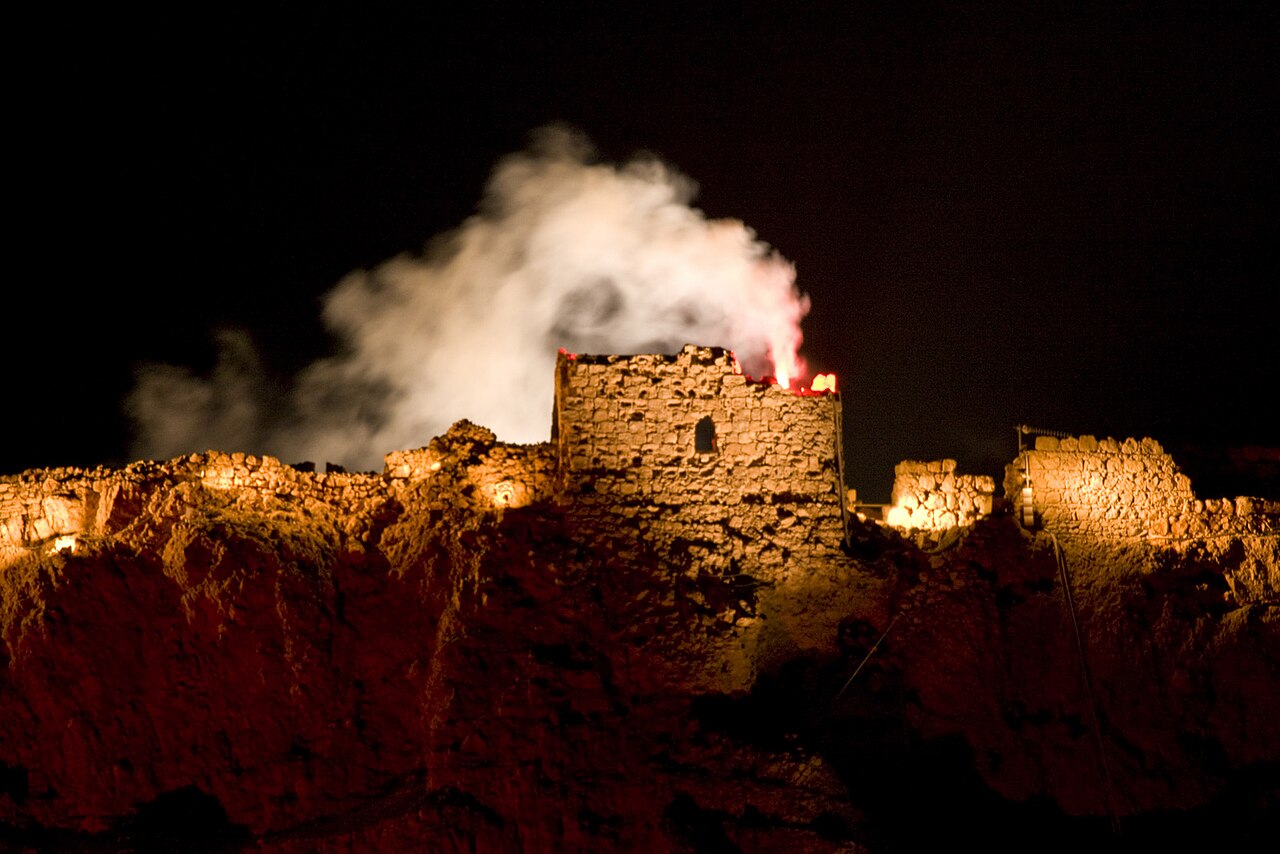
The vertical range is the thing that surprises people. Jerusalem sits on the Judean watershed; Masada stands on an isolated plateau above the rift; and the Dead Sea below it lies nearly 400 meters (1,300 feet) under sea level, the lowest surface feature on Earth, with evaporation capable of dropping its surface 2 to 3 centimeters on a hot summer day. All three can be seen in one day, and the air feels different at each.
The easily missed detail
The week, not the month, is the real unit of planning. Israeli public holidays close offices and can close crossings, and the FCDO specifically advises allowing extra time during Israeli holidays and the summer tourist season. Shabbat removes most of a day from a Jerusalem itinerary every week. That means a ten-day trip really contains eight or nine usable days, and the Saturdays should be assigned in advance to places that stay open — the Dead Sea shore, a coastal walk, a site in a city with a different weekly rhythm — rather than discovered on the day.
A practical rhythm
- Before departure — Apply for the ETA (25 NIS, two years, stays to 90 days) and check that the passport expires at least 90 days after arrival.
- Days one to four — Jerusalem, with the Old City read slowly; it has been a World Heritage property since 1981 and on the Danger list since 1982.
- Days five to ten — One coastal base and one desert day. Acre and the White City of Tel-Aviv in the north and west, Masada and the Dead Sea to the southeast.
What could complicate the plan
The FCDO's advice against all travel to parts of Israel and against all but essential travel to others is the first filter on any itinerary, and it also affects travel insurance. Crossings open and close with little notice. The Dead Sea's shoreline has retreated dramatically over recent decades as Jordan River water has been diverted for agriculture, and NASA states the lake will eventually dry up unless a new inflow is found, so the access points on an older map may no longer reach the water. Entry can involve lengthy questioning, and refusal of entry is possible.
What to do next
The Israel when-to-visit question sets out the seasonal and holiday timing for the Old City; the places-and-experiences question lists the nine inscribed properties the itinerary can be built around.
Sources
- UK Foreign, Commonwealth and Development Office, Israel entry requirements — ETA start date, fee, validity and stay length, passport rule, entry card, restricted stamps, crossing status, Taba cash requirement, holiday and season delays, advice-against-travel areas, entry questioning and refusal
- UNESCO World Heritage Centre documentation, Old City of Jerusalem and its Walls — 1981 inscription and continuous Danger listing since 1982
- UNESCO World Heritage List, properties in Israel — the nine inscribed properties
- NASA Earth Observatory, Dead Sea — elevation, evaporation rate, Jordan River diversion and projected drying