Israel country guide Places and experiences
What should a first-time traveler see in Israel beyond the obvious highlights?
The short answer
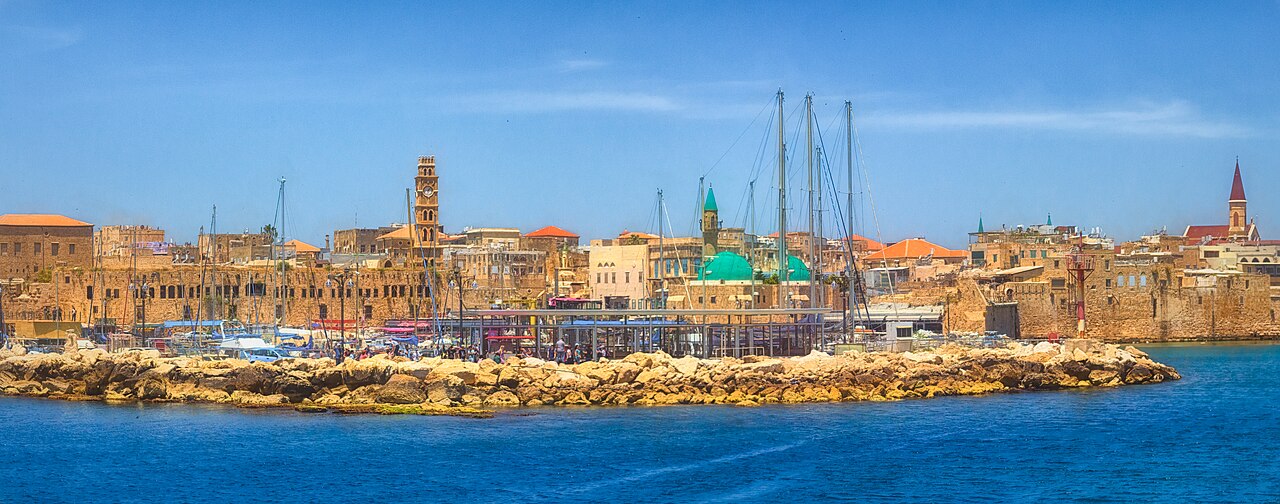
Go north to the Old City of Acre and west to the caves of Mount Carmel — Israel has nine World Heritage properties, and Acre's Crusader city, a major stronghold until 1291 and the holiest city of the Bahá'í Faith, is the one that most rewards a traveler who has already seen Jerusalem.
The answer, with local context
The nine inscribed properties in Israel are strikingly varied, and only one of them is in Jerusalem. The others are Masada above the Dead Sea; the Old City of Acre on the northern coast; the White City of Tel-Aviv, listed for its Modern Movement architecture; the Biblical Tels of Megiddo, Hazor and Beer Sheba; the Incense Route and its desert cities in the Negev; the Bahá'í Holy Places in Haifa and the Western Galilee; the Sites of Human Evolution at Mount Carmel, the Nahal Me'arot or Wadi el-Mughara caves; the Caves of Maresha and Bet-Guvrin in the Judean lowlands; and the Necropolis of Bet She'arim. That list spans prehistory, the Iron Age, antiquity, the Crusades and the twentieth century, inside a country you can drive the length of in a day.
Acre is the strongest single addition to a first trip. It has a long record of settlement, conquest and destruction, was a major Crusader city until 1291, retains a mixed population today, and holds a particular standing as the holiest city of the Bahá'í Faith. Its walls run directly to the sea, and the medieval city survives beneath and within the living one rather than as a cleared archaeological park.
The Negev provides the other direction entirely. The Incense Route's desert cities were inscribed for the trade network that crossed the desert, and the landscape between them is the reason the route existed. Add the Dead Sea for geological rather than historical reasons: at nearly 400 meters (1,300 feet) below sea level it is the lowest surface feature on Earth, covering about 1,035 square kilometers (405 square miles), split into two lobes by agricultural diversion, with the southern part largely dry except for ponds used to extract potash and other salts.
Picture the place
Acre's ramparts sit at the water's edge, so the sea is audible from inside the old city in a way it is not in any inland site in the country. The Dead Sea is the opposite kind of place: a basin so far below sea level that the air is thick and the light flat, with a shoreline that has visibly retreated within living memory.
The easily missed detail
The Dead Sea is shrinking fast enough to change where the shore is between visits. NASA attributes the retreat principally to diversion of Jordan River water for agriculture, notes that the lake has retreated dramatically over recent decades, and states that it will eventually dry up unless a new inflow is found; feasibility studies for canals bringing water from the Mediterranean and Red Seas are under way. Shoreline facilities built decades ago now stand well back from the water, which is why a day there is planned around current access points rather than around a map.
A practical rhythm
- North — The Old City of Acre, a Crusader stronghold until 1291 and the holiest city of the Bahá'í Faith, with the Bahá'í Holy Places of Haifa and the Western Galilee nearby.
- Coast — The White City of Tel-Aviv, inscribed for its Modern Movement architecture rather than for antiquity.
- South and east — Masada, the Incense Route desert cities of the Negev, and the Dead Sea at nearly 400 meters below sea level.
What could complicate the plan
The FCDO advises against all travel to parts of Israel and against all but essential travel to other parts, which directly constrains which regions a northern or southern itinerary can include. Overland crossings are unreliable: the Erez crossing is currently closed, Rafah closes without warning, and the Taba crossing to Egypt requires cash in US dollars with fees that can change at short notice. West Bank checkpoints may close on Israeli public holidays. Entry itself requires an Electronic Travel Authorisation, in force since 1 January 2025, at 25 NIS, valid two years for stays of up to 90 days, with the passport expiring at least 90 days after arrival.
What to do next
The Israel when-to-visit question explains why the spring and autumn shoulders suit both the Judean hills and the Dead Sea basin; the trip-planning question covers the ETA and the crossings in detail.
Sources
- UNESCO World Heritage List, properties in Israel — the nine inscribed properties and their names
- UK Foreign, Commonwealth and Development Office, Israel entry requirements — ETA terms, passport rule, crossing status, Taba cash requirement, holiday checkpoint closures, advice-against-travel areas
- NASA Earth Observatory, Dead Sea — elevation, surface area, two-lobe split, potash extraction, Jordan River diversion and projected drying
- Wikimedia Commons file description, The Old City of Acre, Israel — Crusader city until 1291, mixed population, standing as the holiest city of the Bahá'í Faith