Japan country guide Trip planning
How can I plan a memorable first trip to Japan without rushing?
The short answer
Fourteen nights, three bases, and one decision made early — whether a Japan Rail Pass pays, now that the JR Group's 7-day ordinary pass costs 53,000 yen following the increase on 1 October 2026.
The answer, with local context
The rail pass is the hinge of most Japan itineraries, and the October 2026 prices changed the arithmetic. The ordinary pass rose to 53,000 yen for 7 days, 84,000 for 14 days and 105,000 for 21 days, up from 50,000, 80,000 and 100,000. Green Car versions now cost 74,000, 116,000 and 147,000 yen. Child fares, for ages 6 to 11, are roughly half the adult price. The pass rewards long legs — a trip that reaches the mountain interior or Tohoku — and generally does not repay an itinerary that shuttles only between Tokyo and Kyoto.
Entry itself is unusually simple. The US Department of State records no visa requirement for US citizens on tourist or business stays of up to 90 days, with proof of a return or onward ticket required. The passport must remain valid through the entire visit, with one blank page per entry stamp, though airlines may deny boarding if the passport has less than six months of validity. Japan sits at Level 1 — Exercise normal precautions, issued 15 May 2025. Visit Japan Web, run by the Digital Agency, lets arriving travelers complete immigration inspection and the customs declaration online before reaching the airport checkpoints, with its QR code replacing the paper forms.
The two things that genuinely dictate dates are the rainy season and the holiday calendar. The JMA's 1991–2020 averages put the baiu in Kinki from about 6 June to about 19 July, in Hokuriku from about 11 June to about 23 July, and in Okinawa from about 10 May to about 21 June, with Hokkaido unaffected. On the holiday side, Japan's national holidays include New Year's Day on 1 January, National Foundation Day on 11 February, Vernal Equinox Day around 20 March and Greenery Day on 29 April — the last of these falling at the start of the spring holiday cluster, when domestic travel and accommodation demand peak.
Picture the place
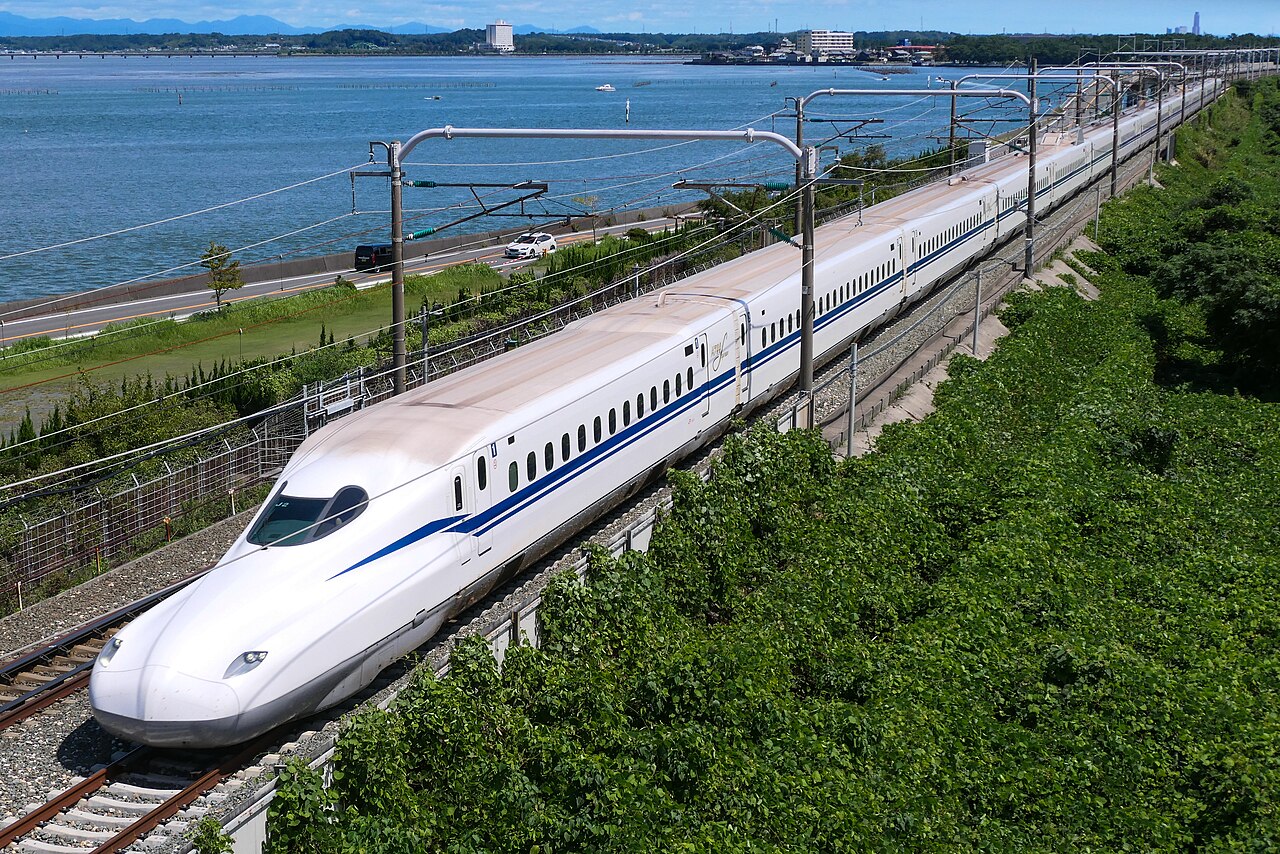
The Tokaido Shinkansen, which carries most first-trip itineraries, runs N700S sets at intervals tight enough that missing one costs minutes rather than hours. Between Hamamatsu and Toyohashi the line runs through open country, and from a reserved seat the transition from city to coastal plain happens in a few minutes.
The easily missed detail
Accommodation taxes in Japan are set locally, and Kyoto's are now among the steepest. From March 2026 the city charges, per person per night on the room rate including service charges, 200 yen below 6,000 yen, 400 yen from 6,000 to 19,999 yen, 1,000 yen from 20,000 to 49,999 yen, 4,000 yen from 50,000 to 99,999 yen, and 10,000 yen from 100,000 yen. The two top bands previously stood at 1,000 yen, so a luxury stay in Kyoto now carries up to ten times the per-night tax it did in February 2026. Budgeting a Kyoto leg at the old figures understates it substantially.
A practical rhythm
- Before booking — Price the full itinerary against the post-October 2026 pass figures: 53,000 yen for 7 days, 84,000 for 14, 105,000 for 21. Long legs justify it; corridor-only trips usually do not.
- Before flying — Complete Visit Japan Web for immigration inspection and the customs declaration, and check the passport against the one-blank-page-per-stamp rule and airline six-month expectations.
- On the ground — Three bases over fourteen nights, each with at least four nights, so the Shinkansen legs are a small share of the trip rather than its structure.
What could complicate the plan
Spring holiday demand around Greenery Day on 29 April and the New Year period around 1 January both compress accommodation availability nationwide. The baiu adds roughly six weeks of cloud and rain to whichever region you are in between early June and late July, except in Hokkaido. Kyoto's revised accommodation tax can add meaningfully to a mid-range or high-end stay. An International Tourist Tax of 3,000 yen is payable on departure from Japan by aircraft or ship, regardless of purpose or nationality, and is collected with the fare. Japan is also listed among the destinations in the CDC's Global Measles travel health notice at Level 1 — Practice Usual Precautions, dated 28 May 2025.
What to do next
The Japan places-and-experiences question identifies the regions that justify a rail pass; the when-to-visit question gives Kyoto's blossom averages and the Kinki rainy-season dates to book around.
Sources
- Japan National Tourism Organization — JR Group pass prices before and after 1 October 2026 for ordinary and Green Car, adult and child
- US Department of State, Japan travel advisory — advisory level and date, 90-day visa-free stay, onward ticket, passport validity and blank page rules
- Digital Agency, Government of Japan, Visit Japan Web — procedures completed online and QR code function
- Japan Meteorological Agency, Baiu season information — regional average onset and withdrawal dates
- Embassy of Japan, Ministry of Foreign Affairs of Japan, national holidays — New Year's Day, National Foundation Day, Vernal Equinox Day and Greenery Day dates
- Kyoto City accommodation tax bands effective March 2026, as published to guests — revised and previous per-person per-night amounts and thresholds
- National Tax Agency of Japan — International Tourist Tax amount and scope
- US Centers for Disease Control and Prevention, Travel Health Notices — Global Measles notice level and date