Japan country guide Places and experiences
What should a first-time traveler see in Japan beyond the obvious highlights?
The short answer
Leave the Tokyo–Kyoto corridor for the mountain interior — the gassho-zukuri farmhouses of Ogimachi village in Shirakawa-go, Gifu Prefecture, are a World Heritage property of inhabited timber houses rather than monuments, and they sit in a region the baiu rainy season and the snow reach on a completely different schedule.
The answer, with local context
Japan has 26 properties on the World Heritage List, and the better part of them are nowhere near the corridor most first trips follow. Shirakawa-go's steep thatched farmhouses in Ogimachi are the clearest alternative: a working village in the Gifu mountains, where the roof pitch exists to shed one of the heaviest snow loads in the country, and where the buildings are homes rather than exhibits.
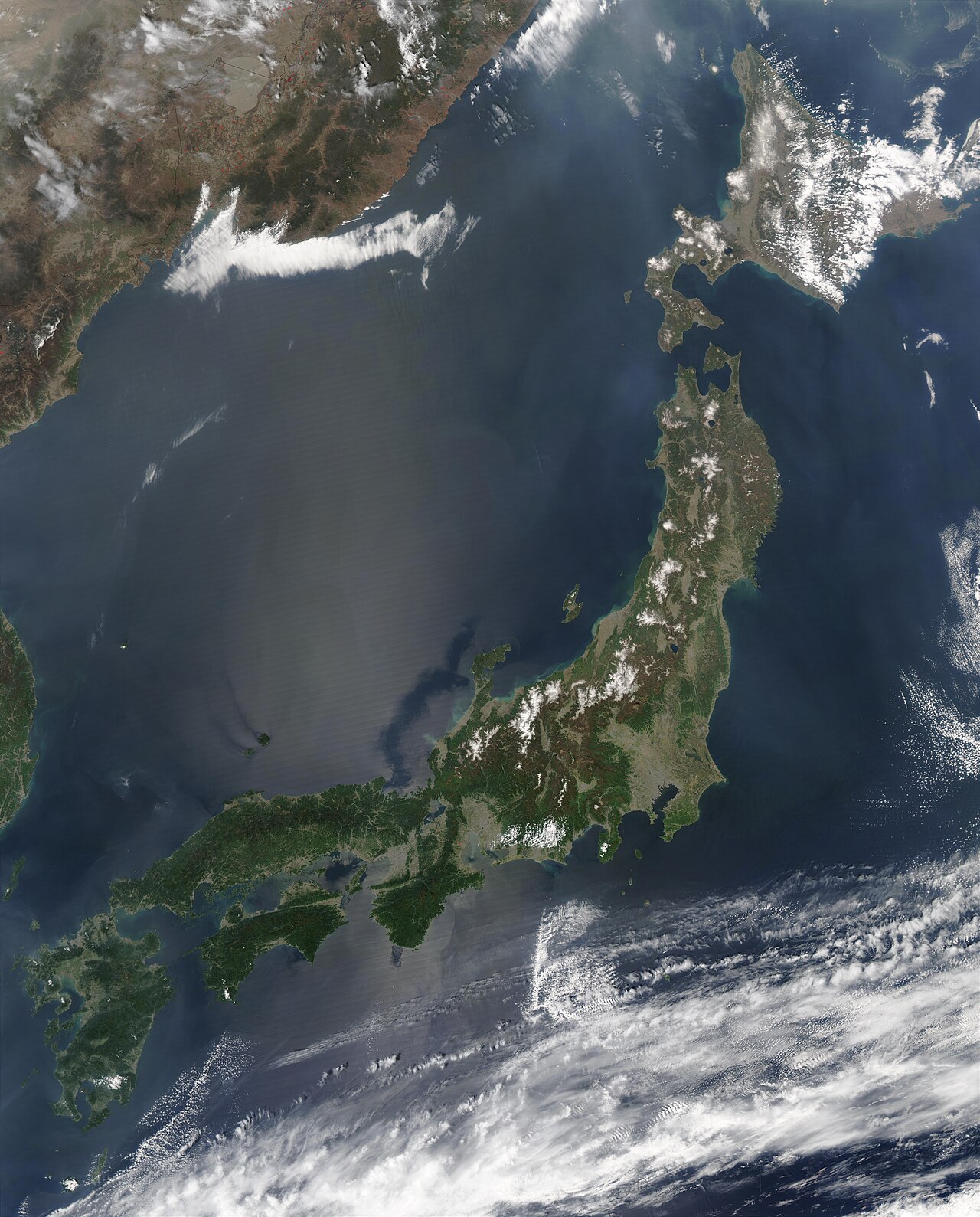
Choosing a mountain or northern region changes the weather calculation entirely, and the JMA's baiu averages are the tool for that. The rainy season reaches Hokuriku — the Sea of Japan side, adjacent to the Gifu mountains — around 11 June and ends about 23 July, later at both ends than Kinki's 6 June to 19 July. Push further north and it moves again: southern Tohoku about 12 June to 24 July, northern Tohoku about 15 June to 28 July. Hokkaido is not affected by the baiu at all. Go the other way and Okinawa's rainy season is almost a month earlier, about 10 May to 21 June. A single June trip can therefore be planned to sit either side of the rain depending on which end of the archipelago you choose.
The practical enabler is the rail network, and it is also the main cost. The Japan Rail Pass is issued by the JR Group, and from 1 October 2026 its prices rose: a 7-day ordinary pass to 53,000 yen from 50,000, a 14-day to 84,000 yen from 80,000, and a 21-day to 105,000 yen from 100,000, with Green Car versions at 74,000, 116,000 and 147,000 yen. Child fares, for ages 6 to 11, are roughly half. A pass makes sense for an itinerary that leaves the corridor; it rarely pays for one that stays inside it.
Picture the place
Ogimachi's farmhouses are built with their long axes aligned and their roofs rising to a sharp ridge — the gassho or "praying hands" shape — so from the slope above, the village reads as a line of steep triangles set in rice fields. In winter the snow depth on those roofs is the reason for the pitch.
The easily missed detail
Shirakawa-go is one of Japan's World Heritage properties where people still live in the inscribed buildings, which sets the terms of a visit. Many houses are private homes, parking and access are managed to keep the village functioning, and the thatch is maintained by communal labor on a rotating schedule rather than by a heritage contractor. Treating it as a village you are a guest in, rather than an open-air museum, is both the correct approach and the practical one.
A practical rhythm
- The mountain interior — Ogimachi in Shirakawa-go, Gifu Prefecture, where the baiu arrives around 11 June and ends about 23 July rather than Kinki's 6 June and 19 July.
- The far north — Hokkaido, the one region the JMA records as unaffected by the rainy season, and a genuinely different climate from the main islands.
- The far south — Okinawa, where the rainy season runs about 10 May to 21 June, so a late-June trip there lands after it rather than inside it.
What could complicate the plan
Mountain and northern regions mean long rail legs, and the JR Pass price rise of 1 October 2026 changes the arithmetic on whether a pass is worth buying. US citizens need no visa for tourist or business stays of up to 90 days, but proof of a return or onward ticket is required, one blank passport page is needed per entry stamp, and airlines may deny boarding if the passport has less than six months of validity. Japan sits at Level 1 — Exercise normal precautions in the State Department advisory issued 15 May 2025. Japan has 26 World Heritage properties but they are not clustered, so each addition to an itinerary costs a travel day rather than an afternoon.
What to do next
The Japan trip-planning question works through pass arithmetic, Visit Japan Web and the departure tax; the when-to-visit question explains why Kyoto's own windows are so narrow.
Sources
- Japan Meteorological Agency, Baiu season information — regional average onset and withdrawal dates, including Hokuriku, Tohoku and Okinawa, and Hokkaido's exclusion
- UNESCO World Heritage Centre, States Parties statistics — Japan's 26 inscribed properties
- Japan National Tourism Organization — JR Group pass prices before and after 1 October 2026, ordinary and Green Car, adult and child
- US Department of State, Japan travel advisory — advisory level and date, visa-free stay, onward ticket, blank page and passport validity conditions
- Wikimedia Commons file description, Gassho-zukuri farmhouse — location of the subject in Ogimachi Village, Shirakawa-go, Gifu Prefecture