Laos country guide Trip planning
How can I plan a memorable first trip to Laos without rushing?
The short answer
Give Laos two weeks, travel its spine in one direction, and let its two great slow vehicles set the pace — the Laos–China Railway for the mountains between Vientiane and Luang Prabang, and the two-day Mekong slow boat for arrival itself.
The answer, with local context
The planning fact that reshaped Laos arrived on December 3, 2021, when the Laos–China Railway opened: 262 miles (422 km) of standard-gauge line from Vientiane to Boten on the Chinese border, with ten passenger stations and electric trains running at up to 99 mph (160 km/h). Journeys that defined slow travel collapsed — Vientiane to Vang Vieng takes about an hour, Vientiane to Luang Prabang about 1 hour 50 minutes, against six to ten hours by mountain road — and the line now carries around 10,000 riders a day. The trick to a unhurried trip is to use the railway as a spine, not an excuse to add stops: Vientiane for two nights, Vang Vieng for two, Luang Prabang for four, with days left unplanned in each, beats the same stations sprinted in half the time. Note the system's rituals: tickets go on sale only about three days ahead through the LCR Ticket app or station offices, your passport is the ticket's ID, and the stations sit outside their towns — Luang Prabang's is 7.5 miles (12 km) from the old town.
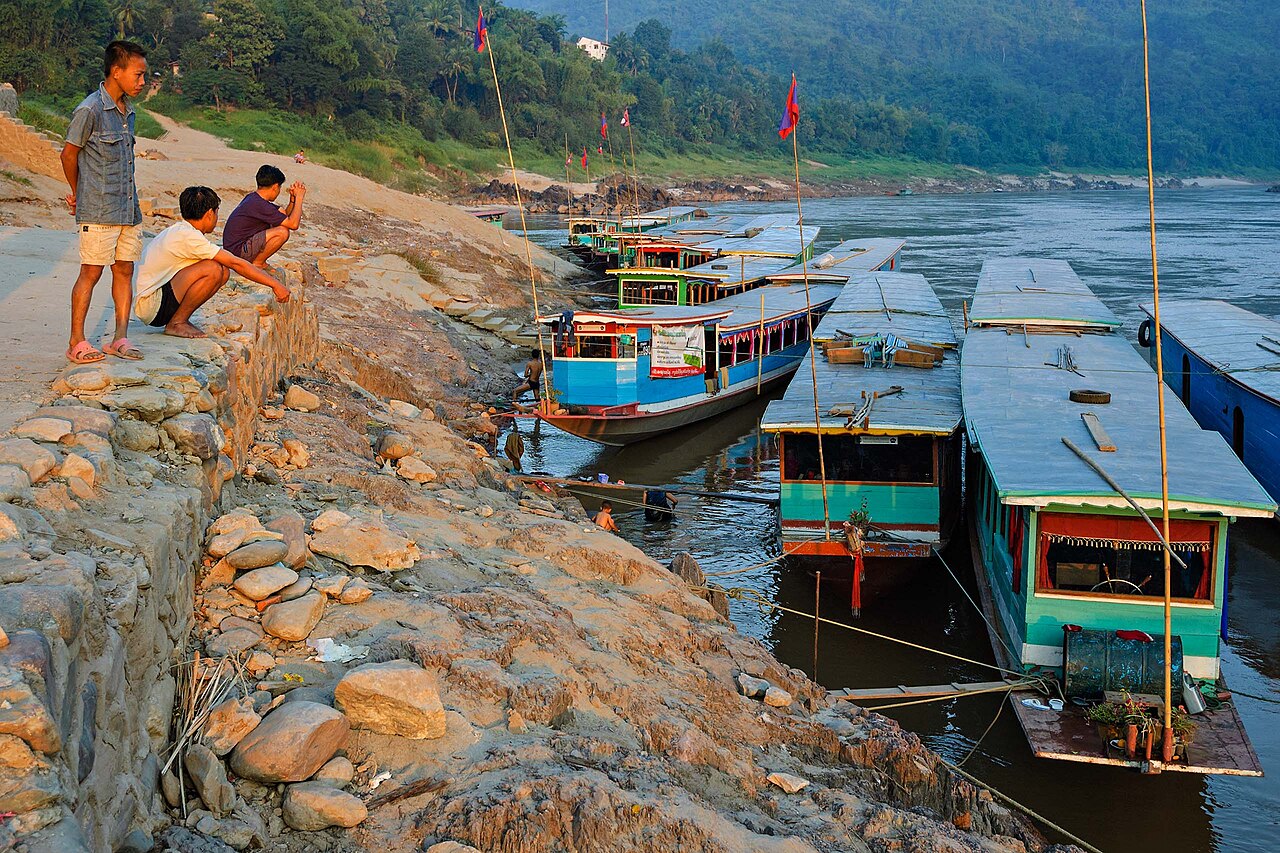
The second great vehicle runs the other way, on water. From Huay Xai, on the Thai border, the public slow boat descends the Mekong to Luang Prabang in two days — six to eight hours a day on the river, an overnight in the riverside village of Pakbeng, a ticket in the region of 300,000 kip — and it remains the finest arrival in Southeast Asia: the country unspools at walking pace, limestone, jungle and fishing villages, before the town appears. Build the trip around these two machines and the geometry solves itself: enter by river from Thailand, drift south through Luang Prabang, Vang Vieng and Vientiane by rail, and you have crossed Laos without a single backtrack.
The paperwork is proportionate: most nationalities receive a 30-day visa on arrival — about US$40, paid in cash — at Vientiane and Luang Prabang airports and the Friendship Bridge, or can apply through the official eVisa portal before departure; note that visa on arrival is not available at the Boten rail border from China. The south deserves its own paragraph of honesty: Pakse, the Bolaven Plateau, Vat Phou and the 4,000 Islands make a magnificent second week, reached by a domestic flight to Pakse, but they cannot be folded into a one-week northern trip without destroying the point of going. Choose the north or the south for a first visit of seven to ten days; take both only with fourteen.
Picture the place
On the slow boat's second morning the river is wide and brown and unhurried, fishermen cast nets from rocks that will be islands by the dry season's end, and the boat's whole company — farmers, monks, backpackers, a cage of chickens — has settled into the Mekong's own timetable, in which arrival is understood to be a rumor until the town is actually in sight.
The easily missed detail
The railway's speed conceals its real gift: it removed the journey dread, not the journey. The Vientiane–Luang Prabang road it replaced consumed a full day each way and left travelers arriving wrecked; the train returns those two days to the trip itself — which is exactly why the temptation it creates, adding Vang Vieng "because it's only an hour," must be rationed. Laos's slowness now lives in the places, not the transport, and a good itinerary protects it there.
A practical rhythm
- Morning — Travel in the mornings and arrive by lunch: the railway's early trains and the slow boat's mid-morning departures both land you with an afternoon to orient, rather than a night arrival in a strange town.
- Midday — Keep the middle of every second day deliberately empty: Laos's pleasures — a wat courtyard, a market, a riverbank café in Luang Prabang — happen in unassigned hours, and the heat argues for them anyway.
- Evening — Evenings are for the town you're in, not the next one: night market, riverside dinner, early bed. The trip compounds in rest, not in sights.
What could complicate the plan
The railway's booking window is the friction point: tickets released only about three days ahead sell out on holiday weekends and around Pi Mai in April, so hold your dates flexibly and buy the moment the window opens, through the app or a station counter with your passport in hand. Cash is the second: beyond the cities, Laos runs on kip in hand, card machines are rare, and the visa-on-arrival fee itself wants US dollars. Finally, season governs the south and the rivers — wet-season roads to the Bolaven and the islands slow drastically, and the slow boat's schedule bends with the Mekong's level, so the itinerary's river days need a buffer the railway days do not.
What to do next
Sketch fourteen days: cross from Thailand to Huay Xai, take the two-day boat to Luang Prabang for four nights, ride the railway south through Vang Vieng to Vientiane, and either fly home rested or fly to Pakse for the southern week — and leave one day in Luang Prabang with nothing in it at all.
Sources
- Laos–China Railway Company — the line's December 3, 2021 opening, 262-mile (422 km) Vientiane–Boten route, ten passenger stations, 99 mph (160 km/h) services and roughly 10,000 daily riders; the three-day ticket release window
- Lao Ministry of Foreign Affairs (eVisa portal) — 30-day visa on arrival at the international airports and Friendship Bridge, the official eVisa channel, and its absence at the Boten rail crossing
- Mekong slow boat operators, Huay Xai–Pakbeng–Luang Prabang — the two-day schedule of six-to-eight-hour river days and the approximately 300,000-kip public boat fare