Lofoten Islands / Norway Things to do
What are the most worthwhile things to do in Lofoten Islands on a first visit?
The short answer
Hike Reinebringen in the west, take a sea-eagle boat into Trollfjorden in the east, walk the stockfish villages of Å and Nusfjord, stand in the Viking longhouse at Borg, and put one white-sand beach and one fishing trip between them.
The answer, with local context
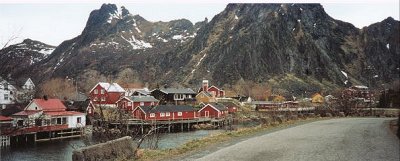
The west end holds the icons. Above Reine, the Reinebringen staircase — about 1,566 stone steps built by Nepalese Sherpa stoneworkers to stop the old trail's erosion — climbs to the shelf view over Reinefjorden and Olstinden (2,214 feet, 675 m) that defines the archipelago in photographs; go early or late in the long day. At the road's end, Å i Lofoten is a preserved fishing village whose Norwegian Fishing Village Museum spreads through the old bakery, cod-liver oil factory and boathouses, with a separate stockfish museum explaining the trade that built it all. Between them, Nusfjord — one of Norway's oldest and best-preserved fishing villages, its rorbu rows and general store intact — charges a small village entry in season and repays it at dawn before the coaches. The west's wild card is Kvalvika beach at Fredvang, reached only on foot (about 45 minutes each way) to a golden cove between peaks, with its neighbor summit Ryten above it.
The east end runs on water and birds. From Svolvær (the archipelago's small capital, about 4,800 people), RIB boats run the sea-eagle safari into Trollfjorden — a fjord barely 2 km long whose entrance narrows to some 230–330 feet (70–100 m), its cliffs holding one of Europe's densest white-tailed eagle populations; the eagles come to the boats for fish, close enough to hear. Svolvær's own shore holds the Svinøya rorbu quarter across the bridge, the Lofoten War Memorial Museum's dense WWII collection (the islands were raided twice in 1941's Operation Claymore), and the twin peaks of Svolværgeita, the "goat" horns climbers jump between. Henningsvær, 30 minutes south, strings its houses across islets joined by bridges — a working fishing port with galleries (the KaviarFactory contemporary art space in a former caviar factory), the famous rock-island football pitch, and the Festvågtind hike (1,775 feet, 541 m) straight from the village.
The center and the deep past fill the middle days. At Borg on Vestvågøy, the Lofotr Viking Museum rebuilds the largest Viking longhouse ever found — 272 feet (83 m) long, excavated where a chieftain ruled around 500–900 AD — with a replica longship on the water below. Kabelvåg holds Vågan Church, the "Lofoten Cathedral" of 1898, a wooden church seating 1,100 built for the seasonal fishermen. And in season the archipelago's foundational act is available to join: the skrei fishery (January–April), when migratory Arctic cod return to spawn and visitors can ship out from Svolvær, Henningsvær or Stamsund on working boats, then see the catch hanging on the hjell by afternoon. Unstad, on Vestvågøy's outer coast, runs the world's northernmost surf scene — Arctic surf under the midnight sun or the aurora, wetsuits thick, the beach café's cinnamon buns famous.
Picture the place
Trollfjorden at boat level: the walls close to a corridor, the water glass-green, and a white-tailed eagle folding its eight-foot span down off the cliff toward the fish in the guide's hand.
The easily missed detail
Lofoten's most complete museum charges nothing and smells of tar: the fishing villages themselves. Skip the curated version once and walk a working harbor at landing time (about 3–4 p.m.) in Ballstad, Henningsvær or Reine during the winter–spring fishery, when the skrei boats unload, the gulls go mad, and the racks behind the quay take the day's fish within the hour. In summer the same quays at the same hour give you the leisure fleet and the cod drying overhead. Either season, the harbor — not the viewpoint — is where the archipelago explains itself.
A practical rhythm
- West for peaks and villages — Reinebringen, Å and Nusfjord from a Moskenes base; Kvalvika on the stillest day
- East for boats and eagles — Trollfjorden RIB and a Henningsvær afternoon from Svolvær; the war museum on the wet day
- Centre for the longhouse — Lofotr at Borg and the Uttakleiv–Haukland beaches split the drive between the two bases
What could complicate the plan
The headline hikes are weather-gated: Reinebringen in high wind or ice is a staircase to avoid, and low cloud erases the view that justifies it — hold one flexible day per base. The Trollfjord boats cancel in heavy seas, and the fjord's famous stillness is not guaranteed. Village parking is the islands' friction point: Reine, Å and Henningsvær all run small paid lots that fill by late morning in summer, and the E10's single carriageway crawls behind motorhomes — early starts are the local technology for all of it.
What to do next
Book the eagle RIB and a fishing trip (in season) before you fly, and let the hikes float on the weather between your two bases.
Sources
- Lofotr Viking Museum (Museum Nord) — the Borg chieftain's house: the 83 m longhouse, the largest Viking-age house found, and its reconstruction
- Visit Lofoten / Destination Lofoten — Reinebringen's Sherpa-built staircase (about 1,566 steps); Trollfjorden's dimensions and the sea-eagle safaris from Svolvær
- Norwegian Fishing Village Museum, Å (Museum Nord) — the preserved fiskevær and the stockfish museum
- Lofoten Links / Visit Northern Norway — Unstad's Arctic surf scene, the world's northernmost