Lofoten Islands / Norway Food and drink
Where should I eat in Lofoten Islands, and which local food or drink is worth trying?
The short answer
Skrei in its winter season, stockfish the rest of the year, fish soup in Reine, and bacalao everywhere — eaten in the east's harbor restaurants and the west's village kitchens, where the menu is written by the boats.
The answer, with local context
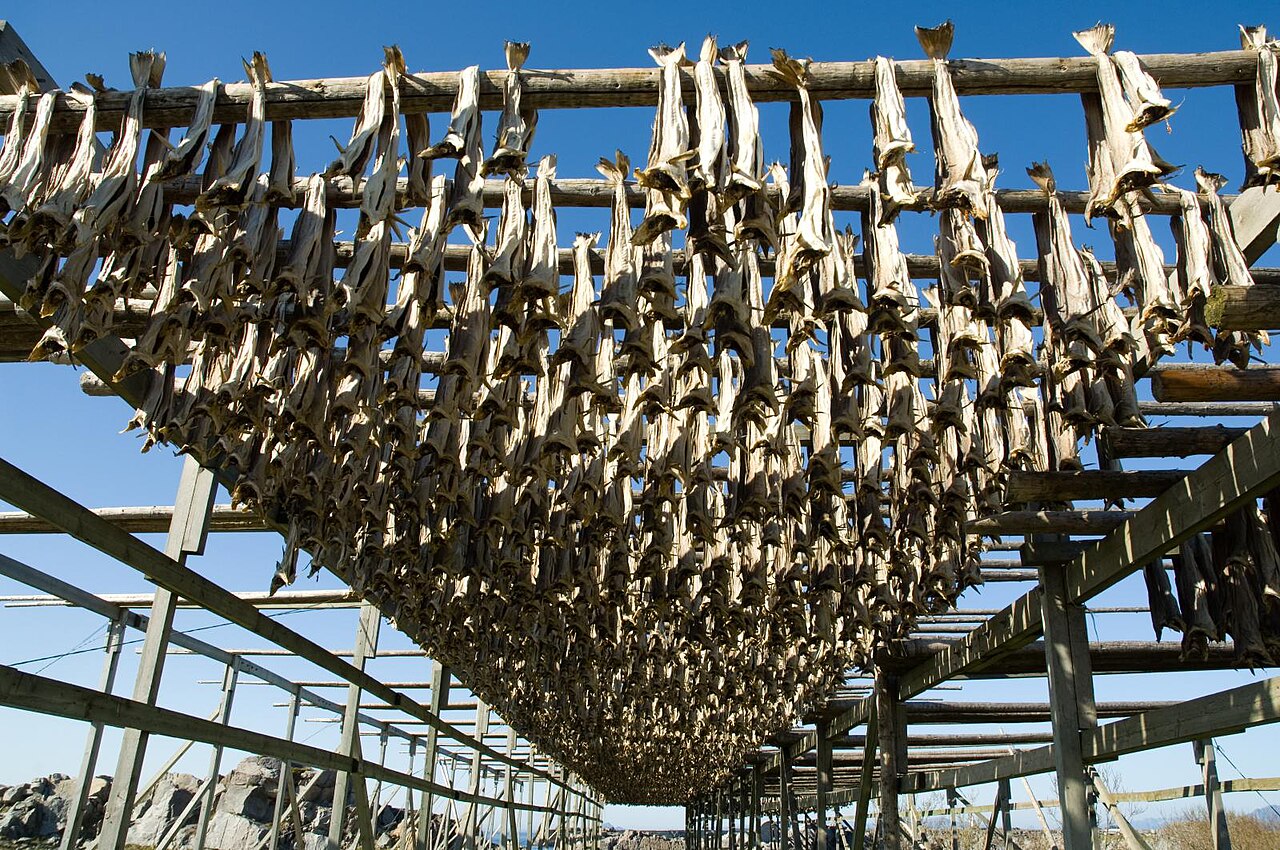
Lofoten's table has one author: the cod. From January to April the skrei — mature Arctic cod that migrate hundreds of miles from the Barents Sea to spawn in the Vestfjord — are landed daily, and the islands serve the season's sacred plate, mølje: poached skrei with its liver and roe, potatoes and onions, eaten in fishermen's cafés and village restaurants from Svolvær to Å while the fishery runs. The same fish, split and hung unsalted on the hjell racks from February, becomes tørrfisk — stockfish, dried rock-hard by the cold wind over three months, exported from these villages for a thousand years (the Italian market's love affair dates to the Venetian captain Pietro Querini, shipwrecked on Røst in 1432 and sent home preaching stoccafisso). "Tørrfisk fra Lofoten" now carries protected geographical status in Norway and the EU, and the restaurants cook it year-round: soaked back to life, then served grilled, in creamy stews, or as the starter at the archipelago's best tables.
Where: in the west, Anita's Sjømat in Reine — a seafood deli-restaurant on the quay, famous for its fish soup and stockfish dishes eaten among the landing boats — and Maren Anna in Sørvågen, cooking Lofoten produce in a former fisherman's home. In the east, Børsen Spiseri at Svinøya in Svolvær (a waterfront restaurant in an 1828 stockfish-era storehouse, the islands' most atmospheric dining room) and Fiskekrogen in Henningsvær, the classic fish restaurant on the harbor. Henningsvær also holds the bakery-and-café layer the villages run on; Leknes and Stamsund in the center feed the working islands without ceremony. In Nusfjord, the village's restaurant serves its own catch in the old storehouse setting. Everywhere, order the fish soup — each kitchen's version, saffron or cream, is a local argument — and the bacalao, the tomato-rich stew of rehydrated clipfish that the Portuguese trade left as Lofoten's adopted comfort dish.
The rest of the larder: Lofoten lamb (geographically protected too — the sheep graze seaweed-rich shore pastures, and autumn menus feature it), the islands' cheeses (the goat farms of Lofoten produce chèvre-style cheeses sold at farm shops), cloudberries in late summer (in desserts and with waffles), and cinnamon buns at Unstad's surf café, a pilgrimage item in themselves. Drink is simpler: the islands' water is superb, the beer is Mack and the northern Ringnes... the local pour is the craft output of Lofotpils in Svolvær (the archipelago's own brewery, brewing since 2015 in the old dairy), and coffee is taken the Norwegian way — black, strong, and with a waffle and brown cheese (brunost) when the café offers it. Aquavit appears where the skrei does: a Linie with the mølje is the season's correct grammar.
Picture the place
Børsen in Svolvær on a February night: stockfish-era timber black with age, candles on the long tables, and a plate of skrei with its liver arriving as the harbor lights come on outside.
The easily missed detail
Stockfish has a snack form the islands guard: tørrfisk as bar food — hammered, torn and eaten dry with beer, the texture of biltong and the taste of the racks themselves — sold in village shops and served at Lofotpils and the harbor pubs. Ask for it where the locals drink; it divides visitors absolutely, and finishing a piece earns you opinions about which village dries best (Røst's fish, dried on the flat outer islands, is the connoisseurs' answer).
A practical rhythm
- Season decides the order — January–April: mølje and skrei first, everything else second; June–September: stockfish preparations, lamb and fish soup
- West dinner, east dinner — Anita's in Reine and Børsen in Svolvær are the two rooms to book ahead; village cafés cover the rest without reservations
- Shop the racks — A vacuum-packed stockfish from a village producer travels home legally and cooks the islands back to life in your kitchen
What could complicate the plan
Village restaurants keep island hours: kitchens close early (often 8–9 p.m.), many shut one or two days a week even in summer, and the west end's handful of famous rooms book out days ahead in season — reserve dinner when you reserve the rorbu. Outside the skrei months, "fresh cod" on a menu may be farmed or frozen stock of other origin; the stockfish dishes are the year-round guarantee of the local fish. Prices are Norwegian — a village fish soup is the islands' best-value plate, and the supermarket (with its hot deli counter) is the fisherman's own fallback.
What to do next
Book Børsen and Anita's with the cabins, time one lunch to a harbor landing, and carry a stockfish home.
Sources
- Norwegian Directorate of Fisheries / Institute of Marine Research — the skrei migration and the January–April Lofoten fishery
- Nofima / Tørrfisk Forum — "Tørrfisk fra Lofoten" protected geographical status; the February–June drying on hjell racks; the Querini voyage of 1432
- Visit Lofoten — the archipelago's restaurants: Anita's Sjømat (Reine), Børsen Spiseri at Svinøya (Svolvær, in an 1828 building), Fiskekrogen (Henningsvær)
- Mattilsynet / Lovdata — the protected designations for Tørrfisk fra Lofoten and Lofoten lamb