Lofoten Islands / Norway When to visit
When should I visit Lofoten Islands, Norway, for the best experience?
The short answer
June — the midnight sun runs around the clock across the whole archipelago, the stockfish racks are still full in the west, and every ferry, trail and rorbu in both the eastern and western islands is open at once.
The answer, with local context
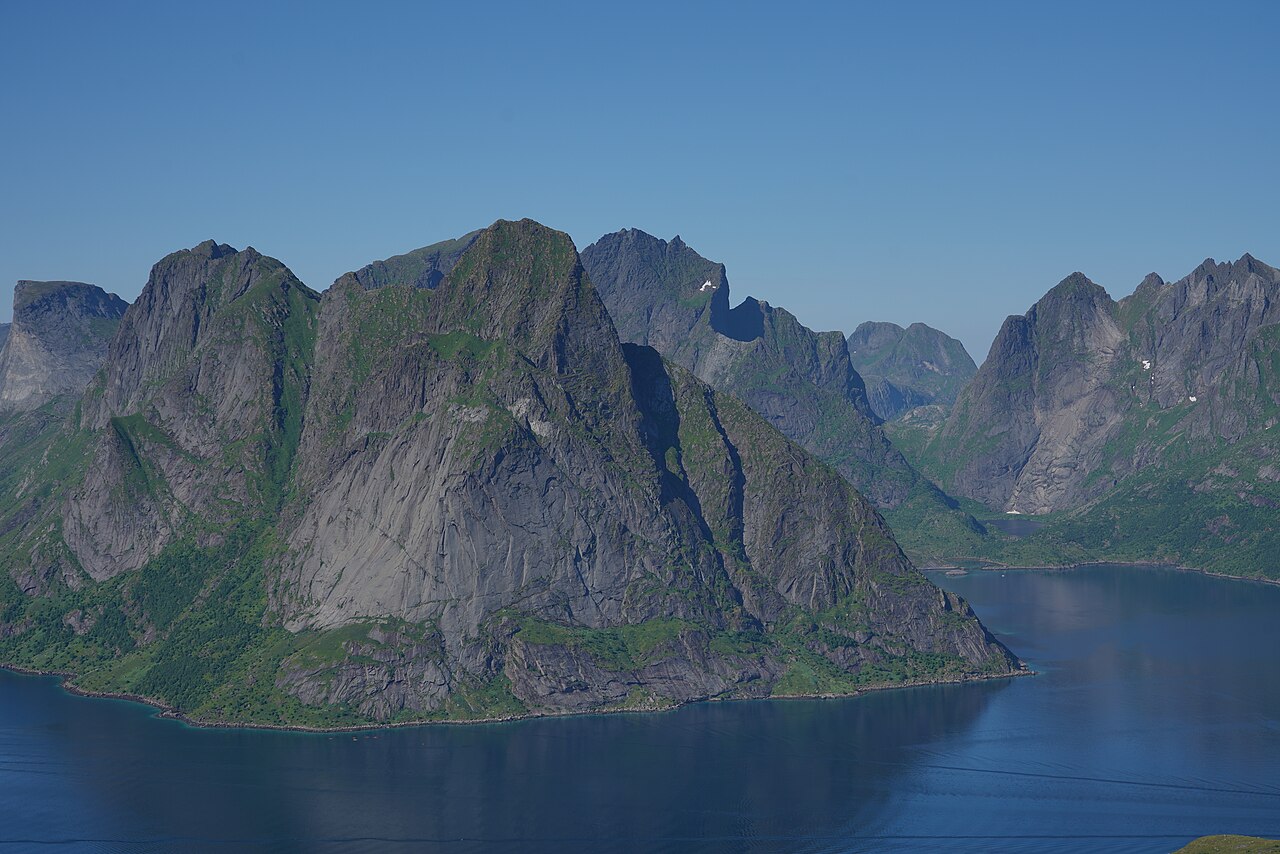
Name the geography first, because "Lofoten" is a 100-mile (160 km) wall of islands strung along the E10 road from Svolvær in the east to the village of Å at its western end, and June lights all of it equally. The midnight sun period at this latitude (about 68°N) runs from roughly May 28 to July 14: the sun circles without setting, and the usable day stops being a planning constraint — hikes up Reinebringen above Reine in the west or Festvågtind above Henningsvær in the east can start at 8 p.m. into golden light, the white beaches of Flakstadøya and Vestvågøy (Haukland, Uttakleiv, Ramberg) glow at midnight, and the sea-eagle RIB safaris out of Svolvær run late sailings into Trollfjorden. June temperatures sit at 50–59°F (10–15°C) — Lofoten's Gulf Stream climate is the mildest on earth at this latitude — with the year's driest stretch by Norwegian Meteorological Institute normals for the islands.
June also catches the working islands at their most legible. In the west (Reine, Å, Nusfjord) and the east (Laukvik, Henningsvær), the wooden hjell racks still carry the winter's stockfish — cod hung headless in pairs from February, drying in the cold sea wind until June, an unbroken economy over a thousand years old — so the villages smell, look and work as they are meant to. The season's services run full but the July peak has not landed: the Bodø–Moskenes car ferry (about 3.5 hours) sails its summer timetable, the Hurtigruten and Havila coastal ships call daily at Svolvær and Stamsund, and the rorbu cabins — the red fishermen's cabins that are now the archipelago's signature lodging — are bookable without July's siege conditions. In the center, Leknes and Stamsund give the beaches-and-farms version of the same month; on Gimsøy in the north-east, Lofoten Links plays golf at 2 a.m. under the sun.
The rivals are real but narrower. February–April is the skrei season (see Things to do) plus aurora darkness — magnificent, weather-beaten, and dark by 4 p.m. at its start. September trades the midnight sun for the first auroras and russet hillsides (see the aurora answer below). But for a first Lofoten — all islands, all activities, light without limit — June is the month the archipelago itself would choose.
Picture the place
Reinebringen's stone steps at 11 p.m. in June: the fjord below in full daylight, Olstinden pink-lit, a sea eagle quartering the water, and hikers still coming up behind you in sunglasses.
The easily missed detail
The midnight sun's fine print: it does not set, but it does dip behind the peaks — in the fjord-bottom villages (Reine, Å, the inner Vestfjord shore) the sun leaves direct view for hours behind the mountains even at solstice, while the outer-coast beaches (Uttakleiv, Haukland, Eggum) and the northern shores keep the true over-the-sea midnight sun. Choose the island side by the light you want: Eggum's old radar-station headland on Vestvågøy is the locals' midnight-sun amphitheatre, west-facing and built for it.
A practical rhythm
- Split the stay east and west — Three nights near Svolvær/Henningsvær, three near Reine: the E10 between them is beautiful and slow, and June light forgives long drives
- Hike in the evenings — The trails are emptiest and the light best after 7 p.m.; save middays for ferries and villages
- Book the ferry with the flights — Bodø–Moskenes car spaces are the archipelago's true bottleneck in summer
What could complicate the plan
June's weather is Atlantic: a week can run sun, horizontal rain and 50°F wind in rotation, and the exposed west-end villages take the worst of it — pack for winter's edge, not summer's promise. The midnight sun scrambles sleep (rorbu blackout curtains vary; bring a mask), and the most famous hikes now manage their crowds — Reinebringen's staircase exists because erosion forced it, and parking at Reine and Henningsvær fills by mid-morning even in June. Mosquitoes are minor on the coast but the midges of still inland evenings are not.
What to do next
Book June rorbu nights east and west, reserve the car ferry the same day, and plan the headline hikes for the evening light.
Sources
- Norwegian Meteorological Institute (MET Norway) — Lofoten's climate normals and the midnight sun period (about May 28–July 14 at 68°N)
- Visit Lofoten / Destination Lofoten — the E10 island chain from Svolvær to Å; ferry routes including Bodø–Moskenes (about 3.5 hours)
- Nofima / Norwegian Seafood Research — the stockfish season: cod hung on hjell racks from February and taken down in June
- Statens vegvesen (Norwegian Public Roads Administration) — the E10 and the Lofast mainland connection (opened 2007)