Luxembourg country guide Food and drink
What local dishes should I try in Luxembourg, and where should I look for them?
The short answer
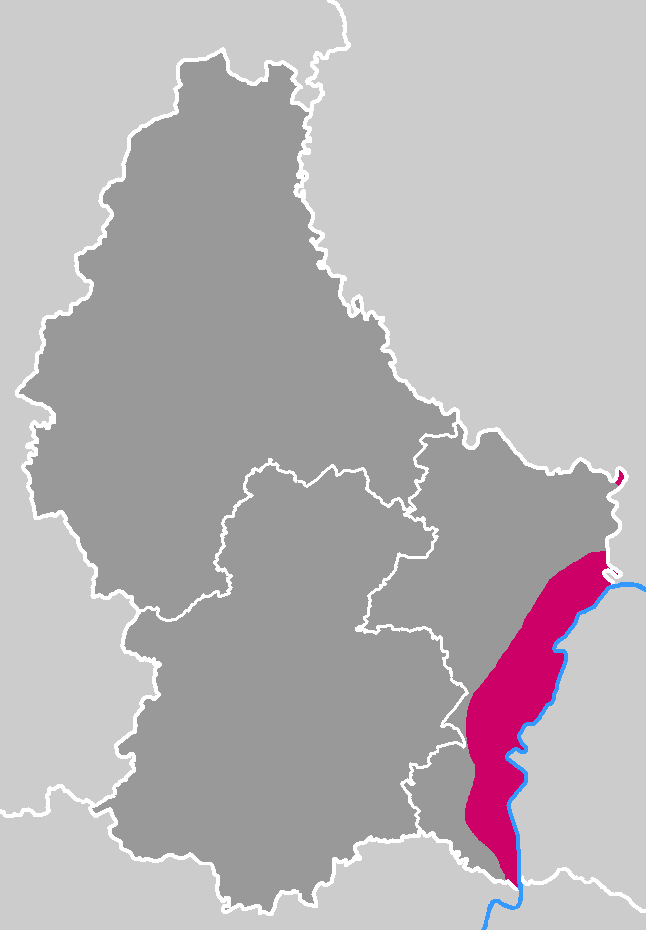
Start with the wine, because that is where Luxembourg's official designations actually sit — the AOP Moselle Luxembourgeoise covers 1,246 hectares and 340 wineries, producing 125,000 hectolitres a year, 25 percent of it Crémant de Luxembourg.
The answer, with local context
Luxembourg is a small producer with a heavily documented appellation, and that asymmetry is the useful fact for a visitor. The government's AOP register breaks the plantings down to 1,124 hectares of white cultivars, 90 percent of the total, against 122 hectares of red at 10 percent. Crémant is not a sideline: a quarter of all production is sparkling, which is a very high share for a still-wine region and explains why crémant appears on so many Luxembourg tables.
Where to look is settled by geography. The wine route runs 42 km along the Moselle between Schengen and Wasserbillig, with vineyards between 150 and 250 meters above sea level. The producers are on that strip, not in the capital, so a drinking itinerary and a sightseeing itinerary are different trips.
The register's historical notes give the wine some depth. Ausonius was already describing Moselle vineyards in 370 A.D. The vines then vanished after the Great Frost of 1709 and had to be re-established. Stainless steel fermentation tanks only reached many Luxembourg cellars in the mid-1970s, which is late, and which marks roughly when the modern style of these wines was fixed.
Alongside the AOP label the register recognizes speciality wines and three Charta groupings — Domaine et Tradition, Charta Schengen Prestige and Charta.Privatwënzer — without ranking them against each other.
Picture the place
The estates sit on slopes between 150 and 250 meters above sea level, low enough that a vineyard and the Moselle itself belong to the same view, and the 42 km of marked route never leaves the water for long. Stainless steel only reached many of these cellars in the mid-1970s, so the equipment behind the tasting counter is younger than the vines in front of it.
The easily missed detail
The village of Schengen anchors the southern end of the 42 km wine route. The place that gave its name to Europe's border-free area is a Luxembourg wine village on the Moselle, and the AOP register names it twice — once as the route's terminus and once in the Charta Schengen Prestige grouping. Arriving there by road from France or Germany and then drinking a wine from the same parish is a genuinely Luxembourgish experience that no guidebook highlight list will give you.
A practical rhythm
- Along the river — Work the 42 km route between Schengen and Wasserbillig. The 340 wineries are distributed along it rather than concentrated in one town.
- Ask for crémant by name — A quarter of national production is sparkling, so it is the house style rather than an occasional bottle.
- Pair with the procession — Echternach sits in the east, and the Tuesday-of-Pentecost procession draws an average of 13,000 participants, so plan eating and drinking around it rather than in it.
What could complicate the plan
The State Department's Luxembourg advisory warns of petty crime in tourist areas, and it singles out the north and the east of the country for a Level 2 caution over wartime munitions that were never recovered — worth remembering if a vineyard walk tempts you off a marked track near the eastern frontier. On the health side, the CDC's Yellow Book 2026 counts food from kitchens with poor refrigeration among its higher-risk categories and fully cooked food served hot among the lower-risk ones, which is a fair description of the choice between a cellar's cold plate and a village restaurant. Note also that the AOP page carrying these figures was last updated on 4 October 2022, so treat the hectare and volume numbers as that vintage.
What to do next
Read the Luxembourg places-and-experiences answer for the Echternach and Moselle context in full, and the when-to-visit answer for the seasonal pattern that governs when vineyard visits are pleasant.
Sources
- AOP Luxembourg, Vins et Crémants (Government of Luxembourg) — appellation figures, white/red split, crémant share, wine route, Charta groupings, 370 A.D. and 1709 dates, page update date
- UNESCO Intangible Cultural Heritage — procession date and average participant figure
- US Department of State, Luxembourg travel advisory — petty crime and unexploded-ordnance cautions
- CDC Yellow Book 2026, Food and Water Precautions for Travelers — refrigeration and cooked-food risk categories