Luxembourg country guide Places and experiences
What should a first-time traveler see in Luxembourg beyond the obvious highlights?
The short answer
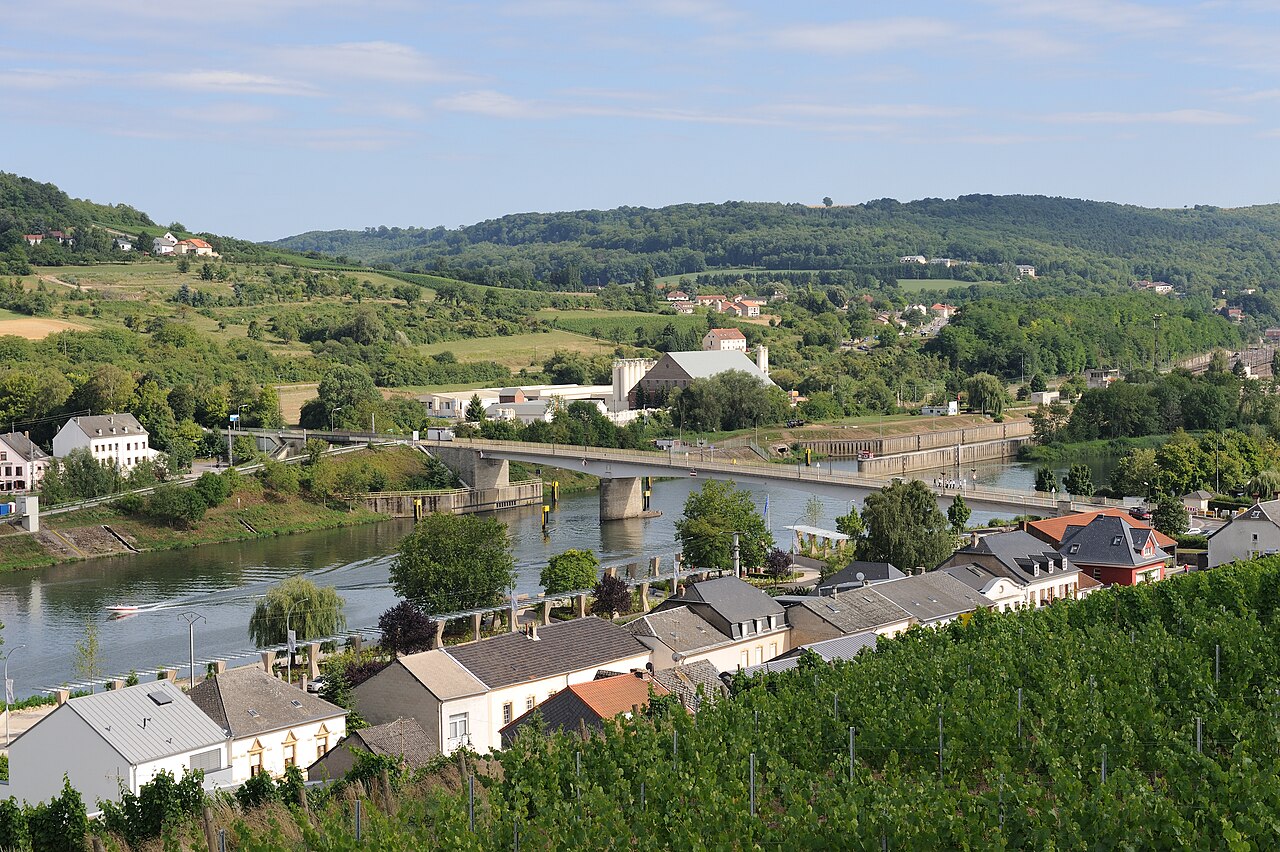
Echternach and the Moselle — Echternach for the Hopping Procession that UNESCO inscribed on the Representative List of the Intangible Cultural Heritage of Humanity in 2010 under decision 5.COM 6.27, and the Moselle for a 42 km wine route linking 340 wineries between Schengen and Wasserbillig.
The answer, with local context
The Echternach procession is Luxembourg's strongest living-heritage claim and it is not in the capital. UNESCO's record puts about 8,000 dancers in 45 groups, an average of 13,000 participants a year drawn from Luxembourg and neighbouring regions, and documentation of the event going back to 1100. It starts early in the morning in the courtyard of the ancient abbey and ends with a service in the basilica. It happens once a year, on the Tuesday of Pentecost.
The Moselle is the other half of the country most first-timers skip. The government's AOP register puts 1,246 hectares under the Moselle Luxembourgeoise quality label, splitting 90 percent white cultivars and 10 percent red, with 125,000 hectolitres produced and a quarter of that bottled as Crémant de Luxembourg. The vineyards sit between 150 and 250 meters above sea level. The register also reaches a long way back: Ausonius described Moselle vineyards in 370 A.D., and the vines disappeared after the Great Frost of 1709 before being re-established. Stainless steel tanks reached many cellars only in the mid-1970s.
Schengen itself sits at the southern end of that 42 km route, which gives the drive an unexpected second dimension — the village that named the agreement is a wine village on the river.
Picture the place
The Moselle slopes face the river across a narrow valley, and at 150 to 250 meters the vineyard terraces are shallow enough to walk between rows rather than climb. The 42 km of route follows the water, so the horizon on one side is always the far bank.
The easily missed detail
Luxembourg's quality-wine framework has a layer above the appellation that is easy to miss. The AOP register names three Charta groupings — Domaine et Tradition, Charta Schengen Prestige, and Charta.Privatwënzer — alongside the AOP label, Crémant de Luxembourg and speciality wines, but it does not rank them, so a Charta bottle is a producer commitment rather than a higher legal tier. The register also records a three-year Provino research project tied to EU Directive 2009/129, which is the kind of detail that explains why a country of this size has so much published technical material about 1,246 hectares of vines.
A practical rhythm
- Echternach — Visit on the Tuesday of Pentecost for the procession, or any other day for the abbey and basilica without 13,000 participants in the streets.
- The Moselle — Drive or cycle the 42 km between Schengen and Wasserbillig, stopping at the river villages rather than treating it as a single destination.
- The north and east — Beautiful, and the one part of the country where the State Department attaches a specific caution.
What could complicate the plan
Two of the three places named above sit inside a cautioned zone. The State Department rates northern and eastern Luxembourg at Level 2, one step above the national Level 1, because World War munitions in those districts remain unexploded — which bears directly on leaving marked paths in the Ardennes and along the eastern frontier, Echternach's own hinterland. The advisory, issued 8 April 2026, also warns of petty crime in tourist areas. At the border, biometric registration of short-stay visitors took effect on 12 October 2025, and your passport needs 2 blank pages and at least 3 months of validity past your Schengen departure.
What to do next
The Luxembourg food-and-drink answer picks up the crémant and appellation detail in practical terms, and the when-to-visit answer explains how the Pentecost date and the casemate tour season fall across the year.
Sources
- UNESCO Intangible Cultural Heritage — 2010 inscription, decision 5.COM 6.27, dancer and participant figures, documentation since 1100
- AOP Luxembourg, Vins et Crémants (Government of Luxembourg) — hectares, white/red split, production, crémant share, wine route, Charta groupings, Provino project, historical dates
- US Department of State, Luxembourg travel advisory — Level 2 unexploded-ordnance caution, petty crime warning, biometric collection date, passport rules