Maasai Mara / Kenya When to visit
When should I visit Maasai Mara, Kenya, for the best experience?
The short answer
July through October offers the strongest combination of relatively dry game-drive conditions and the possibility of seeing migrating wildebeest, although the Maasai Mara also supports resident wildlife outside the migration months.
The answer, with local context
The Maasai Mara lies in southwestern Kenya, adjoining Tanzania’s Serengeti ecosystem. Its western section, the Mara Triangle, covers approximately 510 square kilometers (197 square miles) and represents roughly one-third of the national reserve. The Triangle is bounded by the Mara River, the Oloololo Escarpment and the international border with Tanzania.
Rainfall follows a seasonal pattern rather than remaining constant throughout the year. A peer-reviewed study published in PLOS Climate found that the Mara ecosystem averaged approximately 57.1 mm (2.25 inches) of rain per month during July–October, compared with 106.1 mm (4.18 inches) during November–June, using its analyzed station dataset. April forms a principal rainfall peak. Narok County’s meteorological planning documents also identify substantial variation across the county because elevation and terrain influence rainfall.
The Mara Conservancy identifies June or July through November as the broad period when migrating wildebeest may be present. The timing concerns movement across the wider Serengeti–Mara system, not an annual procession arriving at one riverbank on a fixed date. Lions, elephants, cheetahs, zebras, giraffes and other wildlife can be seen independently of the main migration.
Visitor access follows the reserve’s operating rules. The Mara Triangle opens its gates at 6 a.m., closes them at 7 p.m., and does not permit new vehicle entry after 6:30 p.m. Its 12-hour daytime admission period runs from 6 a.m. to 6 p.m., regardless of the actual entry time. Published 2026 nonresident-adult reserve fees were US$100 per day from January through June and US$200 per day from July through December, covering park entry rather than accommodation, vehicle fees or a guided safari.
Picture the place
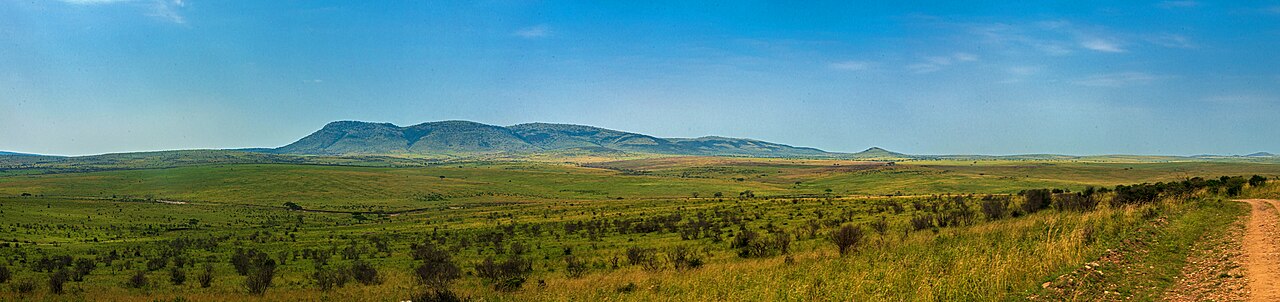
Grassland extends toward the Oloololo Escarpment, with scattered trees and river corridors dividing the plains. During drier months, the open terrain gives greater visibility across grazing areas; greener periods produce denser vegetation.
The easily missed detail
A visitor who enters the Mara Triangle at noon does not receive a ticket lasting until midnight. The conservancy defines the daytime ticket by its 6 a.m.–6 p.m. window, rather than by twelve hours counted forward from entry. This matters when a safari involves crossing a reserve gate late in the afternoon or staying outside the protected area.
A practical rhythm
6 a.m. — Morning drive: Begin when the gate opens and wildlife activity can be observed before midday warmth.
Midday — Lodge or camp: Break the drive at the accommodation or another designated facility rather than leaving the vehicle anywhere in the reserve.
Afternoon — Second drive: Follow open tracks and return in time for the applicable closing or accommodation-access requirements.
What could complicate the plan
The U.S. State Department raised Kenya to Level 3, Reconsider Travel, in its advisory issued October 19, 2026, citing health and other security concerns. The same advisory notes that major flooding in the Mara in May 2024 required helicopter rescues. Roads and river crossings can therefore be affected by significant rainfall. Reserve fee categories, conservation charges and entry rules are also controlled by the relevant administrators, not by Kenya Wildlife Service national-park tariffs.
What to do next
explains the principal safari activities and protected-area rules. focuses specifically on selecting dates for migrating wildlife and river crossings.
Sources
- Mara Conservancy, Experience Mara Triangle — area, boundaries, animals and gate hours.
- Mara Conservancy, Conservation Fees — daytime-ticket validity, identification and payment rules.
- PLOS Climate, Mara–Serengeti Climate Study — measured seasonal rainfall differences.
- Narok County Government, County Annual Development Plan — regional climate and seasonal migration context.
- U.S. Department of State, Kenya Travel Advisory — advisory level, issue date and flood risks.